Recent Space Research Sheds Light on Chiron’s Unique Surface and Coma

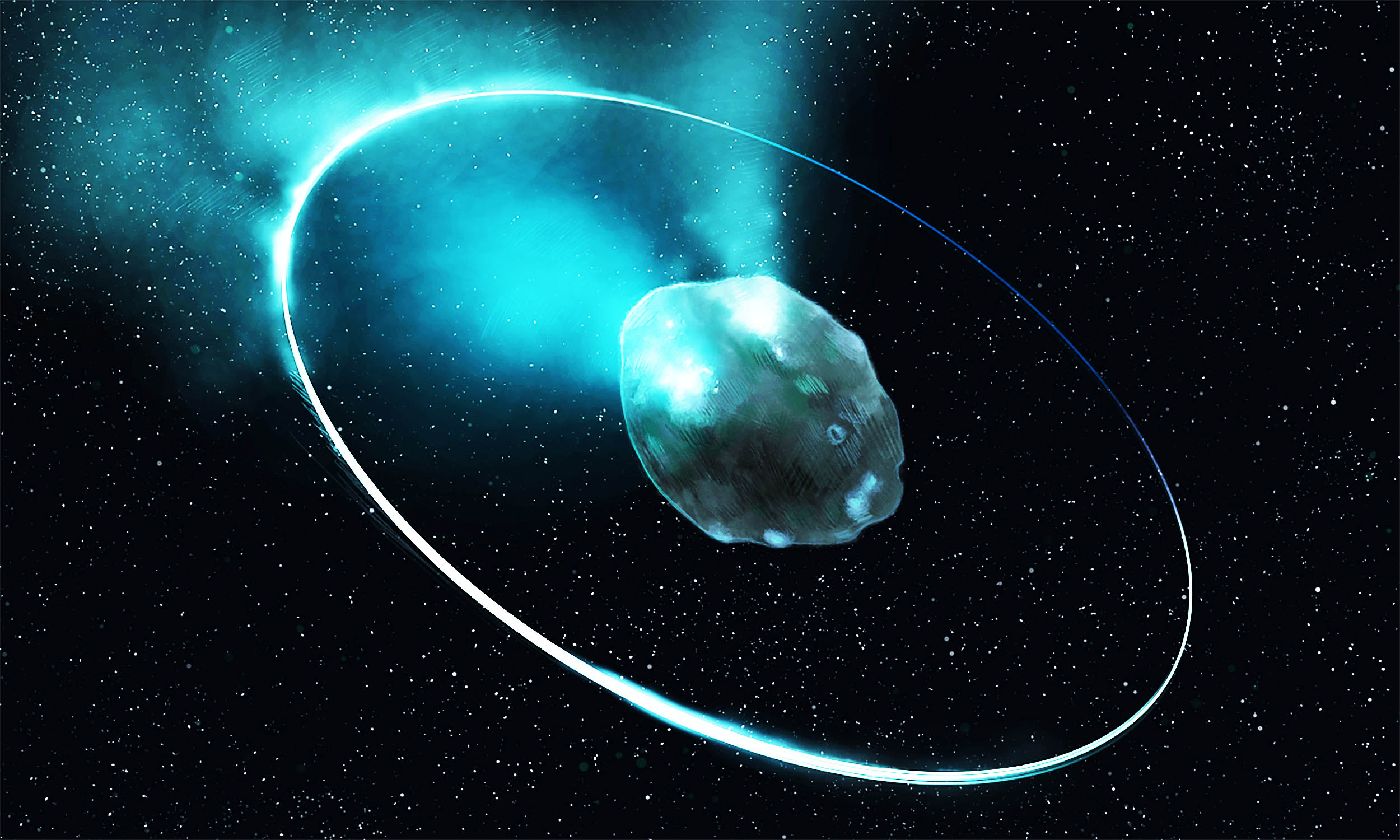
Researchers have recently turned their focus on (2060) Chiron, a celestial object that orbits between Jupiter and Neptune, unveiling new details about its unusual surface and the composition of its coma. A study published in Astronomy & Astrophysics classifies Chiron as a centaur, a category of celestial body that shares characteristics of both asteroids and comets. The James Webb Space Telescope provided critical data on Chiron’s surface, detecting carbon dioxide and carbon monoxide ice, as well as methane and carbon dioxide gases in its coma. This discovery offers valuable insights into the early history and evolution of our solar system, according to the research team from the University of Central Florida (UCF).

Chiron’s surface and coma are unique compared to other celestial bodies, largely due to the presence of volatile ices and gases. Dr. Noemí Pinilla-Alonso, an Associate Scientist at UCF’s Florida Space Institute and the lead researcher, emphasized the importance of these features. She explained that the presence of volatile materials sets Chiron apart from other centaurs, which often undergo active transformations due to solar heating. These changes allow scientists to study how Chiron’s surface composition evolves and how these transformations provide insights into the object’s behavior. The coma, a gaseous envelope surrounding the surface, is particularly important as it gives researchers a direct view of gases originating from beneath the surface—something that is not as easily observed in typical asteroids or trans-Neptunian objects.

The study of Chiron’s surface and coma not only deepens our understanding of this unique centaur but also has broader implications for understanding the dynamics of the solar system. Dr. Charles Schambeau, an Assistant Scientist at UCF with expertise in centaurs and comets, pointed out that Chiron’s unique activity and its potential for debris rings make it a fascinating case. By investigating the interaction between Chiron’s surface ices and its coma gases, researchers hope to uncover thermophysical processes that could explain the behavior of other similar celestial bodies in our solar system.

Chiron’s combination of asteroid-like and comet-like features makes it a crucial subject of study for those looking to understand the fundamental processes that govern the evolution of the solar system. This research highlights how centaurs, with their complex mixtures of ice and gas, can provide valuable clues about the conditions and transformations that shaped early planetary bodies. As more data is collected from missions and observations, scientists expect to further unravel the mysteries surrounding these enigmatic objects, offering a window into the past and future of our cosmic neighborhood.
Revised World Magnetic Model Predicts Movement of Magnetic North Pole

Revised version of the World Magnetic Model (WMM) was released by the National Centers for Environmental Information (NCEI) in collaboration with the British Geological Survey (BGS). This updated model aims to forecast the movement of Earth’s magnetic field over the next five years, ensuring that global navigation systems remain accurate. The WMM update is part of a routine schedule and is crucial for a wide range of applications, including satellite navigation, smartphone location services, and maritime and aviation navigation systems.

Earth’s magnetic field, which plays a vital role in various technologies, is generated by the motion of molten iron in the planet’s outer core, located approximately 2,890 to 5,000 kilometers beneath the surface. This dynamic process, known as the geodynamo, sustains the magnetic field through the interaction of electric currents and magnetic forces. According to geophysicist Bruce Buffett from the University of California, Berkeley, without the geodynamo mechanism, Earth’s magnetic field would decay in just around 40,000 years. He likens the loss of the magnetic field to the cooling of a hot object exposed to the environment.

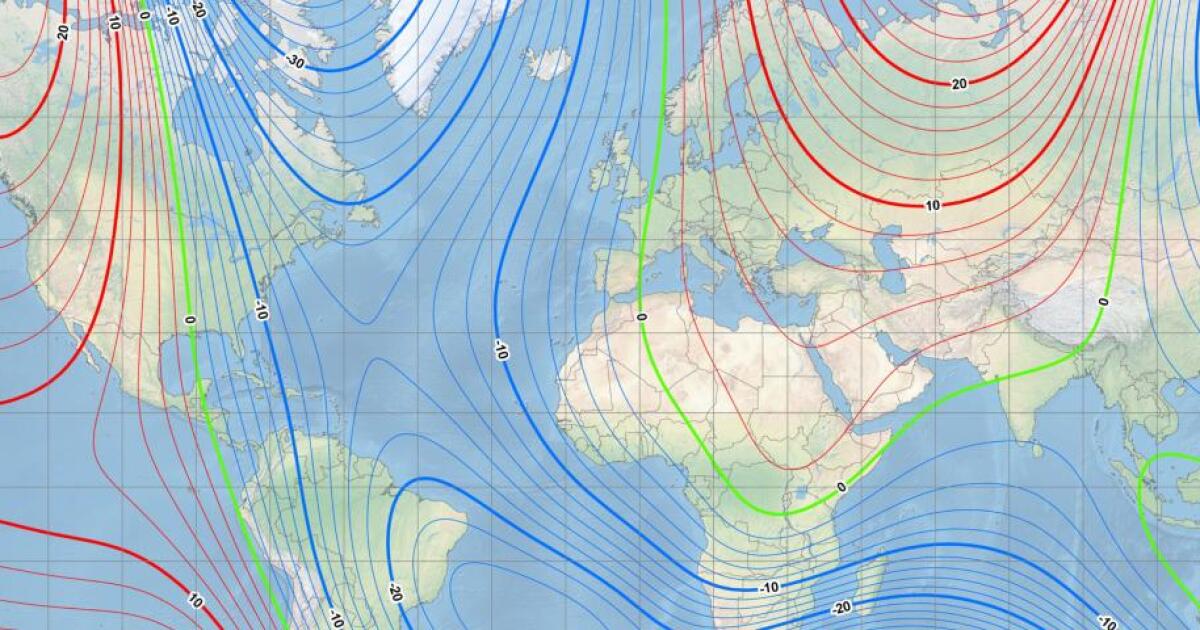
The magnetic north pole, unlike the geographic North Pole, is not fixed in place. It continuously shifts, driven by the dynamic motions within Earth’s outer core. Recent observations have shown that the magnetic north pole is migrating from the Canadian Arctic towards Siberia. This movement is caused by fluctuations in the strength and configuration of Earth’s magnetic field, and scientists are closely monitoring these changes to understand their impact on navigation and technology that depend on precise magnetic readings.

Tracking the magnetic north pole’s movements is essential for updating navigational models and ensuring that systems relying on magnetic field data, such as compasses and GPS, continue to provide accurate positioning. As the magnetic field evolves, scientists rely on models like the WMM to make predictions and adjustments, helping to prevent errors in navigation that could arise from shifts in the magnetic field’s strength or location. The updated World Magnetic Model is thus an important tool for maintaining the precision of systems that many industries and everyday technologies rely on.

Binary Star System D9 Discovered Orbiting Sagittarius A Near the Heart of the Milky Way*

Binary Star System D9 Found Orbiting Sagittarius A Near the Heart of the Milky Way*

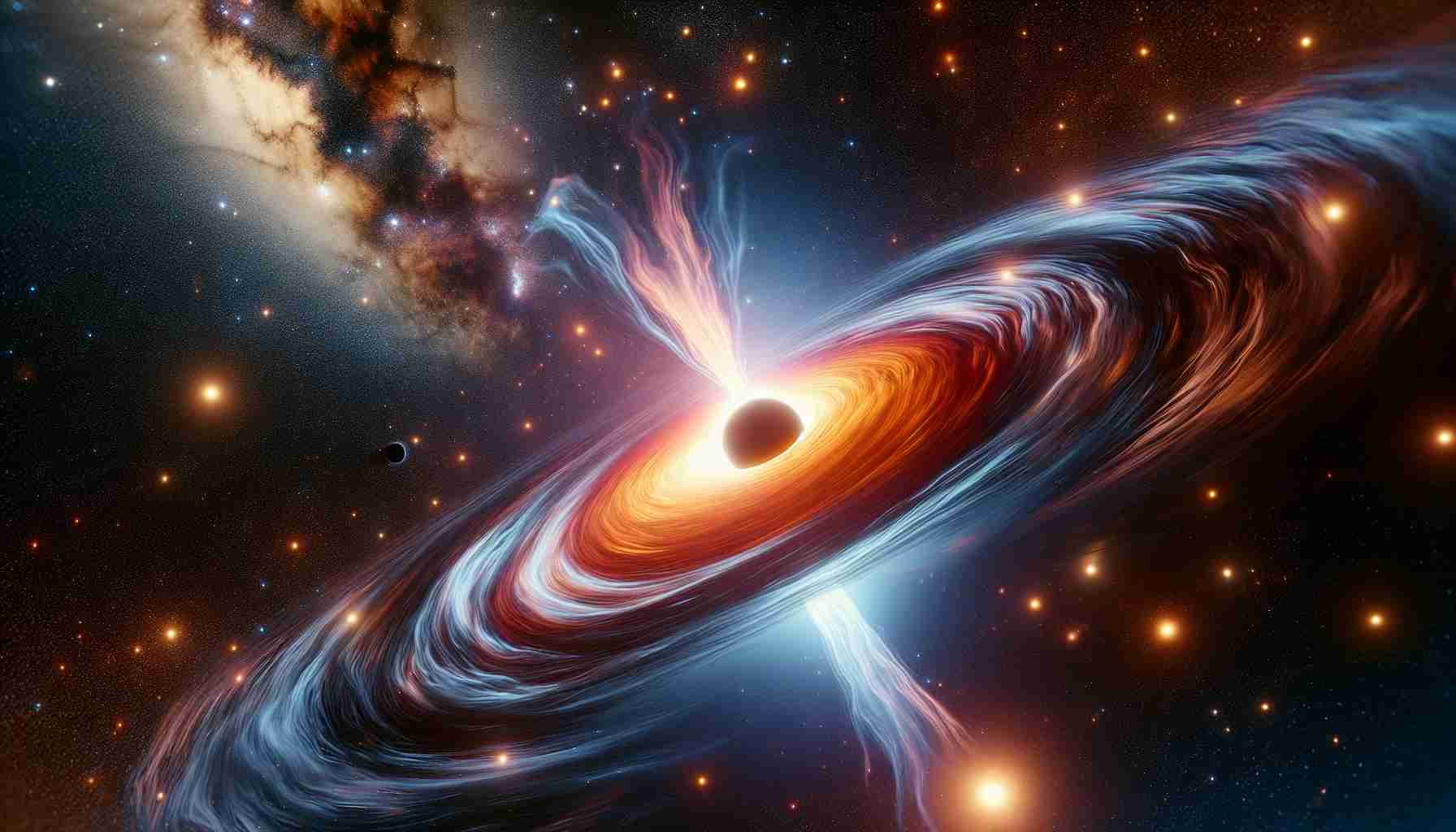
A remarkable discovery has been made with the detection of a binary star system, designated D9, orbiting Sagittarius A*, the supermassive black hole at the center of the Milky Way galaxy. This groundbreaking finding, published in Nature Communications, marks the first time that a binary system has been observed so close to such a powerful gravitational force. The observation was made using data collected from the European Southern Observatory’s (ESO) Very Large Telescope (VLT). The D9 system was found in the S cluster, a densely packed region of stars and objects located near Sagittarius A*. The discovery provides crucial insights into how stars and their systems can persist and even thrive in extreme gravitational environments.

A Challenge to Previous Assumptions About Black Holes

The discovery of D9 challenges previous assumptions about the nature of black holes and their surroundings. Lead researcher Florian Peißker from the University of Cologne explained in the study that black holes might not be as destructive to nearby stars and systems as previously thought. The findings suggest that despite the immense gravitational forces exerted by Sagittarius A*, a binary star system like D9 is capable of surviving and even continuing its orbit for millions of years. This discovery offers a new perspective on the dynamics around black holes and the potential for star systems to form and persist in these regions.

A Rare Phenomenon Near the Supermassive Black Hole

Binary star systems, where two stars orbit each other, are relatively common throughout the universe, but the existence of such a system in close proximity to a supermassive black hole is extremely rare. Previously, it was assumed that the intense gravitational pull from a black hole would disrupt or destabilize any star system within its reach, making it nearly impossible for a binary system to survive in such an environment. The D9 system, however, defies this notion, providing a rare opportunity for astronomers to study stellar dynamics in one of the most extreme gravitational environments in the universe.

The Future of the D9 System

Though the discovery of D9 is fascinating, it is not expected to last indefinitely. The binary system is believed to be approximately 2.7 million years old, and due to the strong gravitational forces from Sagittarius A*, the two stars are predicted to merge into a single star within the next million years. This eventual merger provides further opportunities for researchers to study the long-term effects of a supermassive black hole on nearby star systems. As the system evolves, it will offer valuable insights into the interaction between stars and black holes, shaping our understanding of cosmic environments.