James Webb and Chandra Telescopes Capture Stunning Images of Star Clusters in Remote Galaxies

James Webb and Chandra Telescopes Capture Breathtaking Images of Distant Star Clusters

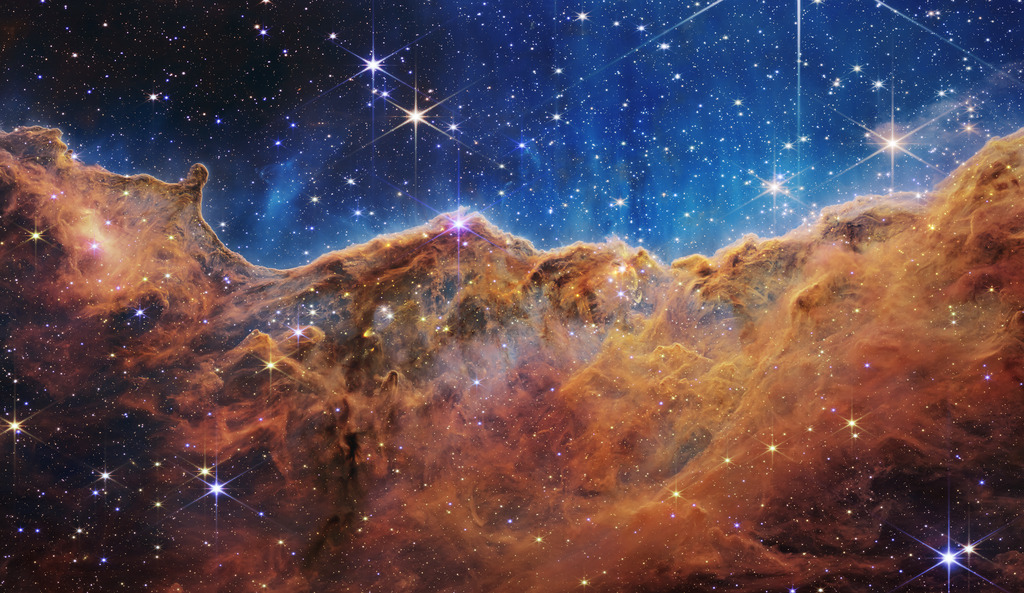
A stunning new image has emerged from the far reaches of the Small Magellanic Cloud, a galaxy located around 200,000 light-years away from Earth. This captivating image showcases the star cluster NGC 602, captured through the combined efforts of the James Webb Space Telescope (JWST) and NASA’s Chandra X-ray Observatory. The cluster, situated in an environment resembling the early universe, is marked by low levels of heavy elements. The surrounding region is teeming with dense dust clouds and ionized gas, offering a glimpse into active star formation processes that unfold under conditions vastly different from those in our own solar neighborhood.

A Wreath of Stars and Dust

The Webb Telescope’s near-infrared and mid-infrared imaging data unveil a striking wreath-like structure encircling the star cluster. This ring of dense dust clouds appears in an array of vivid colors—green, blue, orange, and yellow—while Chandra’s X-ray data paints the image with vibrant red tones, signifying high-energy radiation from young, massive stars. These stars, with their powerful winds, illuminate the surrounding gas and dust, offering a breathtaking view of stellar creation. The combined glow from lower-mass stars extends across the region, creating an image that bears a festive resemblance to a holiday wreath.

Insights Into Stellar Formation

The environment around NGC 602 provides valuable insights into the conditions under which stars are born in the early universe. The low concentration of heavy elements and the ongoing star formation within this region highlight the differences between the star formation processes observed in distant galaxies and those in our own. This discovery adds another layer to our understanding of how stars and galaxies evolve in the vast expanse of space. The remarkable detail captured by both Webb and Chandra offers a unique window into a distant past, shedding light on cosmic events that shaped the universe as we know it.

The Christmas Tree Cluster in Stunning Detail

In addition to NGC 602, another remarkable image has been produced featuring the star cluster NGC 2264, also known as the “Christmas Tree Cluster.” Situated about 2,500 light-years away, this cluster consists of young stars, aged between one and five million years. A composite image, blending Chandra’s X-ray data with optical observations captured by astrophotographer Michael Clow in November 2024, reveals a cone-shaped structure dotted with starlight, resembling a cosmic Christmas tree. The combined data from both the X-ray and optical wavelengths provide a new level of precision, offering an in-depth view of the cluster and its surrounding nebula. These images underscore the power of modern telescopes in unveiling the wonders of the cosmos.
Webb Telescope Reveals Extended Lifespan of Planet-Forming Disks in Early Universe

Webb Telescope Solves Longstanding Mystery of Planet-Forming Disks

The James Webb Space Telescope (JWST), a collaboration between NASA, ESA, and CSA, has confirmed a long-standing mystery surrounding planet formation in the early universe. Findings published in The Astrophysical Journal suggest that planet-forming disks around stars lasted much longer than previously thought, even in environments with minimal heavy elements. This revelation is reshaping our understanding of how planets formed in the early stages of the cosmos, challenging established theories and offering new insights into the processes of planet formation.

Unraveling the Hubble Discovery

In 2003, the Hubble Space Telescope observed massive planets orbiting ancient stars, which was a surprising discovery. These stars lacked heavier elements such as carbon and iron—elements considered crucial for planet formation. The existence of planets around such stars raised significant questions about how these celestial bodies could form in the absence of the necessary raw materials. The discovery left astronomers puzzled, as the standard model of planet formation suggested that such environments would be unsuitable for planet growth.

Webb’s Investigations in NGC 346

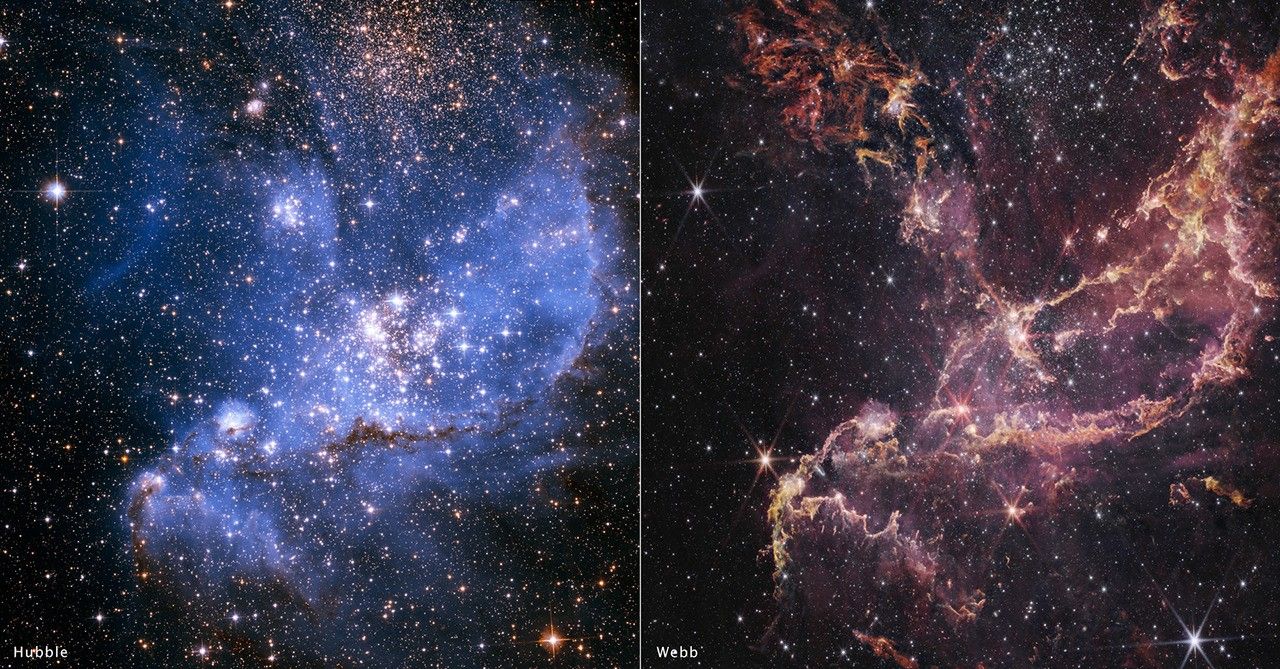
To further investigate this phenomenon, the Webb Telescope focused its attention on NGC 346, a large star cluster located in the Small Magellanic Cloud. As one of the closest neighbors to the Milky Way, NGC 346 offers a unique opportunity to study the conditions that closely resemble those of the early universe. The cluster’s stars, estimated to be only 20 to 30 million years old, were found to retain planet-forming disks far longer than expected. These findings suggest that, under certain conditions, planet formation can occur in environments dominated by hydrogen and helium—elements characteristic of the early universe—extending the timeline for planet development.

Implications for Planet Formation Theory

This new discovery from the Webb Telescope has profound implications for our understanding of planet formation. The fact that planet-forming disks around stars can endure longer than previously thought suggests that the conditions for planet formation in the early universe may have been more favorable than originally believed. This challenges current models and opens up new avenues for research, potentially altering how we think about the development of planetary systems in the distant past. As Webb continues to explore distant star clusters, it promises to provide even more insights into the complex processes that shaped the early universe.

NASA’s InSight Mars Lander Captured Beneath Dust Layers by Mars Reconnaissance Orbiter

Mars Reconnaissance Orbiter Captures Retired InSight Lander Beneath Dust Layers

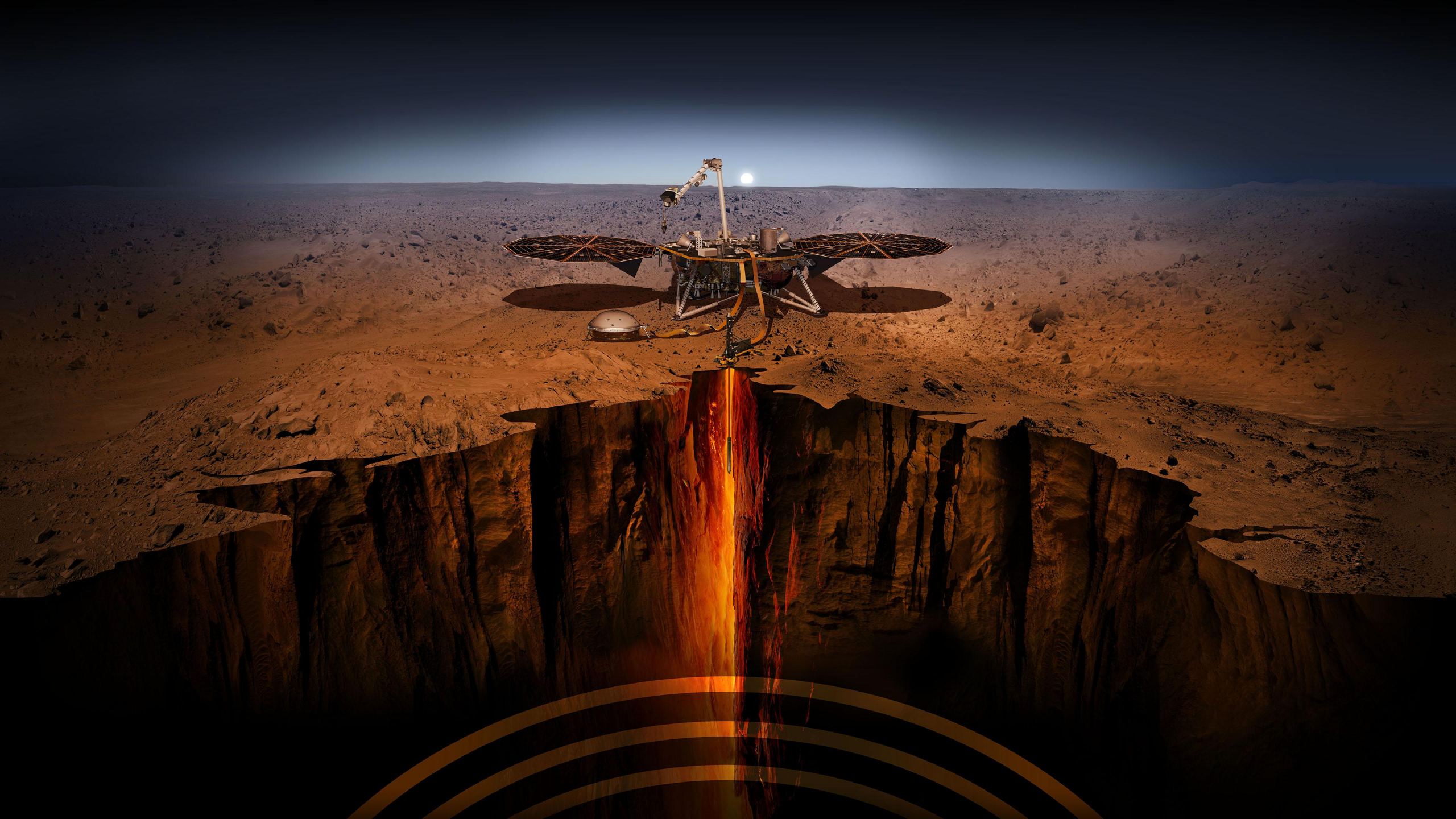
NASA’s retired InSight Mars lander has recently been photographed by the Mars Reconnaissance Orbiter (MRO) in an image taken on October 23, 2024, using its High-Resolution Imaging Science Experiment (HiRISE) camera. The image reveals the lander nearly camouflaged beneath layers of dust that have accumulated on its solar panels, which now match the reddish-brown hue of the Martian surface. This observation continues to provide valuable insights into Mars’ dynamic dust and wind patterns, helping scientists better understand the planet’s environmental processes.

InSight’s Historic Mission and Its Retirement

The InSight lander, which landed on Mars in November 2018, was instrumental in detecting Marsquakes and studying the planet’s crust, mantle, and core. Its primary mission was to monitor seismic activity and gain deeper insights into Mars’ internal structure. However, in December 2022, NASA officially declared the mission over after the lander stopped communicating due to severe dust accumulation on its solar panels. Engineers from NASA’s Jet Propulsion Laboratory (JPL) in California continued to monitor the lander, hoping that Martian winds would clear the dust and restore power. Despite their efforts, no signals were received, and the lander’s listening operations are set to conclude by the end of this year.

Tracking Dust and Wind Dynamics on Mars

The new HiRISE images were captured as part of an ongoing effort to monitor the effects of dust and wind on Mars’ surface. By tracking how dust accumulates and shifts over time, scientists are gaining a better understanding of the planet’s dust cycle and wind dynamics. Ingrid Daubar, a member of the science team at Brown University, emphasized the significance of these observations, stating that they provide crucial data for future missions to Mars. Understanding how dust interacts with the Martian environment is key for planning future landings, as dust accumulation remains a major challenge for solar-powered missions.

Impact on Future Mars Missions

The information gathered from the HiRISE images of InSight’s location will continue to shape how future missions approach the Martian surface. Dust remains one of the most significant obstacles for equipment on Mars, and understanding how it moves and settles will inform strategies to mitigate its effects on upcoming missions. As NASA prepares for future explorations of Mars, including the Artemis missions and potential human landings, the insights gained from monitoring InSight’s dust-covered panels will be critical in developing new technologies to protect spacecraft and rovers.