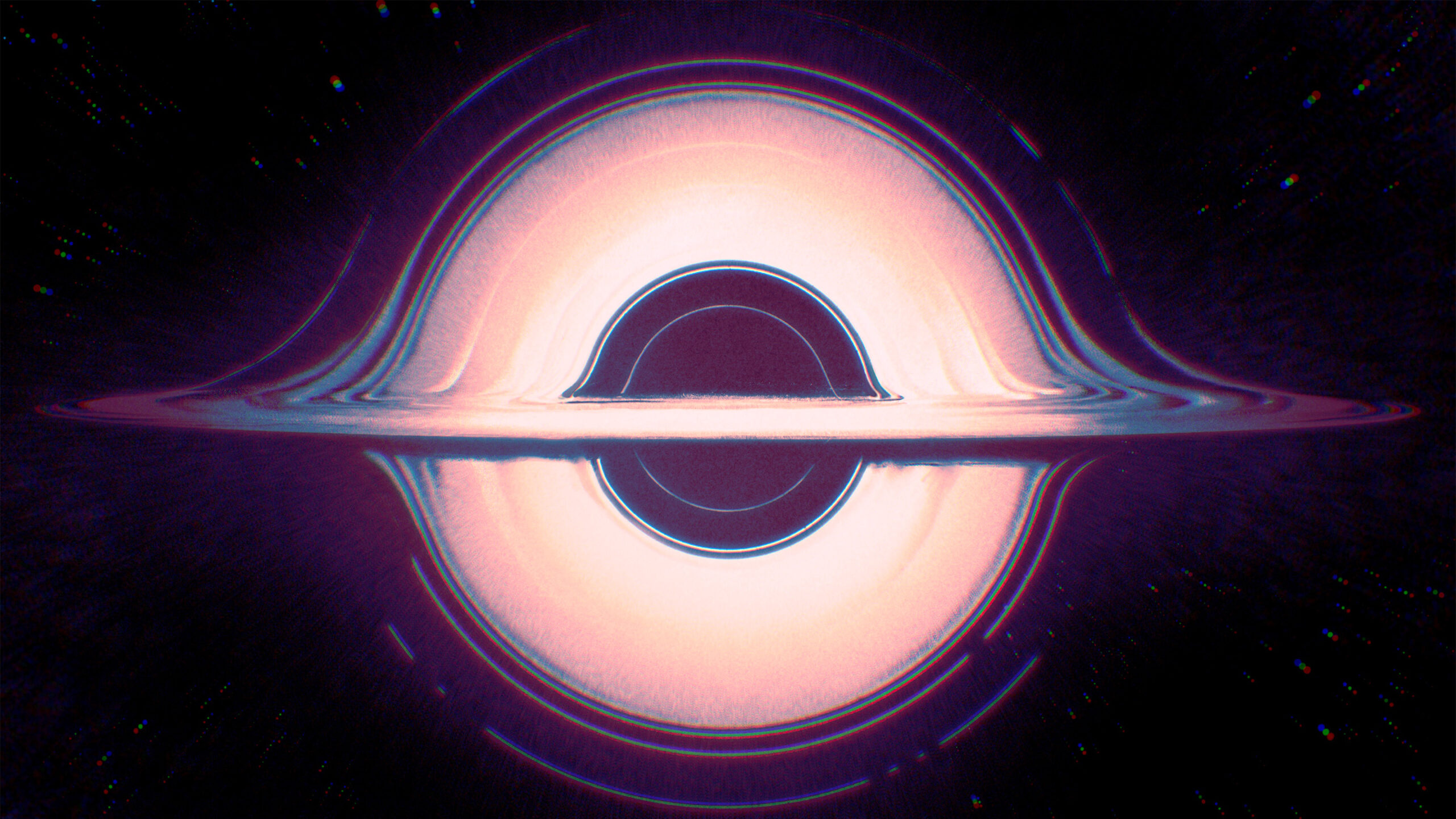
Gravitational Waves Proposed as Key to Unlocking Black Hole Information Paradox

A groundbreaking study proposes that the elusive black hole information paradox might be resolved by examining disturbances in space-time. Researchers suggest that gravitational waves—ripples in the fabric of space-time generated during black hole mergers—could carry subtle signatures of the information supposedly lost to black holes. If confirmed, this idea could bridge a critical gap between quantum mechanics and general relativity, offering profound insights into the universe’s fundamental laws.

The black hole information paradox, first introduced by physicist Stephen Hawking in 1976, questions what happens to the information consumed by black holes. Hawking theorized that black holes emit radiation (known as Hawking radiation) and eventually evaporate, seemingly destroying all information they once held. This apparent loss conflicts with the principles of quantum mechanics, which assert that information cannot be destroyed. Over the years, numerous theories have been proposed to resolve this tension, one of which is the concept of “nonviolent nonlocality.”

The idea of nonviolent nonlocality, gaining traction among theoretical physicists, posits that a black hole’s interior may be subtly connected to its exterior environment through quantum nonlocality—without requiring catastrophic events like explosions. This theory suggests that such connections could allow information to escape black holes in ways that do not violate the principles of either quantum mechanics or general relativity. While the connections are nonlocal, they are “nonviolent” in the sense that they avoid disrupting the black hole’s structure.

Researchers at the California Institute of Technology explored this hypothesis and proposed that these quantum connections might leave detectable imprints on space-time itself. Specifically, during black hole mergers, gravitational waves could encode unique patterns reflecting the preserved information. With the advent of advanced observational tools such as the Laser Interferometer Gravitational-Wave Observatory (LIGO), these patterns might be identifiable. If confirmed, this discovery could mark a monumental step in solving the black hole information paradox and deepening our understanding of the universe’s most enigmatic phenomena.
NASA Explores Ingenuity’s 72nd Flight Mishap, Shares Insights on Crash

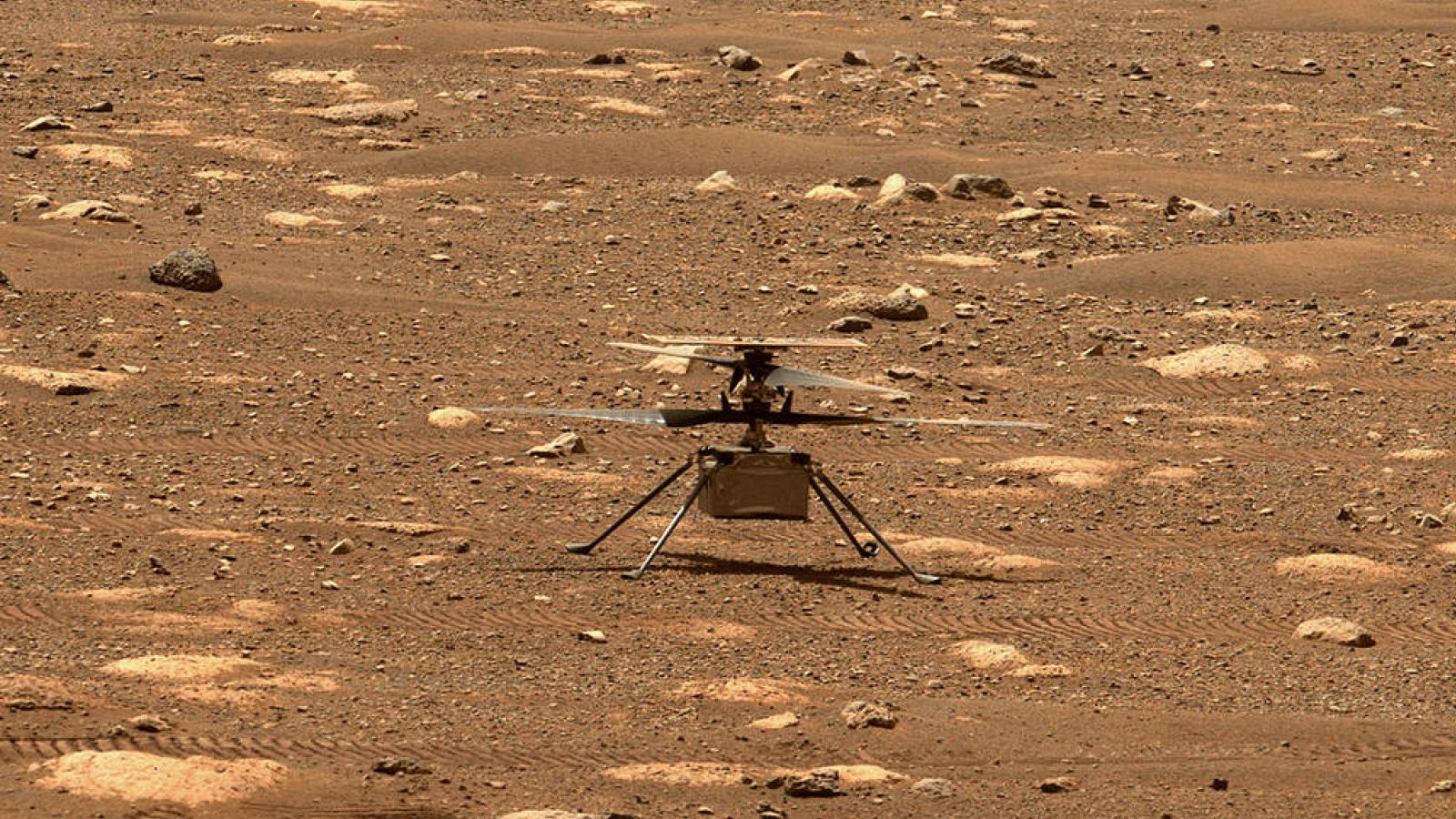
NASA’s Jet Propulsion Laboratory (JPL) in Southern California, in collaboration with AeroVironment, is currently investigating the events surrounding the final flight of the Ingenuity Mars Helicopter. On January 18, 2024, the rotorcraft, which had far exceeded its original mission parameters, experienced a critical failure during its 72nd flight. Originally designed as a technology demonstration to prove that aerial flight on Mars was possible, Ingenuity accomplished an extraordinary feat by completing 72 flights over nearly three years. The ongoing investigation aims to uncover the cause of the mishap and provide insights that could shape the design and operation of future extraterrestrial aircraft.

Ingenuity’s 72nd flight was intended as a routine operation to assess system performance and capture imagery of the Martian surface. The flight plan included a straightforward ascent to an altitude of 40 feet. Preliminary data shows that the helicopter reached its target altitude without incident but lost communication shortly after landing. Subsequent imagery, transmitted after a delay, confirmed that the rotor blades had sustained significant damage, effectively marking the end of Ingenuity’s operational career.

The leading theory regarding the incident points to a failure in the navigation system, caused by the challenging terrain of Jezero Crater. The helicopter’s navigation relies on tracking surface textures to estimate movement and position. However, experts believe that the featureless sand ripple terrain in the area provided insufficient visual cues, leading the system to generate incorrect position estimates. Håvard Grip, Ingenuity’s first pilot, explained that these errors likely resulted in excessive horizontal speed during touchdown, causing severe mechanical stress on the rotorcraft’s components.

Despite the unfortunate end, Ingenuity’s achievements have been groundbreaking, offering valuable lessons for the future of Mars exploration. The technical report from the investigation, expected to be released later this year, will provide detailed findings and recommendations for addressing navigation challenges in similar environments. These insights are anticipated to influence the development of more advanced aerial systems for future missions, including potential scouting vehicles and delivery drones for planetary exploration.

JWST Identifies Jupiter-Sized Binary Objects in Orion Nebula, Revealing New Insights

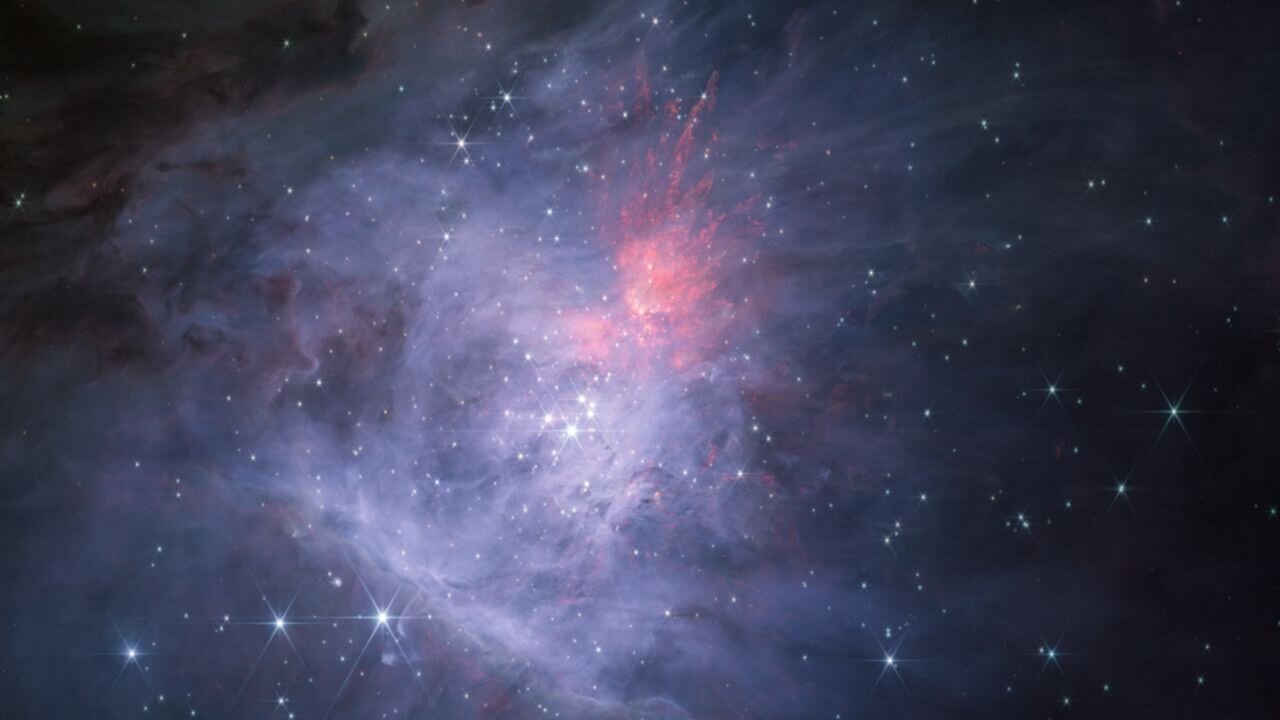
The James Webb Space Telescope (JWST) has made a groundbreaking discovery in the Orion Nebula, identifying dozens of massive, planet-like objects known as Jupiter-mass binary objects (JuMBOs). These objects, consisting of pairs of rogue gas giants, range in mass from 0.7 to 30 times that of Jupiter. The intriguing feature of these binary systems is their large separation distances, ranging from 25 to 400 astronomical units (AU). These findings are offering new insights into the processes behind stellar formation and the possible disruption of planetary systems.

The JuMBOs are located in the trapezoid region of the Orion Nebula, an area known for being a stellar nursery where new stars and planetary systems are born. Their discovery and the study of their origin were published in The Astrophysical Journal on November 5. Scientists believe that these objects might have formed under conditions not typically seen in other parts of the galaxy. There are a variety of theories about their formation, including the possibility that they were ejected from their home star systems due to gravitational dynamics or that they originated close to stars but were later forced into independent orbits.

A new hypothesis emerging from the study suggests that the JuMBOs might be “failed stars,” formed when nascent stars lost mass due to intense radiation. This radiation would have stripped away the outer layers of the forming stars, leaving behind smaller objects that failed to ignite fully as stars. These objects could represent a critical stage in star and planetary formation, offering valuable clues about how stars and planetary systems evolve in environments like the Orion Nebula.

Richard Parker, a senior lecturer in astrophysics at the University of Sheffield and a co-author of the study, explained that the wide separations observed between the JuMBO pairs make them distinct from other known brown dwarfs in the galaxy. The research delved into whether these binary systems might have formed from pre-stellar cores that were exposed to extreme radiation from nearby massive stars. The idea, first proposed by Anthony Whitworth and Hans Zinnecker two decades ago, is that such intense radiation could erode the outer layers of a forming star’s core while compressing its center, potentially resulting in the creation of JuMBOs. This theory presents a fascinating new perspective on how objects like the JuMBOs could form in the extreme conditions of stellar nurseries.