Google-Backed Isomorphic Labs Delays Clinical Trial Timeline

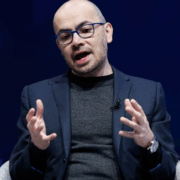
Isomorphic Labs, an artificial intelligence-driven drug discovery company backed by Google, now expects to begin its first clinical trials by the end of 2026, marking a delay from its earlier plans, founder and CEO Demis Hassabis said on Tuesday.

Speaking at the World Economic Forum in Davos, Hassabis said the revised timeline reflects the complexity of translating AI-designed drug candidates into human trials. Last year, he had indicated that Isomorphic aimed to have its first AI-developed medicines enter clinical testing by the end of 2025.

Founded in 2021, Isomorphic Labs was spun out of Google DeepMind, which Hassabis also leads. The company applies AI to accelerate drug discovery by improving how potential medicines are designed and evaluated.

Interest in AI-powered drug development has surged as pharmaceutical companies look to shorten research timelines and reduce costs. One of DeepMind’s most prominent achievements, AlphaFold, demonstrated AI’s potential by accurately predicting protein structures, a key challenge in biology.

Isomorphic raised $600 million in its first external funding round last year, led by Thrive Capital, underscoring strong investor confidence despite the longer path to clinical trials.

Mubadala Targets Opportunities in AI and Robotics, CEO Says

Abu Dhabi sovereign wealth fund Mubadala is stepping up its focus on artificial intelligence and robotics, identifying the convergence of the two as a key driver of future industrial growth, according to its group chief executive.

Speaking at the World Economic Forum in Davos, Khaldoon Al Mubarak said the intersection of AI and robotics could significantly reshape manufacturing and broader industry. He noted that the pace of technological change has shortened traditional investment horizons, making even five-year outlooks difficult to predict.

With assets of about $330 billion, Mubadala has expanded its technology portfolio in recent years, building positions across semiconductors, data centres, and AI infrastructure. Al Mubarak said robotics is becoming increasingly relevant as AI capabilities mature and begin to translate into physical automation.

Beyond industrial technology, Mubadala is also prioritising investments in life sciences, healthcare, and biotechnology, sectors the CEO said are likely to be transformed by AI-driven innovation. He added that the fund is preparing for a new phase of growth in Africa, as it looks to diversify geographically while aligning with long-term structural trends.

Google Launches Multiple Open-Source Translation Models Following ChatGPT Translate

Google launches open AI translation models challenging ChatGPT Translate

Google has continued its aggressive push in the artificial intelligence (AI) space in 2026. Following a series of initiatives including a partnership with Apple, the launch of new shopping tools, the introduction of Personal Intelligence in Gemini, and the integration of a chatbot into its Trends website, the company is now focusing on the open community. Its latest move comes with the release of TranslateGemma, a set of multilingual AI models designed for translation across a wide range of languages, supporting both text and image (input only) modalities.

In a recent blog post, Google announced three different variants of the TranslateGemma models. These AI models are available for download through Google’s Hugging Face listing and Kaggle, and can also be accessed via Vertex AI, the company’s cloud-based AI hub. Google has released the models under a permissive licence, enabling both academic and commercial use cases, which encourages broader adoption and experimentation by developers and enterprises alike.

The TranslateGemma models come in three sizes: 4B, 12B, and 27B parameters. The smallest, 4B model, is optimized for mobile and edge deployment, while the 12B variant targets consumer laptops, balancing performance and efficiency. The largest, 27B model, provides maximum translation fidelity and can run locally on a single Nvidia H100 GPU or TPU, making it suitable for high-demand environments and research applications.

With this release, Google is aiming to democratize AI-powered translation and provide the developer community with robust, versatile tools. By making TranslateGemma models open-source and easy to deploy across different devices, Google is reinforcing its commitment to accessible AI and strengthening its position in the multilingual AI ecosystem. The move also highlights the growing importance of translation technology in enabling global communication and cross-cultural collaboration.