Physical AI Takes Centre Stage at CES, but Humanoid Helpers Remain Distant

Just four years after the launch of ChatGPT brought artificial intelligence into the mainstream, CES in Las Vegas this week was dominated by talk of “physical AI” — robots, humanoids and autonomous systems that move AI beyond software and into the real world.

The annual technology show highlighted a clear shift by the global tech and auto industries from pure AI software toward hardware-driven applications. From robotics and autonomous driving to AI-powered home devices, exhibitors showcased visions of how AI could reshape daily life in the coming years.

Chip designer Arm Holdings said AI is fuelling a fresh wave of innovation and demand. Arm told Reuters it has reorganised its business to create a dedicated physical AI unit aimed at expanding into robotics. “AI is really driving a whole innovation and demand cycle,” said Chris Bergey, head of Arm’s PC and mobile unit.

Humanoid robots drew particular attention. Machines from companies including LG Electronics played poker, folded paper and danced with visitors. But their slow, carefully scripted movements underlined persistent hurdles such as limited processing power, battery constraints and difficulty handling real-world situations beyond pre-programmed tasks. Analysts said affordable, capable humanoid assistants remain years away.

AI HARDWARE MEETS SOFTWARE
Major tech players used CES to underline the convergence of AI hardware and software. Lenovo hosted a high-profile event featuring Jensen Huang and Lisa Su, unveiling its Qira AI assistant designed to work across PCs, phones and wearables, including services from companies such as Expedia.

Meta Platforms showcased upgrades to its Ray-Ban Display glasses and Neural Band, while Google introduced its Gemini AI model for TVs and smart home devices.

Alongside headline products, CES also featured more questionable AI applications. From AI-powered hair clippers and dry-cleaning gadgets to digital pets and talking avatars, analysts noted that many devices previously branded as “smart” now simply carried the AI label.

CHIPS UNDER THE HOOD
Behind the scenes, chipmakers stressed the need to move AI workloads from the cloud onto devices to control costs. Intel launched its Panther Lake laptop chip, built using its new 18A manufacturing process, while AMD unveiled new processors for AI PCs.

Still, questions remain over consumer demand. “The general consumer is still not aware of what an AI PC really means,” said Ben Bajarin of Creative Strategies, adding that it could take time before the benefits become clear.

While CES made clear that physical AI is the industry’s next big push, experts agreed that truly useful, affordable humanoid servants are still a long way off.

US Supreme Court to Hear Case Alleging Cisco Aided China’s Persecution of Falun Gong

The U.S. Supreme Court on Friday agreed to hear an appeal by Cisco Systems, a case that could narrow the scope of a centuries-old U.S. law used to hold companies liable for human rights abuses committed abroad.

Cisco is challenging a 2023 ruling that revived a lawsuit first filed in 2011, which accuses the California-based technology firm of knowingly developing surveillance technology that enabled the Chinese government to monitor, detain and persecute members of the Falun Gong. The appeal is supported by the administration of U.S. President Donald Trump.

The lawsuit is based primarily on the Alien Tort Statute (ATS), a 1789 law that allows foreign plaintiffs to bring civil cases in U.S. courts for violations of international law. Long dormant, the statute has been increasingly tested in recent decades. Cisco is urging the Supreme Court to further limit its reach, arguing that the claims are unfounded and that the company sold technology to China that was legal under U.S. trade policy.

Plaintiffs also allege violations of the Torture Victim Protection Act, claiming Cisco executives “aided and abetted” acts of torture and persecution by Chinese officials. They argue that Cisco helped design and implement the so-called “Golden Shield,” an internet surveillance system used by Chinese authorities to target Falun Gong practitioners and other dissidents.

Falun Gong, founded in China in 1992, combines meditation and moral teachings drawn from Buddhism and Taoism. The Chinese Communist Party banned the movement in 1999 after mass protests in Beijing, labeling it an “evil cult,” and has since detained and imprisoned many of its members. Some plaintiffs allege they were subjected to beatings, electric shocks, sleep deprivation and force-feeding while in custody.

The case was initially dismissed in 2014, with a judge ruling that the alleged conduct lacked a sufficient connection to the United States. However, in 2023, the 9th U.S. Circuit Court of Appeals ruled that plaintiffs had plausibly alleged Cisco provided “essential technical assistance” with awareness that serious human rights violations were likely.

In agreeing to hear the appeal, the Supreme Court said it will focus on whether claims of aiding and abetting can proceed under the Alien Tort Statute and the Torture Victim Protection Act. The court is expected to hear arguments and issue a decision by the end of June.

A Cisco spokesperson welcomed the court’s decision, saying the company looks forward to presenting its case. Lawyers for the

plaintiffs did not immediately respond to requests for comment.

X Corp, owned by billionaire Elon Musk, has sued 18 major music publishers and a leading U.S. music industry trade group, alleging they conspired to block competition and force the platform to buy music licenses at inflated prices. The lawsuit, filed on Friday in a federal district court in Texas, accuses the National Music Publishers’ Association along with major publishers including Sony Music, Universal Music Group and Warner Chappell of violating U.S. antitrust law. X alleges the publishers collectively refused to negotiate individual licensing agreements, instead pushing industrywide terms that the company says are anti-competitive. “X has been denied the ability to acquire a U.S. musical-composition license from any individual music publisher on competitive terms,” the complaint said. David Israelite, president and CEO of the National Music Publishers’ Association, rejected the claims, saying X is the only major social media platform that does not properly license music. “We allege that X has engaged in copyright infringement for years, and its meritless lawsuit is a bad faith effort to distract from publishers’ and songwriters’ legitimate right to enforce against X’s illegal use of their songs,” he said in a statement. Sony Music referred Reuters to the association’s response and declined further comment. Universal Music and Warner Chappell did not immediately respond to requests for comment. X also did not respond to a request for comment. According to the lawsuit, publishers representing more than 90% of U.S. copyrighted music coordinated their actions through the trade group. X said the publishers have issued thousands of takedown notices each week, targeting posts that contain copyrighted music — including those from high-profile accounts — in an effort to pressure the platform into accepting collective licensing terms. X said it has removed thousands of posts and suspended more than 50,000 users as a result, hurting its user engagement and advertising revenue. The company is asking the court to restore what it calls competitive conditions in music licensing and to award damages for lost ad revenue. The case follows earlier legal battles between X and music publishers. In 2024, X won dismissal of most claims in a lawsuit filed in 2023 by 17 publishers, including Sony and Universal, who accused the platform of infringing copyrights on nearly 1,700 songs and sought more than $250 million in damages. X said in Friday’s filing that some of the publishers involved in past litigation have been willing to negotiate individual settlements.

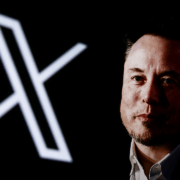
X Corp, owned by billionaire Elon Musk, has sued 18 major music publishers and a leading U.S. music industry trade group, alleging they conspired to block competition and force the platform to buy music licenses at inflated prices.

The lawsuit, filed on Friday in a federal district court in Texas, accuses the National Music Publishers’ Association along with major publishers including Sony Music, Universal Music Group and Warner Chappell of violating U.S. antitrust law. X alleges the publishers collectively refused to negotiate individual licensing agreements, instead pushing industrywide terms that the company says are anti-competitive.

“X has been denied the ability to acquire a U.S. musical-composition license from any individual music publisher on competitive terms,” the complaint said.

David Israelite, president and CEO of the National Music Publishers’ Association, rejected the claims, saying X is the only major social media platform that does not properly license music. “We allege that X has engaged in copyright infringement for years, and its meritless lawsuit is a bad faith effort to distract from publishers’ and songwriters’ legitimate right to enforce against X’s illegal use of their songs,” he said in a statement.

Sony Music referred Reuters to the association’s response and declined further comment. Universal Music and Warner Chappell did not immediately respond to requests for comment. X also did not respond to a request for comment.

According to the lawsuit, publishers representing more than 90% of U.S. copyrighted music coordinated their actions through the trade group. X said the publishers have issued thousands of takedown notices each week, targeting posts that contain copyrighted music — including those from high-profile accounts — in an effort to pressure the platform into accepting collective licensing terms.

X said it has removed thousands of posts and suspended more than 50,000 users as a result, hurting its user engagement and advertising revenue. The company is asking the court to restore what it calls competitive conditions in music licensing and to award damages for lost ad revenue.

The case follows earlier legal battles between X and music publishers. In 2024, X won dismissal of most claims in a lawsuit filed in 2023 by 17 publishers, including Sony and Universal, who accused the platform of infringing copyrights on nearly 1,700 songs and sought more than $250 million in damages. X said in Friday’s filing that some of the publishers involved in past litigation have been willing to negotiate individual settlements.