Exclusive: China mandates 50% domestic equipment rule for chipmakers, sources say

China is requiring chipmakers to use at least 50% domestically produced equipment when adding new manufacturing capacity, according to three people familiar with the matter, as Beijing intensifies efforts to build a self-sufficient semiconductor supply chain.

The requirement is not publicly documented, but companies seeking government approval to build or expand fabrication plants have been told in recent months that they must demonstrate—through procurement tenders—that at least half of their equipment will be sourced from Chinese suppliers, the sources said. Applications that fail to meet the threshold are typically rejected, although authorities may allow flexibility depending on supply constraints. For advanced production lines, where domestic tools are not yet fully available, the rules are applied more leniently.

The mandate represents one of the most significant steps China has taken to reduce reliance on foreign technology, a drive that accelerated after the United States tightened export controls in 2023, restricting sales of advanced AI chips and semiconductor manufacturing equipment to China. While those restrictions blocked access to the most advanced tools, the new rule is pushing Chinese chipmakers to choose local suppliers even in areas where foreign equipment from the United States, Japan, South Korea and Europe remains available.

“Authorities prefer it to be much higher than 50%,” one source said, adding that the long-term goal is for fabs to use entirely domestic equipment. China’s industry ministry did not respond to a request for comment.
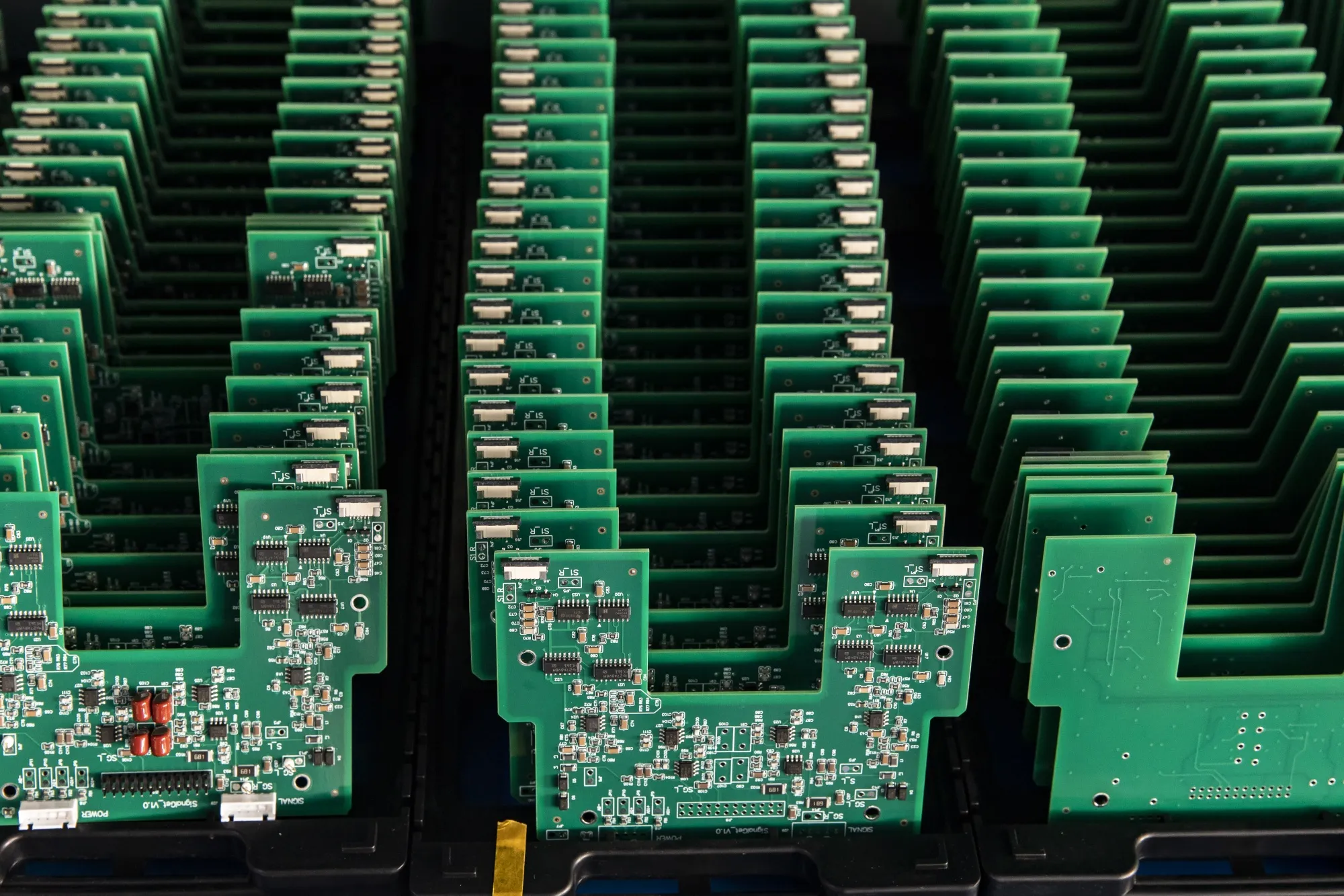
Picture background

The policy aligns with President Xi Jinping’s call for a “whole-nation” approach to semiconductor self-sufficiency, involving thousands of engineers and researchers across companies and institutes. Reuters has previously reported that Chinese scientists are working on prototypes of advanced chipmaking machines—an area Washington has sought to restrict for years.

State-linked buyers have sharply increased orders for domestic tools. Public procurement data show that state-affiliated entities placed a record 421 orders this year for Chinese lithography machines and components, worth about 850 million yuan. Beijing has also poured hundreds of billions of yuan into the sector through the “Big Fund,” which launched its third phase in 2024 with 344 billion yuan ($49 billion) in capital.

The effects are already visible. China’s largest chip equipment maker, Naura Technology, is testing its etching tools on a cutting-edge 7-nanometre production line at SMIC, sources said, after successfully deploying tools on 14-nanometre lines. Etching equipment in China was previously dominated by foreign suppliers such as Lam Research and Tokyo Electron, but is now increasingly being replaced by domestic firms including Naura and AMEC.

Naura has also developed replacement components, such as electrostatic chucks, to keep foreign tools running after overseas suppliers curtailed services following export restrictions. Neither Naura, AMEC, SMIC, Lam Research nor Tokyo Electron responded to requests for comment.

Global competitors are watching closely as foreign suppliers are gradually squeezed out of the Chinese market. Naura filed a record 779 patents in 2025, more than double its filings in 2020 and 2021, while AMEC filed 259, according to data verified by Reuters. Stronger demand has translated into financial gains: Naura’s first-half 2025 revenue rose 30% to 16 billion yuan, while AMEC reported a 44% increase to 5 billion yuan.

Analysts estimate China has now reached roughly 50% self-sufficiency in photoresist-removal and cleaning equipment, a segment once dominated by Japanese firms. Industry sources say the domestic market is likely to be led by just a handful of major players, with Naura firmly among them.
Amazon Scraps Drone Delivery Plans in Italy After Strategic Review

Amazon has decided to halt its plans to launch drone-based delivery services in Italy, citing regulatory and business challenges that undermine the project’s long-term viability. The company confirmed the decision on Sunday following a strategic review of its operations in the country.

Amazon said that although it had made meaningful progress with Italian aerospace regulators, the broader regulatory environment did not support its commercial objectives for drone delivery. “Following a strategic review, we have decided to stop our commercial drone delivery plans in Italy,” the company said in a statement. It added that, despite positive engagement with regulators, the overall business framework remains a limiting factor.

Italy’s civil aviation authority, ENAC, described the move as unexpected. In a statement released on Saturday, ENAC said the decision appeared to be driven by internal company policy and was linked to “recent financial events involving the Group,” without providing further details.

Amazon had previously signaled strong momentum for the initiative. In December 2024, the company announced the successful completion of initial drone delivery tests in San Salvo, a town in the central Abruzzo region. Those trials were seen as a key step toward introducing faster, automated delivery services in Italy as part of Amazon’s broader global drone program.

The halt underscores the challenges facing commercial drone delivery projects, which must navigate not only aviation safety rules but also complex national business and regulatory environments. While Amazon continues to test and operate drone delivery services in select markets, Italy will no longer be part of its near-term expansion plans.

L&F Cuts Value of Tesla Battery Materials Deal as 4680 Plans Falter

South Korean battery materials maker L&F said on Monday that the value of its battery material supply agreement with Tesla has been sharply reduced, falling to just $7,386 from an earlier estimate of $2.9 billion. The company did not disclose the specific reasons behind the dramatic revision.

L&F announced in 2023 that it had signed a deal to supply high-nickel cathode materials to Tesla and its affiliates from January 2024 through December 2025. Industry sources and analysts previously said the agreement was intended to support Tesla’s in-house battery production, particularly its next-generation 4680 cells.

Tesla CEO Elon Musk unveiled the 4680 battery plan in 2020, describing it as a breakthrough technology that would lower costs and enable the production of a fully autonomous electric vehicle priced around $25,000. However, progress has been slower than initially projected. As global demand for electric vehicles weakened and Tesla struggled to scale up production of the 4680 cells, the company required far less cathode material than originally expected, analysts said.

Tesla currently uses the 4680 batteries primarily in its Cybertruck, a model that has underperformed sales expectations despite Musk’s earlier forecasts of hundreds of thousands of units annually. Musk has also acknowledged that scaling up Tesla’s new dry electrode battery manufacturing process remains a significant technical challenge.

Market analysts link L&F’s reduced deal value to broader headwinds across the battery and EV sectors. Cho Hyun-ryul, a senior analyst at Samsung Securities, said issues with production yields for the 4680 batteries, combined with slowing EV demand growth, likely contributed to Tesla cutting back orders. He added that uncertainty is spreading across the battery industry as a whole.

The pressure is not limited to L&F. Several battery suppliers have reported order cancellations and the scaling back of joint ventures with major automakers such as General Motors and Ford Motor following the end of U.S. federal EV subsidies in September. South Korea’s battery sector has been particularly affected as automakers reassess electric vehicle strategies amid policy uncertainty and weakening demand.