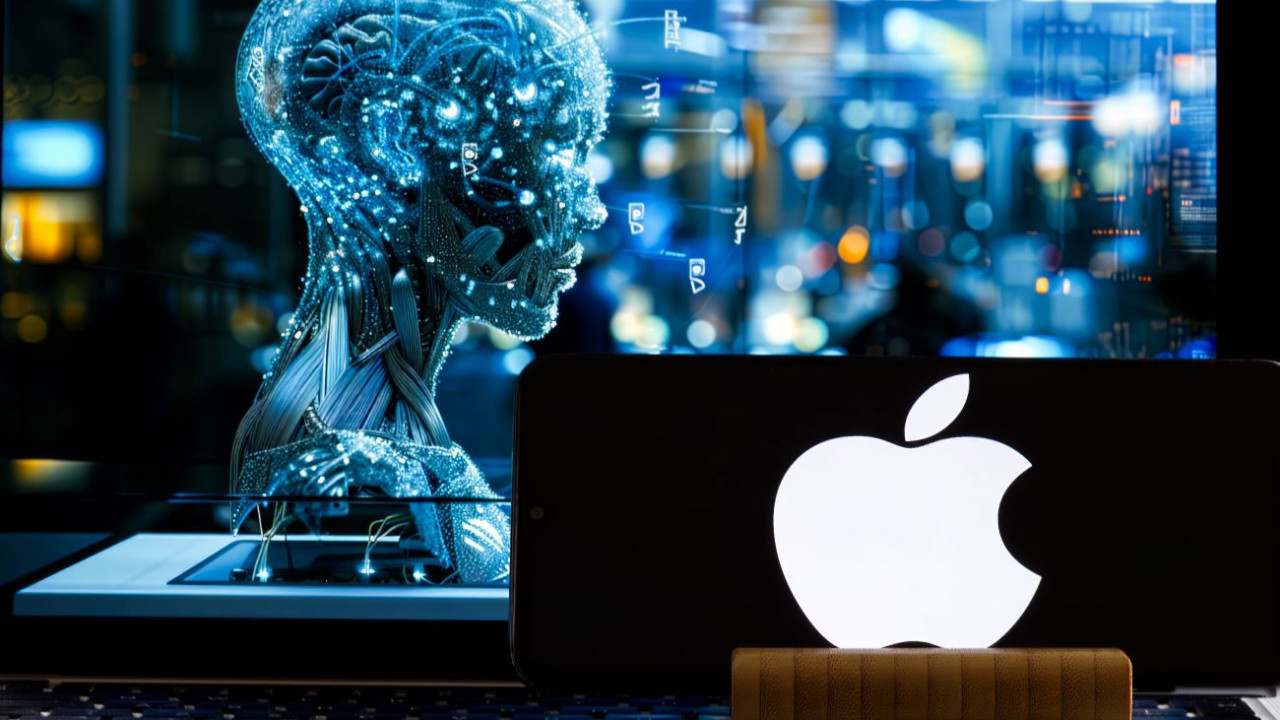
Apple to Integrate Google’s Gemini AI Model to Power New Siri, Bloomberg Reports

Apple plans to use Google’s massive 1.2 trillion-parameter Gemini AI model to power the next generation of its Siri voice assistant, according to a Bloomberg report published Wednesday. The deal, expected to be finalized soon, would see Apple pay roughly $1 billion annually for access to Google’s advanced AI technology.

The partnership marks a major step in Apple’s artificial intelligence ambitions, as it seeks to close the gap with rivals like Microsoft and OpenAI in generative AI. The Gemini model — one of the world’s most powerful — is set to serve as a temporary solution while Apple continues developing its own large-scale AI systems.

Bloomberg reported that the Gemini integration would enable Siri to handle more complex queries, offer improved conversational capabilities, and process natural language more fluidly than before. Apple’s current in-house models are far smaller in scale and capability compared with Google’s.

Neither Apple nor Alphabet has commented on the report. The collaboration underscores the growing trend among major tech firms to partner on AI development, even as they compete fiercely in the space.

Apple’s use of a Google-built AI model mirrors its long-standing partnership with the search giant, whose engine already powers Safari search functions on iPhones — another deal worth billions annually.

China’s WeRide Aims to Raise $308 Million in Hong Kong Listing Amid Autonomous Driving Boom

Chinese self-driving technology company WeRide plans to raise about $308 million through a Hong Kong stock market listing, according to a Bloomberg report on Tuesday. The Guangzhou-based firm is expected to price its shares at HK$27.10 each, valuing the offering at HK$2.39 billion.

WeRide, which went public on Nasdaq in October 2024, is selling 88.3 million shares, with a maximum price of HK$35 per share, according to its prospectus filed on October 27. The offering is led by Morgan Stanley and China International Capital Corp (CICC), which were also involved in the company’s U.S. listing.

The move comes as growing investor enthusiasm for next-generation mobility companies fuels renewed interest in autonomous driving technologies. At the same time, many U.S.-listed Chinese firms are pursuing dual or secondary listings in Hong Kong to diversify funding sources and hedge against geopolitical and regulatory risks linked to U.S.-China tensions.

Founded in 2017, WeRide develops autonomous vehicle systems and operates robotaxi services in China and abroad. The company’s Hong Kong debut follows rival Pony AI, which set the final price for its own Hong Kong listing at HK$139 per share this week.

WeRide declined to comment on its final offer price when contacted by Reuters.

Microsoft Signs $9.7 Billion Cloud Deal with IREN to Boost AI Computing Power

Microsoft has signed a $9.7 billion cloud computing deal with U.S.-based data center operator IREN to expand its artificial intelligence infrastructure and ease ongoing computing bottlenecks. The agreement, which includes access to Nvidia’s powerful GB300 chips, underscores the growing global demand for AI processing capacity.

Shares of IREN surged nearly 25% to a record high following the announcement before settling up around 10%. Dell Technologies, which will supply Nvidia’s advanced chips and related equipment to IREN, also gained about 1%. Under the five-year agreement, Microsoft will use roughly $5.8 billion worth of IREN’s computing hardware and infrastructure capacity.

The deal allows Microsoft to scale its AI operations without immediately building new data centers or acquiring additional power resources — key hurdles that have limited the company’s ability to meet soaring demand for applications like ChatGPT and Copilot. The approach also helps reduce heavy capital spending on rapidly depreciating hardware as newer processors enter the market.

IREN operates data centers across North America with a total capacity of 2,910 megawatts. The Nvidia chips will be deployed in phases through 2026 at the company’s 750-megawatt facility in Childress, Texas, which will include liquid-cooled centers providing 200 megawatts of new IT capacity.

The deal follows Microsoft’s recent $17.4 billion agreement with AI cloud provider Nebius and reflects the company’s strategy to leverage “neocloud” partners such as IREN and CoreWeave to expand capacity. IREN said Microsoft’s prepayment will help fund its $5.8 billion Dell contract, though the deal could be canceled if deadlines are missed.