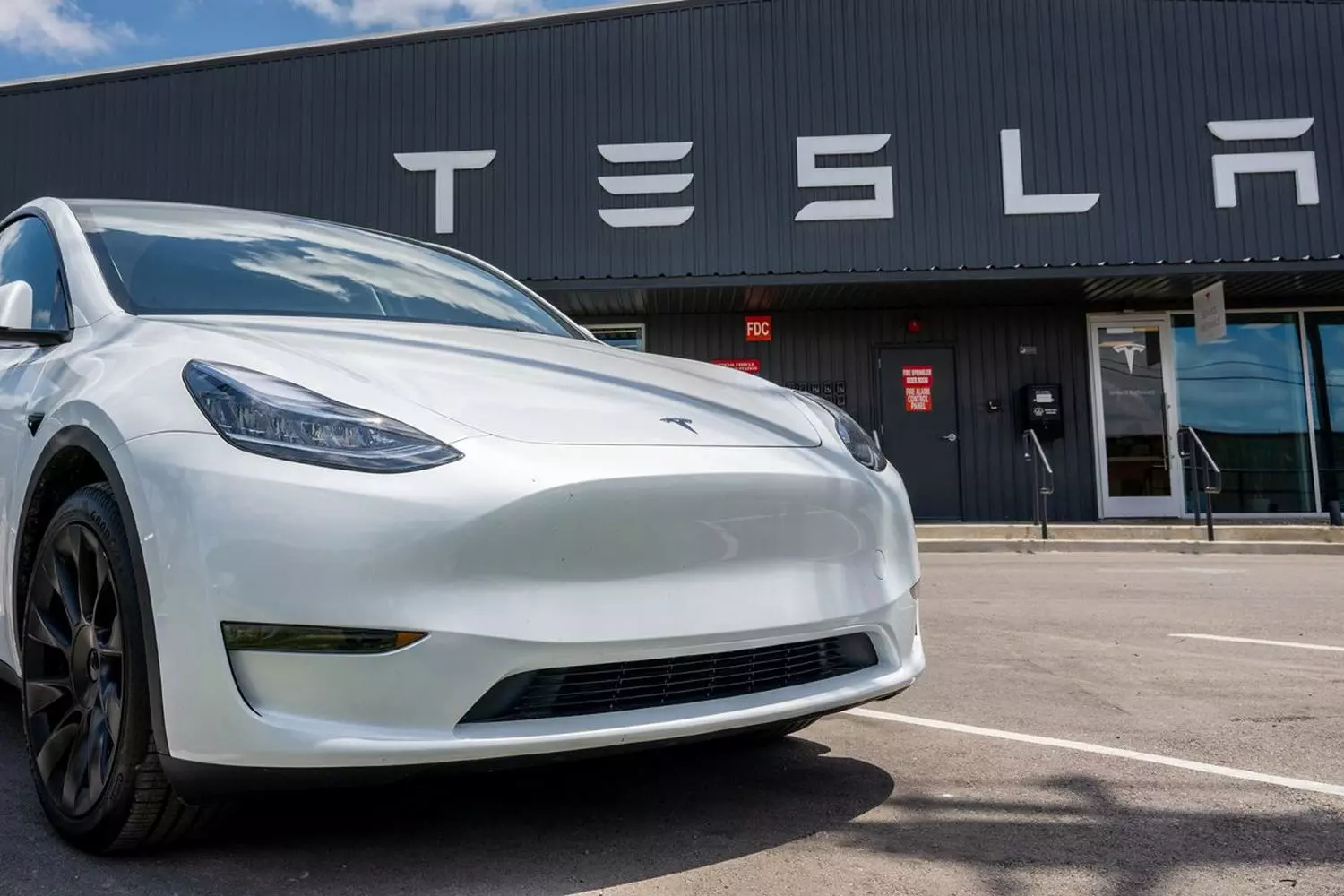
Tesla Profit Misses Expectations Despite Record Sales and Revenue

Tesla posted record third-quarter revenue of $28.1 billion, surpassing analyst estimates of $26.37 billion, but profits fell short due to rising costs, tariffs, and shrinking regulatory credit income. Shares dropped 4% in extended trading as investors reacted to the weaker earnings and fading government incentives that have long supported electric vehicle demand.

Profit per share came in at 50 cents, below the expected 55 cents. The company cited over $400 million in tariff-related costs and a 50% increase in R&D spending, largely tied to AI and robotics projects. Regulatory credit sales fell to $417 million from $739 million a year earlier, signaling continued decline.

Tesla’s gross margin stood at 18%, slightly above estimates, while automotive margins excluding credits reached 15.4%. To sustain demand amid expiring U.S. tax credits, Tesla launched lower-cost “Standard” versions of its Model 3 and Model Y, though analysts warned the move could compress profits further.

Despite the short-term challenges, Tesla remains focused on expansion. CEO Elon Musk said production of the Cybercab robotaxi, Semi truck, and Megapack 3 battery is set for 2026. The company’s energy division grew 81% in storage deployments, and Musk confirmed plans for mass production of the humanoid robot Optimus by late 2026.

Amazon Unveils Smart Glasses and AI Tools to Boost Delivery Speed

Amazon has introduced new wearable technology and robotics aimed at accelerating delivery times and improving worker efficiency. At its “Delivering the Future” event in Seattle, the company showcased advanced eyeglasses for drivers, known internally as Amelia, which provide real-time navigation, package scanning, and photo capture for proof of delivery.

The smart glasses, equipped with a small display and controlled by a paired vest-mounted device, are designed to replace handheld GPS units. Amazon said the eyewear helps drivers stay focused and reduces time lost switching between devices — in some cases saving up to 30 minutes per shift. Hundreds of drivers have already tested the glasses, which will be distributed for free on an optional basis.

Amazon also unveiled Blue Jay, a new robotic arm that assists warehouse staff with picking and sorting tasks, and announced an artificial intelligence system for managing warehouse operations in real time. The company said these technologies will optimize “the last 100 yards” of delivery — the costliest part of logistics.

While Amazon’s automation drive is expected to streamline operations, reports indicate it could reduce U.S. hiring by 160,000 positions over two years. Shares of Amazon fell 1.8% on Wednesday to $217.95, marking a rare decline among major tech firms.

SAP Misses Q3 Revenue Estimates as Cloud Growth Slows, Shares Drop

German enterprise software giant SAP reported third-quarter revenue slightly below analyst expectations, sending its U.S.-listed shares down 3% in after-hours trading. The company posted revenue of €9.08 billion ($10.59 billion), a 7% year-on-year increase but short of the €9.17 billion forecast by analysts, according to LSEG IBES data.

SAP’s cloud business, a key growth driver, rose 22% — its slowest pace since late 2023. CFO Dominik Asam said the company “maintained forward momentum despite an uncertain macroeconomic backdrop.” SAP has been shifting from traditional software licenses to a subscription-based cloud model, seeking more stable long-term revenue streams.

Non-IFRS operating profit grew 14% to €2.57 billion, slightly above estimates, while free cash flow increased 5% to €1.27 billion. Looking ahead, SAP expects 2025 cloud revenue to reach the lower end of its forecast range (€21.6–21.9 billion), but operating profit is anticipated at the upper end (€10.3–10.6 billion). Free cash flow guidance was raised slightly to between €8 billion and €8.2 billion.