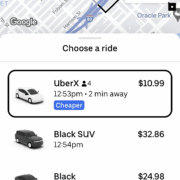
Uber forecasts profit below estimates on cheaper rides and higher taxes

Uber Technologies forecast first-quarter profit below Wall Street expectations, citing higher taxes and a strategic push toward cheaper ride options designed to boost bookings. The outlook sent Uber shares sharply lower in premarket trading, as investors reacted to weaker earnings guidance despite strong demand.

Uber said it expects an adjusted effective tax rate of 22% to 25% this year, reflecting its operations across more than 70 countries. At the same time, the company has expanded lower-cost mobility products such as shared rides, which helped trips rise 22% in the fourth quarter but weighed on near-term margins.

The company projected first-quarter adjusted earnings per share of 65 to 72 cents, below analyst expectations, while gross bookings are forecast to exceed estimates. Uber said it is deliberately moderating margin expansion after proving its ability to generate profits, prioritising affordability to drive growth.

Uber also announced a chief financial officer transition and highlighted accounting changes in the UK that will reduce reported margins without affecting underlying profitability. Management said improving pricing conditions and lower insurance costs should support growth later in the year.
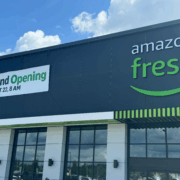

Amazon’s physical grocery push deepens its fight against Walmart

Amazon is stepping up its push into physical grocery retail as it intensifies competition with Walmart, betting on large-format stores to complement its dominant e-commerce business. Analysts expect Amazon’s fourth-quarter physical store revenue, including Whole Foods, Amazon Fresh and Amazon Go, to rise to about $5.9 billion, reflecting a renewed focus on brick-and-mortar retail.

Amazon recently closed its Amazon Fresh and Amazon Go outlets, converting them into Whole Foods Market stores, signaling a strategic shift toward a stronger grocery identity. Its boldest move is the launch of a 225,000-square-foot mega-store near Chicago, designed to rival Walmart and Costco, while also functioning as a hub for same-day delivery.

The effort highlights Amazon’s challenge in matching Walmart’s vast physical footprint, which allows it to cut delivery costs and serve customers faster. While Amazon’s cloud division continues to drive growth, analysts say success in groceries could be key to boosting customer loyalty and long-term value.

US space stocks rise after SpaceX merges with xAI at $1.25 trillion valuation

U.S. space-related stocks climbed after SpaceX announced a merger with xAI, valuing the combined entity at $1.25 trillion. The deal, unveiled by Elon Musk, signals a major push to expand artificial intelligence infrastructure beyond Earth and into orbit, a vision that has energized investors across the emerging space sector.

Shares of listed space companies rallied following the announcement. Rocket Lab, Planet Labs, AST SpaceMobile, Intuitive Machines and Redwire all posted gains, reflecting growing optimism that space-based infrastructure could play a central role in the next phase of AI development. Musk has said that within two to three years, generating AI computing power in space could become more cost-effective than on Earth, thanks to near-constant solar energy and reduced cooling constraints.

The merger brings together rocket launches, satellite networks, AI software and communications platforms under one umbrella, forming what Musk described as a vertically integrated innovation powerhouse. Analysts said the move strengthens SpaceX’s positioning ahead of a potential public offering later this year, which could value the company above $1.5 trillion. The announcement has also fueled expectations of increased investment in space technology, driven by both government defense spending and private-sector demand for AI-related infrastructure.