
Rift at influential Silicon Valley venture firm shows tech’s divide over ICE shooting

A fatal shooting involving U.S. immigration agents has triggered a sharp political divide inside Silicon Valley, spilling into one of the region’s most influential venture capital firms. Partners at Khosla Ventures publicly distanced themselves from a colleague after comments defending the killing of a U.S. citizen during an immigration enforcement operation drew widespread backlash.

The incident involved the death of 37-year-old Alex Pretti, an intensive-care nurse, during a confrontation with federal agents in Minneapolis. The case has intensified national debate as video evidence appeared to contradict the administration’s account, even as officials defended the agents’ actions. The shooting is one of several involving immigration enforcement this month, heightening scrutiny of federal practices.

Tensions escalated after a senior partner at Khosla Ventures argued on social media that the shooting did not involve an innocent victim. Firm founder Vinod Khosla and other partners swiftly rejected the remarks, emphasizing that humanity should transcend politics. Several prominent technology executives echoed that view, praising Pretti and condemning violence.

The episode reflects a broader fracture within the U.S. tech industry, where long-standing progressive values increasingly clash with a growing faction openly supportive of hardline immigration policies. While some executives have aligned themselves with the Trump administration, others face mounting pressure from employees urging companies to speak out against immigration enforcement actions in U.S. cities.

Nvidia invests $2 billion in CoreWeave to boost data center build-out

Nvidia has invested $2 billion in CoreWeave, becoming the AI infrastructure provider’s second-largest shareholder as the two companies deepen their partnership to expand data center capacity across the United States. The announcement pushed CoreWeave’s shares up 9% in premarket trading, highlighting investor confidence in the growing demand for AI-focused cloud infrastructure.

CoreWeave is part of a group of so-called neocloud companies that supply specialized hardware and computing capacity for artificial intelligence workloads. Demand for these services has surged as enterprises accelerate AI adoption. Nvidia’s new investment is expected to help CoreWeave speed up the acquisition of land and power needed to construct large-scale data centers, with the company targeting more than 5 gigawatts of AI data center capacity by 2030.

The investment was made at a purchase price of $87.20 per share, adding roughly 23 million shares and nearly doubling Nvidia’s stake in CoreWeave. Nvidia had previously held a 6.3% stake, making it the company’s third-largest shareholder. Despite scrutiny over Nvidia’s investments in AI firms, CoreWeave said the funds would be used for data center expansion, research and development, and workforce growth, rather than for purchasing Nvidia processors.

Once a cryptocurrency miner, CoreWeave has transformed its business to focus on leasing Nvidia GPUs to technology and AI companies. CoreWeave’s chief executive said the expanded collaboration reflects strong and growing demand for Nvidia’s computing platforms across the AI ecosystem.

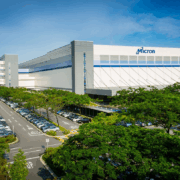
Exclusive: Micron to announce memory chip manufacturing investment in Singapore

U.S. memory chipmaker Micron Technology is set to announce a new investment to expand memory chip manufacturing capacity in Singapore, according to sources familiar with the matter. The move comes as global industries face an acute shortage of memory chips driven by rapid expansion in artificial intelligence infrastructure and growing demand from consumer electronics.

Sources said the announcement could come as soon as Tuesday, with at least part of the investment expected to focus on NAND flash memory. Micron already has a significant manufacturing presence in Singapore, where it produces nearly all of its flash memory chips. The company is also building a $7 billion advanced packaging plant for high-bandwidth memory used in AI chips, which is scheduled to begin production in 2027.

The investment reflects intensifying competition among major memory producers as supply struggles to keep pace with demand. Rivals including Samsung and SK Hynix have announced new production lines and accelerated factory timelines, yet analysts warn the global memory shortfall could persist until late 2027.

Micron has also been exploring ways to boost output elsewhere. The company recently said it was in talks to acquire a fabrication site in Taiwan to expand DRAM wafer production, underscoring the scale of investment required to stabilize the memory market amid the AI boom.