
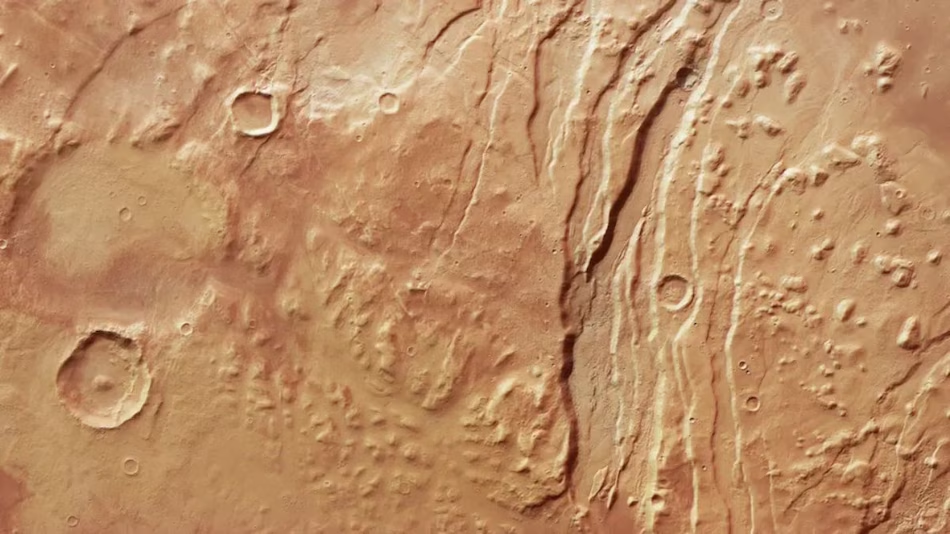
ESA’s Mars Express has captured Acheron Fossae, showcasing rugged ridges and icy valleys shaped by ancient crustal stretching, volcanic activity, and rock glaciers from Mars’ icy past.
The European Space Agency’s Mars Express has been mapping the Red Planet for over two decades, providing invaluable insights into its surface and geological history. In July 2025, the orbiter captured a high-resolution image of the Acheron Fossae region, a rugged terrain marked by deep chasms and valleys. The western edge of this area, revealed in the new photo, displays a fascinating landscape of ridges and sunken valleys, offering clues about how Mars’ surface evolved over time.
Chasms, Valleys, and Rock Glaciers
The Mars Express images show that long faults, or fossae, cut across Acheron Fossae, dividing the terrain into alternating high blocks (horsts) and low troughs (grabens), creating a stretched crust pattern. Valley floors are relatively smooth, shaped by slow-moving ice-rich rock flows, known as rock glaciers. These icy flows gradually carved the terrain into rounded knobs and flat-topped mesas, leaving deep scars that mark the region’s dynamic geological past.
Insights into Mars’ Geological History
These features are believed to have formed roughly 3.7 billion years ago, during Mars’ most geologically active period. Rising molten rock beneath the crust caused stretching and faulting on the surface, while later cooling allowed ice mixed with rock to flow into the valleys like slow glaciers. Over time, these rock glaciers smoothed the valley floors and created the distinctive knobs and mesas seen today.
Evidence of Ancient Ice Ages
The presence of rock glaciers indicates that Mars once experienced cold climatic cycles, akin to ice ages on Earth. By studying these formations, scientists hope to better understand the Red Planet’s icy past, the movement of ice and rock across its surface, and the broader processes that shaped Mars’ unique and rugged terrain over billions of years.