Hydrogen Gas Cloud Could Hold Key to Unraveling the Mystery of Missing Non-Dark Matter in the Universe
For years, scientists have struggled to account for a significant portion of the universe’s matter. While stars, galaxies, and visible structures make up a portion of the cosmos, it’s been observed that about half of the matter remains unaccounted for. Recent discoveries point toward hydrogen gas clouds as the missing piece of the puzzle, potentially unveiling what has been referred to as the “missing” normal matter of the universe. This missing matter, which isn’t dark matter, could account for as much as 15% of the universe’s total mass.
A groundbreaking study led by Simone Ferraro from the University of California, Berkeley, suggests that hydrogen gas clouds surrounding most galaxies are far more extensive than previously understood. This newfound expansiveness could be the key to solving the mystery of the universe’s missing matter. The study, published in the online preprint journal arXiv, presents compelling evidence that these gas clouds may hold the answer to one of the most perplexing questions in modern astrophysics.
To explore this mystery, Ferraro and her team utilized data from the Dark Energy Spectroscopic Instrument (DESI), which gathered images of approximately 7 million galaxies. By studying the faint halos of ionized hydrogen gas at the outer edges of these galaxies—structures that are invisible to traditional observation methods—the team was able to detect signs of this missing matter. The halos, when connected across galaxies, form a cosmic web that could span vast distances, offering a potential explanation for the undetected matter that has eluded scientists for decades.
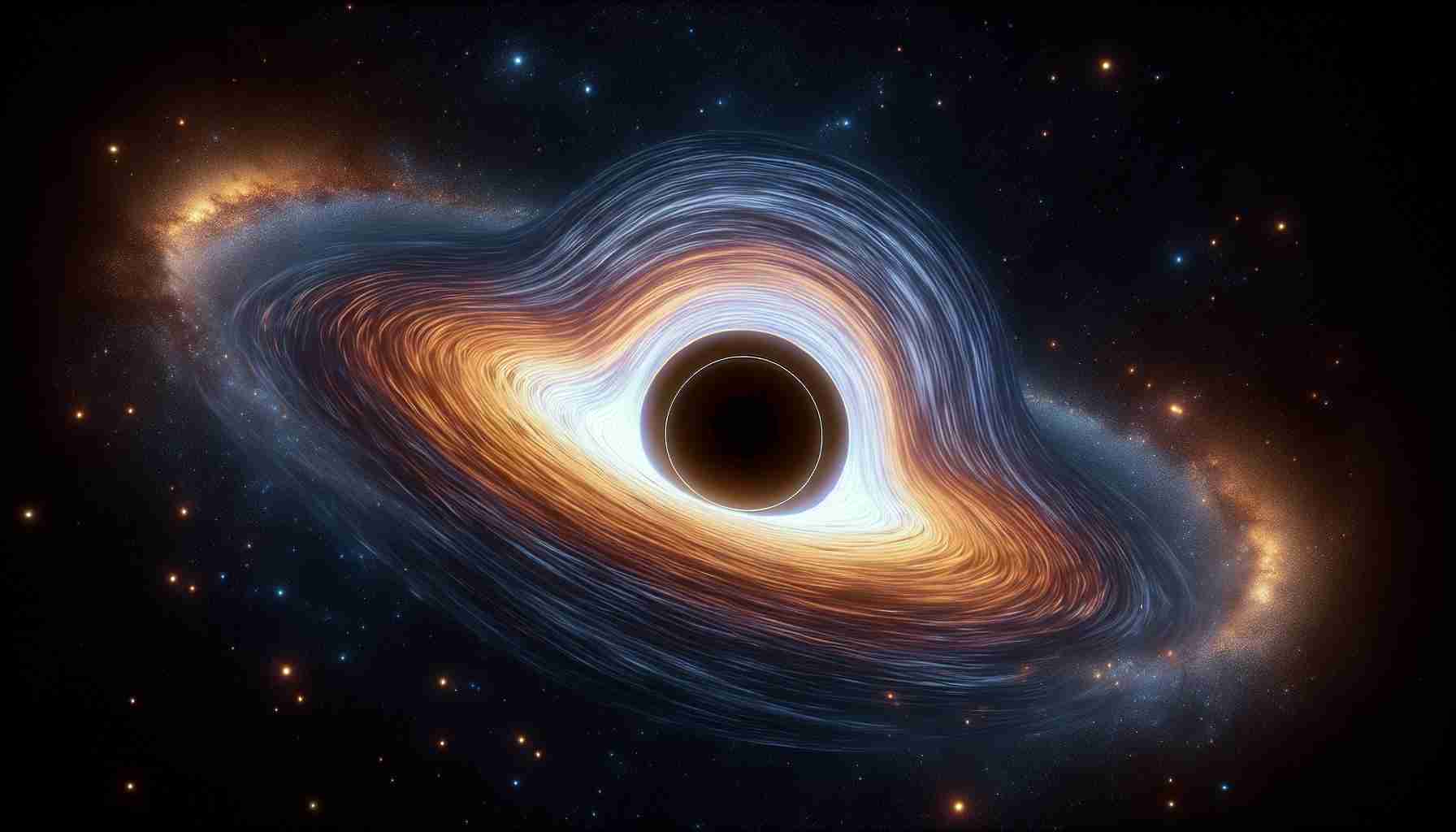
This discovery not only sheds light on the missing matter but also offers new insights into the behavior of black holes. Initially, researchers believed black holes emitted a large amount of gas during their early life cycles. However, the study suggests that these cosmic giants may be far more active than previously thought, with some black holes potentially switching on and off in cycles. The next step for astronomers is to integrate these new findings into existing models of the universe, potentially transforming our understanding of both matter and the dynamic role of black holes in cosmic evolution.