
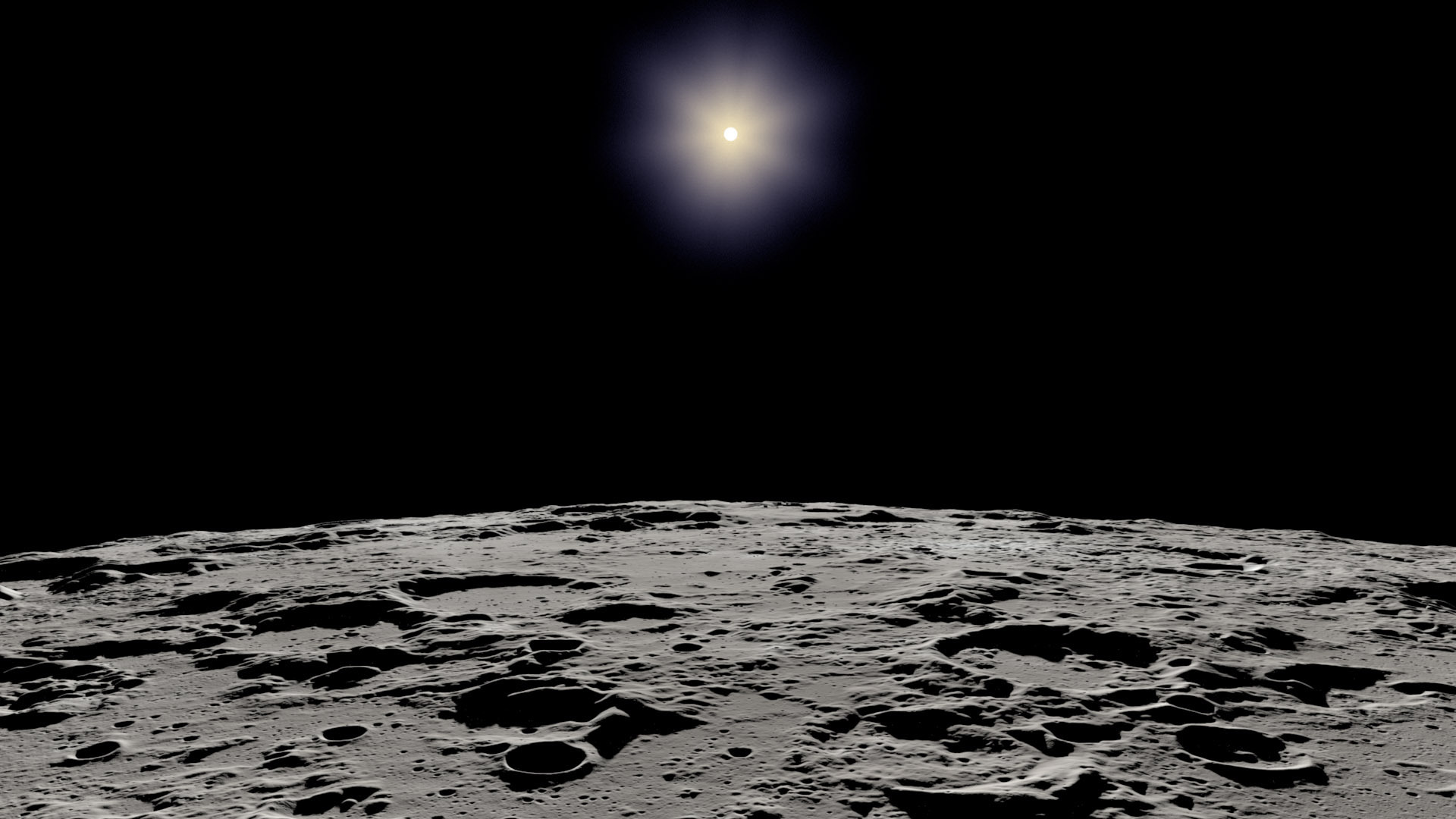
A recent study has revealed an intriguing possibility: solar wind may play a pivotal role in the formation of water on the Moon. The Moon’s surface, covered in a layer of dust and rock known as regolith, has long been thought to contain traces of water—an essential resource for future lunar missions, especially for fueling rockets. Researchers found that this water, found in the form of both water molecules and hydroxyl groups, is embedded within the regolith, which is constantly bombarded by meteoroids and charged particles from the Sun. Surprisingly, the amount of water detected ranged from 200 to 300 parts per million, a significant but modest amount that could have important implications for future lunar exploration.
One of the most striking findings from the study was the low levels of deuterium, an isotope of hydrogen, present in the water and hydroxyl molecules. This suggests that the hydrogen atoms that form the water molecules likely originate from the Sun. The solar wind, a continuous stream of charged particles, delivers these hydrogen particles to the Moon’s surface. When these particles interact with oxygen embedded in the lunar surface rocks, chemical reactions occur, resulting in the formation of water molecules. This discovery not only sheds new light on the Moon’s water composition but also suggests that other airless celestial bodies in the solar system, such as asteroids, may possess water as well.
This groundbreaking research builds on a long-held hypothesis that dates back to the 1960s, when scientists first proposed that the solar wind could be responsible for generating water on the Moon. For decades, this idea remained theoretical, with limited evidence to support it. However, a recent lab simulation conducted by NASA has provided compelling evidence to confirm this hypothesis. The simulation mimicked the process of solar wind interacting with lunar regolith, successfully demonstrating that the charged particles from the Sun can indeed lead to the creation of water on the Moon’s surface. This finding holds significant implications for NASA’s Artemis program, which is preparing to send astronauts to the lunar South Pole, where much of the Moon’s water is believed to be frozen in permanently shadowed craters.
The solar wind, composed mainly of protons (hydrogen nuclei), constantly flows from the Sun, bombarding celestial bodies throughout the solar system. While Earth is shielded from these particles by its magnetic field and atmosphere, the Moon lacks such protection, making it more susceptible to the solar wind’s effects. Computer models and lab tests have shown that when protons collide with the lunar regolith, they interact with electrons and recombine to form hydrogen atoms. This hydrogen then combines with oxygen in the regolith, forming hydroxyl and water molecules. Although hydroxyl and water are chemically similar and difficult to differentiate with current technology, their presence beneath the lunar surface is undeniable. This discovery marks a significant step forward in our understanding of the Moon’s potential as a resource for future space missions.