
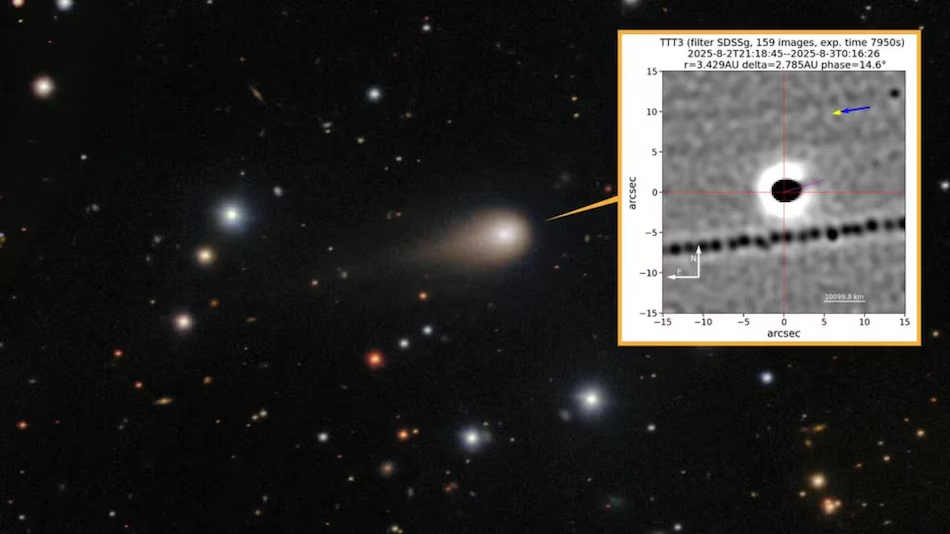
Newly captured images of the interstellar comet 3I/ATLAS reveal a spectacular jet of gas and dust shooting directly toward the Sun, offering scientists a closer look at the object’s natural behavior. First detected in late June and confirmed by NASA in July, 3I/ATLAS originates from a distant star system and is only the third interstellar object ever observed entering our solar system. Measuring between 5 and 11 kilometers wide, it is the largest interstellar visitor discovered so far and may also be the oldest, with an age estimated at billions of years, predating the formation of the Sun.
According to Live Science, the images were captured on August 2 using the two-meter Twin Telescope at the Teide Observatory in Spain’s Canary Islands. The composite image, created from 159 individual exposures, shows a dark nucleus enveloped by a bright white coma, with a massive jet extending toward the Sun in a fan-shaped plume. This striking visual provides direct evidence of how sunlight interacts with interstellar objects, causing material to be expelled from the surface.
Astrophysicist Miquel Serra-Ricart explained that such jets occur when sunlight heats one side of the comet more than others, causing gases and dust to erupt like space geysers. The uneven heating of frozen material on the comet’s surface generates pressure that forces jets to shoot into space, producing the distinctive fan-shaped structure seen in the telescope images. These features are typical for comets, providing clues about their composition and the effects of solar radiation.
The observations of 3I/ATLAS not only offer a rare opportunity to study an interstellar visitor but also help astronomers understand the physical processes shaping comets in extreme environments. By examining the comet’s jets, coma, and nucleus, scientists can gain insights into the composition of material from another star system, the dynamics of interstellar travel, and the history of objects that have existed since the earliest stages of the galaxy. This discovery underscores the value of continuous monitoring of our cosmic neighborhood for transient, once-in-a-lifetime events.