Yazılar

Vance Criticizes Walz and Harris: Allegations of Weirdness and Dishonesty in the Campaign

In a recent interview, Republican vice presidential nominee JD Vance aimed to shift the narrative against Democratic rival Tim Walz, labeling the Minnesota governor as “weird” and accusing him of dishonesty. Vance’s comments come as part of a broader effort to redefine the campaign’s dynamics, especially amid the shifting political landscape following Joe Biden’s exit from the presidential race.

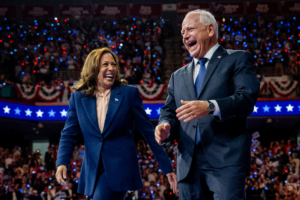
During an interview, Vance scrutinized Walz’s behavior during a rally where Vice President Kamala Harris introduced him as her running mate. Vance highlighted an incident where Walz shook his wife’s hand before hugging her, describing it as an awkward gesture. Vance contrasted this with his own display of affection towards his wife, suggesting that Walz’s actions reflected discomfort and a lack of authenticity, which he attributes to the Democratic ticket’s uneasy stance on their policy positions.
The new law of “weirdness” in the campaign extends to Walz’s military record. Vance criticized Walz for allegedly embellishing his military service, particularly in relation to his claims about serving in combat. Although Walz served in the Army National Guard, his deployment was to Italy, not a combat zone. Vance contends that Walz misrepresented his service for political gain, a claim that Walz’s campaign describes as a misstatement.

Vance also voiced concerns about Kamala Harris’s judgment in selecting Walz as her running mate. He questioned Harris’s credibility and accused her of failing to address the alleged dishonesty surrounding Walz’s military service. Vance’s remarks aimed to undermine Harris’s decision-making and cast doubt on her ability to lead effectively.

As the election approaches, Vance and Trump face a more competitive race due to Biden’s departure and Harris’s rise as the Democratic nominee. Vance acknowledged the altered landscape, noting that the campaign now involves contrasting Trump’s policies with those of the Biden-Harris administration. He argued that Harris, rather than Biden, effectively influences the administration’s policies, given Biden’s perceived cognitive limitations.

On other issues, Vance discussed Trump’s position on abortion, asserting that Trump would not seek to block access to the abortion drug mifepristone but would leave abortion policy decisions to individual states. He expressed empathy for women facing difficult medical situations but maintained that voters should ultimately determine abortion policies.

Vance also supported Trump’s view that presidents should have a say in Federal Reserve policy, challenging the central bank’s historical autonomy. He argued that significant economic decisions, such as interest rates, should involve democratic debate and input from elected leaders.

In addition, Vance criticized Harris for her shifting policy positions, accusing her of presenting different policies to different audiences. He described her campaign as insincere and scripted, claiming that Harris’s inconsistent stances reflect a lack of genuine policy commitments.
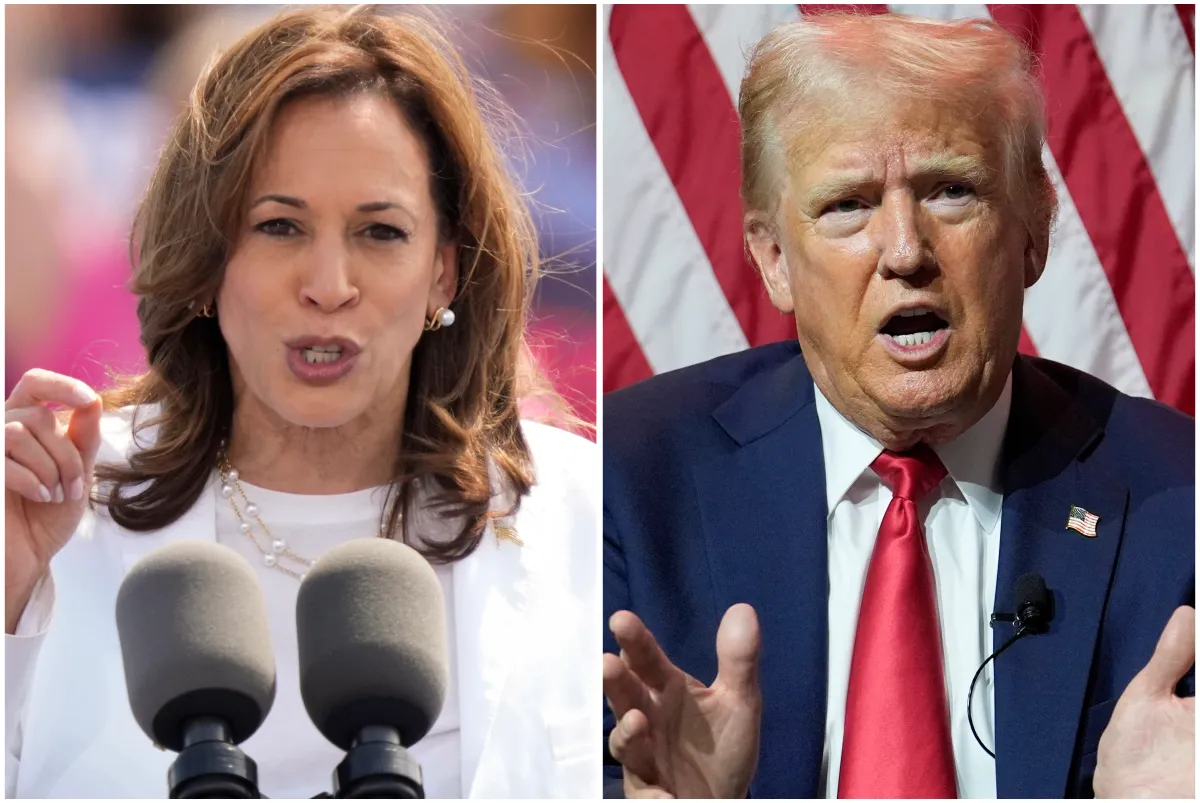
 

Harris Matches Trump’s Proposal to Eliminate Taxes on Tips at Las Vegas Rally

In a move that aligns with former President Donald Trump’s earlier proposal, Vice President Kamala Harris announced her plan to eliminate taxes on tips in the service and hospitality sectors if she wins the presidency. This announcement came during a rally in Las Vegas, a critical battleground state where the hospitality industry plays a significant role in the economy.

Addressing a crowd of over 12,000 supporters, Harris emphasized her commitment to working families, stating, “When I am president, we will continue our fight for working families of America; including to raise the minimum wage, and eliminate taxes on tips for service and hospitality workers.” Her proposal aims to provide financial relief to workers in these sectors, who make up a substantial portion of Nevada’s workforce.

This announcement followed the endorsement of Harris by the Culinary Workers Union, a powerful labor group in Nevada. The timing of this endorsement and Harris’s proposal highlights her strategic focus on appealing to Nevada voters, particularly those employed in the state’s vast hospitality industry.

However, Harris’s proposal has drawn criticism for mirroring Trump’s earlier pledge to remove taxes on tips, which he announced at his own Las Vegas rally in June. Trump quickly took to social media to claim credit, accusing Harris of copying his idea. “Harris has no imagination, whatsoever, as shown by the fact that she played ‘COPYCAT’ with, NO TAXES ON TIPS!” Trump posted on Truth Social.

While both candidates champion the idea of tax-free tips, implementing such a policy would require new legislation and congressional approval. A Harris campaign official acknowledged this, adding that her administration would work with Congress to design a policy with income limits and safeguards to prevent abuse by higher-income individuals.

Critics of the proposal, including the nonpartisan Committee for a Responsible Federal Budget, argue that eliminating taxes on tips could lead to a significant loss in federal revenue, estimated to be between $150 billion and $250 billion over the next decade. Additionally, some economists question the effectiveness of this policy in alleviating the tax burden on low-income workers.

Ernie Tedeschi, economics director at Yale University’s Budget Lab, pointed out that only a small segment of low-income workers are in tipped jobs, and many of these workers are already exempt from paying income tax due to their low earnings. Tedeschi also expressed concerns about the potential for creating disparities among low-income jobs and the possibility of employers encouraging tipping over wage increases.

The debate over this proposal underscores the complexities of tax policy and its impact on workers. As both Harris and Trump vie for support in key states like Nevada, the conversation around tax-free tips is likely to continue to be a focal point in their campaigns.


Why Kamala Harris Chose Tim Walz: The Appeal of “Good Vibes” and Midwestern Charm

Tim Walz, Minnesota’s governor, wasn’t an early favorite for the vice-presidential spot, but his “good vibes” and Midwestern appeal made him an unexpected choice for Kamala Harris. In a political climate where the right “vibe” can be crucial, Walz embodies the approachable, down-to-earth image that Harris sought.

Walz’s background as a teacher, football coach, and Army National Guard enlisted soldier highlights his “meat-and-potatoes” Middle American roots. His affable demeanor and ability to critique Donald Trump effectively without appearing overly aggressive have helped him gain national recognition. His description of Trump and JD Vance as “weird” quickly became a Democratic talking point, showcasing his knack for effective, relatable rhetoric.

Unlike other vice-presidential contenders, such as the polished Josh Shapiro or the disciplined Mark Kelly, Walz offers a safer choice, avoiding potential pitfalls with the Democratic base. Though Minnesota is not a key battleground state, Walz’s Midwestern charm could resonate in swing states like Wisconsin and Michigan. His ability to appeal to rural and Republican voters, as demonstrated by his 2006 victory in a Republican-held House seat, and his skill at explaining progressive policies to moderates and independents further bolster his selection.

Nancy Pelosi, who played a key role in persuading Joe Biden to make way for Harris, has praised Walz for his crucial role in delivering the House majority to the Democrats in 2006. However, the Trump campaign has already targeted Walz with accusations of being a “dangerously liberal extremist” and a “far-left lunatic.” JD Vance has criticized Harris for allegedly catering to radical elements within her party, while Trump has warned of disastrous consequences under Walz’s vice-presidency.

Despite these attacks, Walz’s friendly, unpretentious image may make it challenging for Republicans to effectively cast him in a negative light.