Yazılar

ABB CEO says data center demand for AI power will keep growing for years

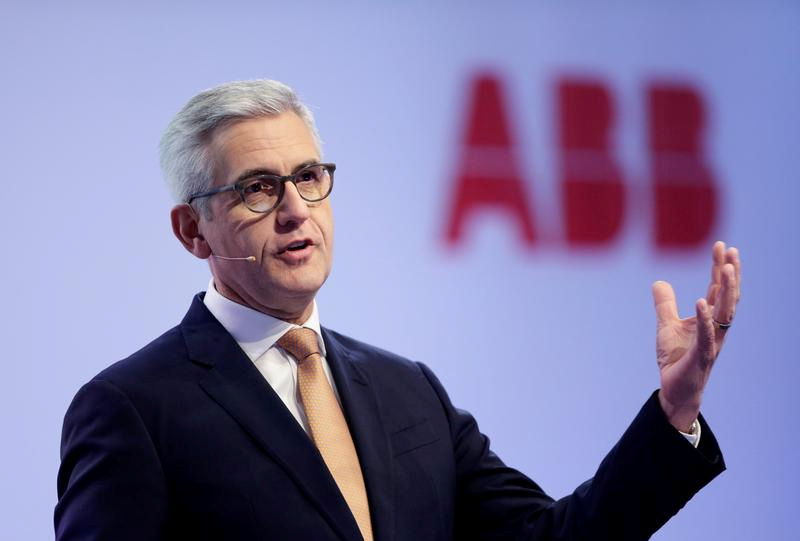
Swiss engineering giant ABB remains highly optimistic about the long-term growth of data centers driven by the global artificial intelligence boom, CEO Morten Wierod told Reuters on Thursday.

Wierod said ABB has seen double-digit growth this year in orders for its electrification products, which include switchgear and uninterruptible power systems that ensure servers stay online. “Over the next five years I am very confident about demand from data centers,” he said.

Rejecting suggestions of an AI bubble, Wierod argued that the challenge lies in construction capacity, not in demand. “We are talking about trillions in investment, but there are not enough people and resources to build all this,” he noted.

AI remains in its early stages, he added, meaning continued expansion of data infrastructure as more companies — beyond the tech giants — invest in new facilities. Data centers accounted for about 7% of ABB’s revenue in 2025, up from 6% the previous year.

Earlier this week, ABB announced a partnership with Nvidia to develop new electrification systems for next-generation chips used in high-performance computing centers. “That’s not for 2025 or 2026, it’s a long-term investment,” Wierod said.

He also highlighted growing opportunities in retrofitting and upgrading older data centers to handle the increased power demands of modern AI systems. “That is a big opportunity,” he said.
SoftBank to buy ABB’s robot unit for $5.4 billion in AI-robotics merger push

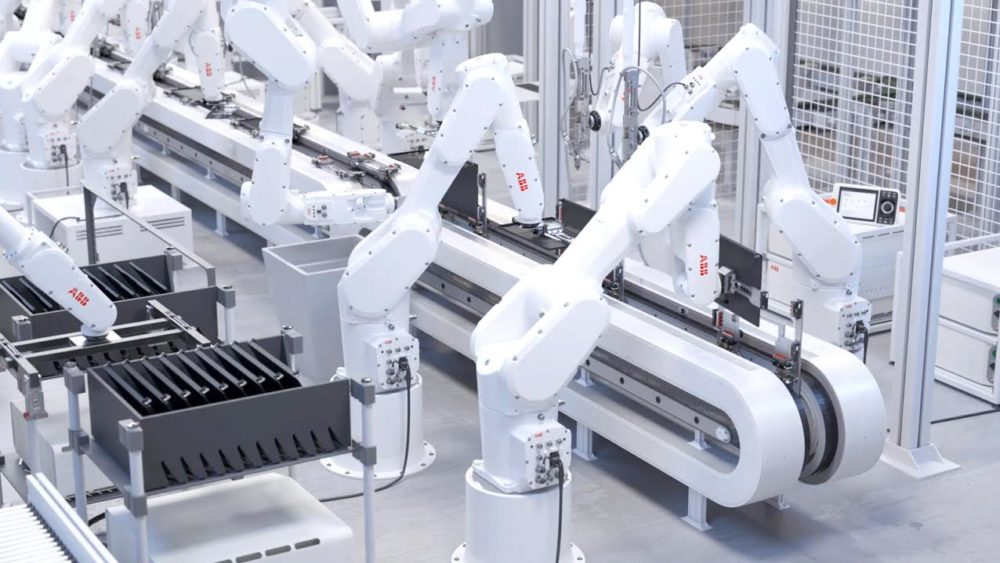
SoftBank Group has agreed to purchase the robotics division of ABB for $5.4 billion, marking a major step in CEO Masayoshi Son’s plan to unite artificial intelligence and robotics into what he calls “Physical AI.” The acquisition, announced Wednesday, gives the Japanese conglomerate control of one of the world’s leading industrial robotics makers as it deepens its bet on AI-driven automation.

The deal signals ABB’s decision to cancel its planned spin-off of the robotics unit, opting instead for a direct sale that delivers immediate liquidity. ABB CEO Morten Wierod said the sale provides stronger financial flexibility to invest in electrification, automation, and potential new acquisitions.

ABB’s robotics arm employs about 7,000 people and generated $2.3 billion in 2024 sales, roughly 7% of ABB’s total revenue. Despite its technological strength, the division struggled with volatile margins and limited overlap with ABB’s core business.

For SoftBank, the acquisition builds on a decade-long robotics journey that began with its humanoid Pepper robot and now extends into advanced factory automation. The company has recently invested in Berkshire Grey, AutoStore, and OpenAI, and earlier this year bought chip designer Ampere for $6.5 billion.

The transaction is expected to close by late 2026, subject to regulatory approvals. ABB shares rose 2% in Zurich after the announcement, while SoftBank’s stock slipped 2% in Tokyo trading.

ABB Launches New Robot Families for China’s Mid-Sized Market to Boost Automation

Swiss engineering giant ABB (ABBN.S) announced on Wednesday the launch of three new families of factory robots specifically designed for the Chinese market, aiming to capitalize on growing automation demand among mid-sized companies. These new robots will serve sectors such as electronics, food and beverage, and metals, performing tasks like polishing and product placement on production lines.

ABB highlighted that China’s mid-market segment, where robots handle simpler tasks like pick-and-place operations, packaging, and basic inspections, is expected to grow by 8% annually in value over the next three years—significantly faster than the global robotics industry in recent years. This surge is driven by labor shortages and the increasing ease of operating robotics technology, aided by advances in artificial intelligence.

The new ABB robot families—Lite+, PoWa, and IRB1200—offer different arm load capacities and speeds tailored to customer needs. One model can be set up and operational within 60 minutes of unpacking and can be programmed using voice commands or by demonstration. Pricing for these robots, along with controllers and equipment, ranges from approximately $20,000 to over $100,000.

China remains the largest robotics market globally, accounting for 51% of new robot installations worldwide in 2023, according to the International Federation of Robotics. It is also ABB’s biggest market for robotics, making up about 30% of the company’s robotics business.

Sami Atiya, president of ABB’s robotics and discrete automation division, downplayed concerns about potential impacts from U.S. tariffs on China, citing the strong domestic market and persistent labor shortages as key demand drivers. The robots will be manufactured at ABB’s new Shanghai factory.

Earlier this year, ABB announced plans to spin off its robotics division, which competes with Japan’s FANUC, Yaskawa, and Germany’s Kuka. Atiya said the spin-off remains on track for completion by Q2 2026 but did not disclose potential valuations or buyer interest, noting that while ABB is open to discussions, their primary goal is to proceed with the spin-off.