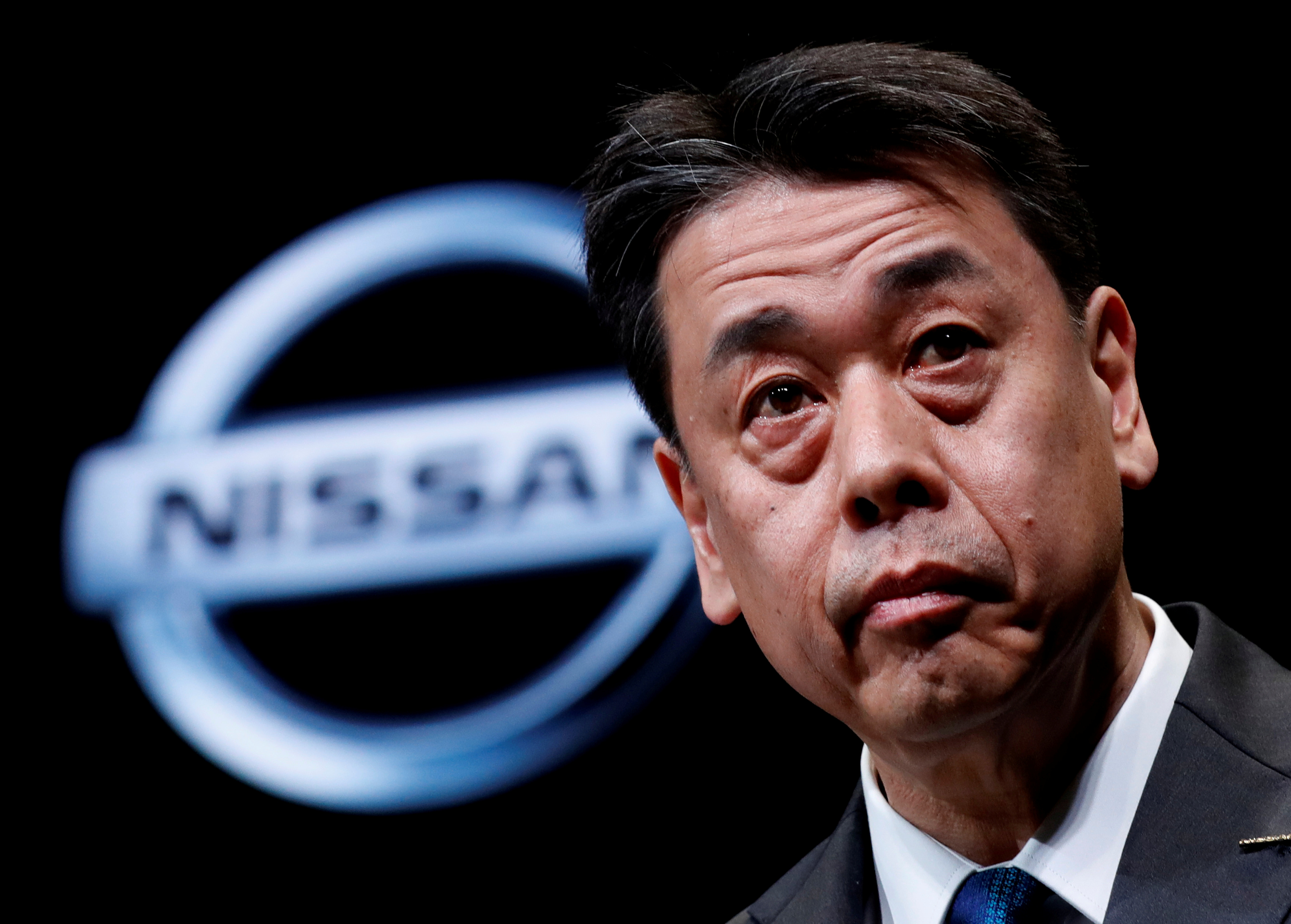
Nissan CEO Makoto Uchida is under intense scrutiny as the automaker grapples with declining sales, job cuts, and strategic missteps in its critical markets, including the United States and China. The company, once a leader in electric vehicles (EVs), is now struggling to recover its footing amidst industry-wide disruptions and internal management challenges.
A Crisis in Leadership
In an October meeting with hundreds of Nissan managers, Uchida delivered stark news about the company’s worsening financial position. Weak sales in North America and China were cited as primary factors, alongside the absence of gasoline-electric hybrids in the U.S. market. Nissan’s decision to go “all-in” on EVs in the U.S. left it vulnerable as demand for hybrids surged due to high EV costs and limited charging infrastructure.
Despite being aware of this demand, Nissan delayed adapting its strategy, leading to missed opportunities. The company has sold its e-Power hybrids in Japan since 2016 but will not introduce a plug-in hybrid in the U.S. until March 2026.
“We weren’t able to foresee the rapid rise in demand for hybrids,” Uchida admitted at a November earnings conference, acknowledging management misjudgments.
Restructuring and Cost-Cutting Measures
To address these challenges, Uchida has pledged to cut 9,000 jobs, reduce global production capacity by 20%, and save $2.6 billion in costs. The company has already seen 1,000 U.S. employees accept early retirement and is considering further cuts in Thailand and China, where underutilized factories may be closed.
Nissan’s joint-venture plant in Mexico, COMPAS, is a likely target for downsizing. The facility, shared with Mercedes-Benz, has been operating far below its 230,000-vehicle annual capacity, producing only about 50,000 vehicles.
The Sunderland plant in the UK, however, is expected to remain operational due to recent upgrades. Weakness in the yen has also made Japan a relatively cost-effective manufacturing base, reducing the likelihood of significant cuts there.
Market Challenges and Missed Opportunities
Nissan has struggled to maintain its position in key markets. The company’s market share in China, once a stronghold, has eroded as it failed to keep up with shifting consumer preferences for futuristic-looking hybrids. Similarly, in the U.S., its EV strategy faltered when post-pandemic consumer spending slowed, and hybrids gained popularity.
The Ariya, Nissan’s much-anticipated EV, faced production delays and missed out on a $7,500 U.S. tax credit due to being manufactured in Japan rather than North America.
Nissan’s global sales fell to 3.3 million vehicles in 2022, a 40% decline from 2017 levels. The company’s stock has also plummeted 70% in the last decade, erasing $30 billion in value.
Internal Turmoil and Activist Pressure
Since the 2018 arrest of former chairman Carlos Ghosn, Nissan has been plagued by leadership instability. Uchida is now facing scrutiny from activist investors such as Singapore-based Effissimo Capital Management and Hong Kong’s Oasis Management, who have built stakes in the company.
The CEO has also been criticized internally for his handling of the company’s recovery and strategic direction. Analysts have questioned Nissan’s decision-making for over a year, particularly regarding the lack of hybrids in the U.S. market.
Future Prospects
Nissan is making efforts to pivot. The company plans to launch 34 hybrid and EV models globally by 2030, including a plug-in hybrid for the U.S. by 2026. Additionally, it is exploring partnerships, such as a potential long-term collaboration with Honda on batteries and research.
Despite the challenges, Uchida remains resolute. “I am determined and committed to fulfill my duty as CEO,” he stated during a recent press conference. However, with declining sales, intensifying competition from Tesla and BYD, and increasing scrutiny from stakeholders, the road ahead for both Uchida and Nissan remains uncertain.