
Yazılar

Adobe Unveils Next-Gen Agentic AI Features for Acrobat, Photoshop, and Premiere Pro

Adobe Explores the Future of Creativity with AI-Powered Agents

Adobe is stepping into the next frontier of creative technology by previewing a new generation of AI agents designed to simplify manual tasks and enhance creative workflows. In a recent announcement, the company offered a glimpse into AI-driven features currently in development across key platforms such as Photoshop, Premiere Pro, Acrobat, Adobe Express, and Creative Cloud. These tools are being developed with a clear objective: to free up users from repetitive tasks and enable them to focus on high-value, creative thinking. While these capabilities remain under development and are not yet available to the public, the preview highlights Adobe’s broader vision for integrating “agentic” AI into its software ecosystem.

The concept of AI agents, as Adobe describes it, refers to intelligent systems that can independently carry out tasks by analyzing problems, generating solutions, and interacting with external tools. This goes beyond traditional automation. Adobe’s implementation of these agents focuses on adaptability and specialization. Each AI agent can be given a particular role — whether it’s acting as a research assistant in Acrobat or a creative collaborator in Express. For instance, in Acrobat, users will soon be able to upload multiple documents, prompt the AI with questions, and receive context-aware insights, summaries, and suggestions for further exploration.

One of the most compelling applications is coming to Adobe Express, where the AI agent is being positioned as a “creative partner.” Instead of merely executing commands, the AI will assist users throughout the entire design process. Whether it’s generating a layout, tweaking visuals based on feedback, or handing control back to the user, the agent is intended to collaborate with creators in a fluid, natural way. For businesses, this opens up scalable opportunities: enterprises can feed brand guidelines into the system to generate consistent on-brand materials, while smaller teams or startups can rely on the AI to accelerate design workflows without needing large in-house creative teams.

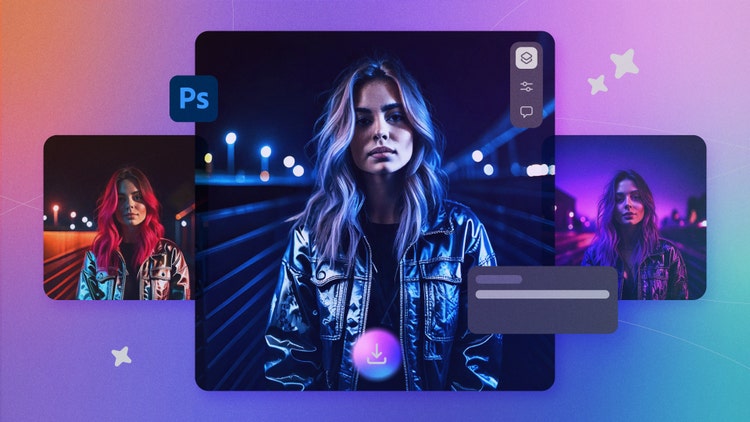
Photoshop will be among the first Adobe products to get a more tangible AI upgrade. Later this month, the company plans to introduce its first “creative agent” for the platform, paired with a redesigned Actions panel. This AI assistant will be able to suggest edits tailored to the context of an image, offer real-time recommendations, and allow users to apply or reject them instantly. With support for over 1,000 natural language commands, the tool promises to drastically streamline photo editing. Through these initiatives, Adobe is signaling a shift from passive AI features to more proactive, autonomous agents that work alongside users as intelligent co-creators.
Adobe’s AI Monetization Struggles Lead to Dull Forecast, Shares Drop

Adobe (ADBE.O) has projected its second-quarter revenue to fall within Wall Street’s expectations, but it is facing challenges in the monetization of its artificial intelligence (AI) products, leading to concerns over its ability to capitalize on the growing demand for AI in creative tools. As a result, shares of the company dropped more than 4% in extended trading.

The company expects second-quarter revenue between $5.77 billion and $5.82 billion, in line with analysts’ estimates, according to data compiled by LSEG. Adobe reaffirmed its annual revenue forecast, and CEO Shantanu Narayen expressed confidence in the company’s ability to capitalize on the acceleration of the creative economy powered by AI.

Despite this optimism, analysts and investors are questioning the pace of monetization for Adobe’s generative AI products. As the company pours resources into differentiating itself from competitors, it aims to enhance its vast portfolio with more AI-driven editing tools. However, there is growing skepticism about whether Adobe can quickly turn its AI offerings into substantial revenue streams.

“I think guidance is rough, and I think people are questioning, is the AI monetization quick enough?” said Parker Snook, a senior research analyst at M Science.

In an effort to stay ahead of rivals, Adobe has been aggressively integrating AI into its software products, notably Photoshop, which is widely used by professionals in a variety of industries. However, its AI and add-on offerings generated $125 million in annual recurring revenue (ARR) at the end of the quarter, and the company expects to double that figure by the end of fiscal 2025, according to CFO Dan Durn.

Despite concerns over AI monetization, DA Davidson analyst Gil Luria is optimistic that new products will eventually ease investor worries: “As Adobe continues to deliver new products, we expect those concerns to be replaced by excitement over those products.”

For the first quarter, Adobe reported revenue of $5.71 billion, surpassing analysts’ estimates of $5.66 billion. The company also saw digital media revenue of $4.23 billion, which exceeded analyst expectations of $4.19 billion. On an adjusted basis, Adobe earned $5.08 per share, above the forecast of $4.97 per share.

Adobe Unveils AI-Driven Generate Video in Public Beta, Introduces Redesigned Firefly Web App

Adobe has officially released its long-awaited Generate Video tool in public beta, now accessible to all users. This AI-powered video generation tool is built on Adobe’s Firefly Video Model, which was first previewed in September 2024. Generate Video represents Adobe’s first fully AI-driven solution for creating end-to-end video content. The tool allows users to generate high-quality 1080p videos at 24 frames per second, starting with just text prompts or images as input. Adobe’s goal with this tool is to simplify video creation while offering robust creative control, making it a valuable resource for both professionals and enthusiasts alike.

The Generate Video tool offers users a remarkable level of control over the creative process. In addition to basic input like text or images, users can specify detailed cinematographic elements such as camera angles, motion, shooting distances, and even art styles. This granular level of control empowers users to produce highly customized video content with ease. Currently, the tool can generate short, five-second video clips, but Adobe plans to expand its capabilities, including introducing a lower-resolution ideation model and a higher-resolution 4K model for professional-grade production work in the near future. Major companies, such as PepsiCo, Stagwell, and Dentsu, are already exploring real-world applications of the Generate Video tool, indicating its practical potential in commercial use.

In addition to the video tool, Adobe has also redesigned its Firefly web app, which acts as a central hub for the company’s generative AI tools. The revamped interface is designed to make navigating between different Firefly-powered models easier and more intuitive. This update ensures that users can efficiently access a variety of tools, from video generation to image creation, all powered by Adobe’s AI. The integration of Firefly with Creative Cloud apps such as Photoshop, Premiere Pro, and others streamlines the workflow for creatives, allowing seamless transitions between AI-powered generation and traditional creative software.

One key feature of the Firefly platform that Adobe emphasizes is its “IP-friendly” approach to AI models. Adobe has ensured that the Firefly models have been trained using datasets from the public domain and licensed content, making them safe for commercial use. This focus on intellectual property protection offers users confidence when utilizing these tools for professional projects, addressing concerns that have plagued generative AI in the past. With these updates, Adobe aims to push the boundaries of creative possibilities, making advanced video and image generation more accessible while ensuring commercial safety and compliance.