
Yazılar

OpenAI to permit mature content on ChatGPT for verified adults from December

OpenAI will begin allowing mature content on ChatGPT starting in December for users who verify their age, CEO Sam Altman announced on Tuesday. The decision marks a major policy shift under OpenAI’s new “treat adult users like adults” principle, following earlier restrictions that limited the chatbot’s ability to handle sensitive topics.

Altman said on X (formerly Twitter) that the company made ChatGPT “pretty restrictive” to avoid harm to users experiencing mental distress, which he acknowledged had made the chatbot “less useful or enjoyable” for others. “As we roll out age-gating more fully … we will allow even more, like erotica for verified adults,” he said.

The move comes as OpenAI develops new safety tools and moderation systems aimed at identifying mental health risks and ensuring appropriate usage. Altman added that the company now feels confident it can safely relax restrictions for most adult users while maintaining strong protections for minors.

In parallel, OpenAI plans to roll out a customization feature that lets users adjust ChatGPT’s tone and personality, including more expressive or conversational styles. “If you want ChatGPT to act more human-like or friendly, it should — but only if you want it,” Altman said.

The announcement came the same day Meta introduced new PG-13-style content filters on Instagram, underscoring the growing trend among tech firms to tailor content standards by user age and consent verification.
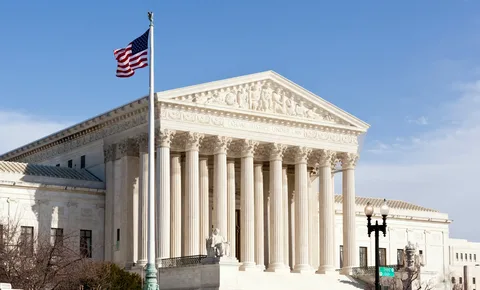

U.S. Supreme Court Lets Mississippi Social Media Age-Check Law Stand for Now

The U.S. Supreme Court on Thursday declined to temporarily block a Mississippi law requiring social media users to verify their age and obtain parental consent for minors, in a challenge filed by NetChoice, a trade group representing companies including Meta (META.O), Alphabet’s YouTube (GOOGL.O), and Snapchat (SNAP.N). The law remains in effect while NetChoice’s broader legal challenge, which argues it violates the First Amendment, continues in lower courts.

Justice Brett Kavanaugh noted in a statement that the Mississippi law is likely unconstitutional but said NetChoice had not met the high standard needed to halt enforcement at this stage. Paul Taske, co-director of the NetChoice Litigation Center, described the Supreme Court’s decision as “an unfortunate procedural delay” but expressed confidence that the challenge would ultimately succeed.

Mississippi’s attorney general welcomed the order, saying it allows “thoughtful consideration” of the law. The legislation, passed unanimously by the state legislature, requires platforms to obtain “express consent” from a parent or guardian before a minor can open an account and mandates “commercially reasonable” age verification. Violations can carry civil penalties of up to $10,000 per incident and potential criminal penalties under state deceptive trade practices laws.

The case comes after U.S. District Judge Halil Suleyman Ozerden initially blocked enforcement for some NetChoice members, but the 5th U.S. Circuit Court of Appeals allowed the law to take effect. Similar measures have been blocked in courts in seven other states. Technology companies maintain that their platforms already include extensive content moderation and parental controls to protect minors.

Mississippi defended the law as a “common” method to safeguard children online, emphasizing parental consent and age verification as key protective measures.

Australia’s Teen Social Media Ban Faces a New Wildcard: Teenagers

Australia is preparing to implement the world’s first national social media ban for users under 16, but new challenges have emerged from the very group the law aims to protect: teenagers themselves.

Thirteen-year-old Jasmine Elkin from Perth recently tested five different photo-based age verification software products, alongside about 30 other students. While impressed by some systems’ ability to estimate age to the exact month, Elkin doubts the ban’s effectiveness, noting that young users could easily bypass it by asking older siblings to take verification photos.

This concern reflects a broader worry shared by child protection advocates, tech companies, and trial organizers: the technology works, but young people are highly skilled at finding workarounds.

Starting in December, major social media platforms such as Facebook, Instagram, Snapchat, and TikTok will face fines up to A$49.5 million ($32.17 million) if they fail to take “reasonable steps” to prevent users under 16 from accessing their services. Currently, these platforms require users to be at least 13 to create accounts.

How well Australia’s ban succeeds may influence other countries. Britain, France, and Singapore are pursuing similar restrictions, and several U.S. states, including Florida, are challenging free speech laws to impose age limits. Elon Musk, owner of X (formerly Twitter), has criticized the Australian law and regulatory authority, calling it a “censorship commissar.”

Trial organizers say nearly 60 products were considered, with about a dozen tested by teenagers in May. The teenagers demonstrated fast tech skills, leading organizers to increase the number of products tested and shorten testing times. The software mainly used selfies to estimate age, as other methods—such as credit card checks—were impractical for teens, and hand-gesture recognition gave imprecise age estimates near the 16-year cutoff.

The trial’s detailed results will be presented on June 20, with a full report to the government expected by the end of July. This will inform the eSafety Commissioner’s recommendations. The government has cited risks from cyberbullying, harmful body image content, and misogyny as reasons for the law.

Despite the technology’s promise, uncertainties remain about how effective it needs to be and whether it can keep pace with teenagers’ ingenuity. Some trial participants said they would find ways around blocks, while others accepted it as a step toward safer online environments.

Communications Minister Anika Wells’s spokesperson emphasized that age restrictions are “not the end-all be-all” but a positive move to protect young people online.