Yazılar

Datadog Raises 2025 Revenue Outlook as AI-Fueled Cloud Security Demand Surges

Datadog has raised its full-year 2025 revenue forecast and posted better-than-expected first-quarter sales, propelled by strong demand for AI-driven cloud security and monitoring tools and a growing base of large enterprise clients.

The cloud infrastructure and observability provider now expects 2025 revenue between $3.22 billion and $3.24 billion, up from its earlier range of $3.18 billion to $3.20 billion, and above Wall Street’s $3.20 billion consensus, according to LSEG.

Datadog’s first-quarter revenue rose 25% year-over-year to $761.6 million, beating analyst expectations of $741.5 million. Adjusted earnings came in at 46 cents per share, also topping forecasts of 43 cents.

CEO Olivier Pomel highlighted rapid innovation across the Datadog platform, stating the company is helping customers “observe, secure, and act” in cloud environments increasingly shaped by artificial intelligence.

Datadog also announced the acquisition of Eppo, a feature flagging and experimentation platform, to enhance its AI and analytics capabilities and support faster, lower-risk product development.

Newer services like App Builder and On-Call are showing strong uptake, and security monitoring is gaining substantial traction among clients. Datadog ended the quarter with approximately 3,770 customers generating over $100,000 in annual recurring revenue, a 13% year-over-year increase.

Blackstone Remains Committed to Data Center Investments Despite DeepSeek Concerns

Blackstone reaffirmed its commitment to data center investments on Thursday, dismissing concerns that the rise of DeepSeek’s low-cost AI models would weaken demand for physical infrastructure. The alternative asset manager, which holds $80 billion in leased data centers, emphasized its “prudent approach” and strong partnerships with major global companies.

Data centers remain critical for AI development, providing the infrastructure needed to store, process, and analyze massive datasets. While investors previously saw data centers as key beneficiaries of AI growth, DeepSeek’s unexpected emergence has sparked debate over whether lower-cost AI models could reduce demand for such facilities.

Blackstone’s President and Chief Operating Officer Jonathan Gray addressed these concerns in a post-earnings call, stating that while the company is monitoring DeepSeek’s impact, lower AI costs could actually drive broader adoption, ultimately increasing data center demand. “As usage goes up significantly, there’s still a vital need for data centers. We still think it’s a very important segment,” Gray said.

Analysts at Jefferies echoed this sentiment, arguing that hyperscale cloud providers are unlikely to cut capital expenditures given the intensifying competition in AI. Tech giants such as Microsoft and Meta have also defended their aggressive AI spending, insisting that substantial investment is necessary to remain competitive.

Despite Blackstone’s confidence, its shares fell nearly 4% in afternoon trading, reflecting investor caution amid the evolving AI landscape.


Microsoft Unveils Copilot Chat to Accelerate AI Adoption for Businesses

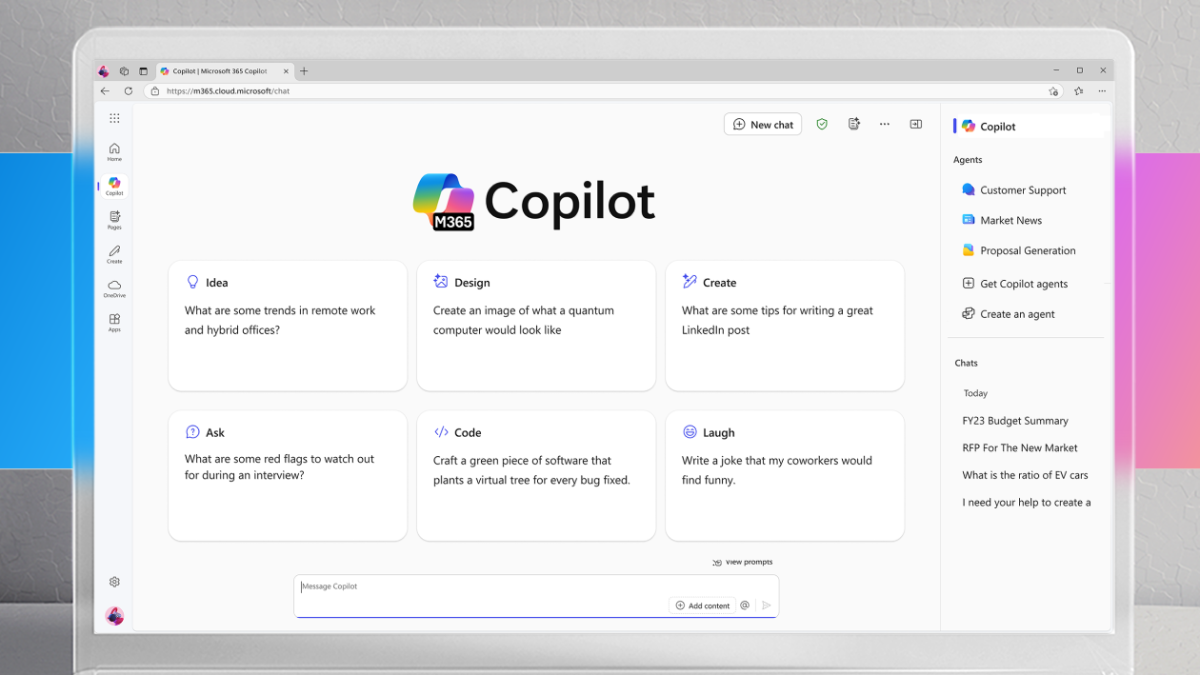
Microsoft launched a new AI service, Copilot Chat, on Wednesday, aiming to help businesses integrate on-demand AI agents for routine tasks. The service, which uses OpenAI’s GPT-4, is designed to make AI more accessible with a pay-as-you-go model that could drive widespread adoption. Copilot Chat allows users to create AI agents in natural languages, such as English and Mandarin, for tasks including market research, writing strategy documents, and meeting preparation.

While the basic service is free, additional features like summarizing and transcribing Teams calls and creating PowerPoint slides are available through a $30 monthly Microsoft 365 Copilot subscription. Microsoft, which has invested heavily in AI infrastructure, including a projected $80 billion this fiscal year on data centers and AI-related projects, is under pressure to demonstrate the financial return on these investments.

Despite some initial skepticism about Copilot’s uptake, as highlighted by a Gartner report, Microsoft has continued to promote the service. In November, the company started enabling customers to create autonomous AI agents requiring minimal human oversight, a move that some analysts see as a potential way for tech companies to monetize AI more efficiently.