Yazılar

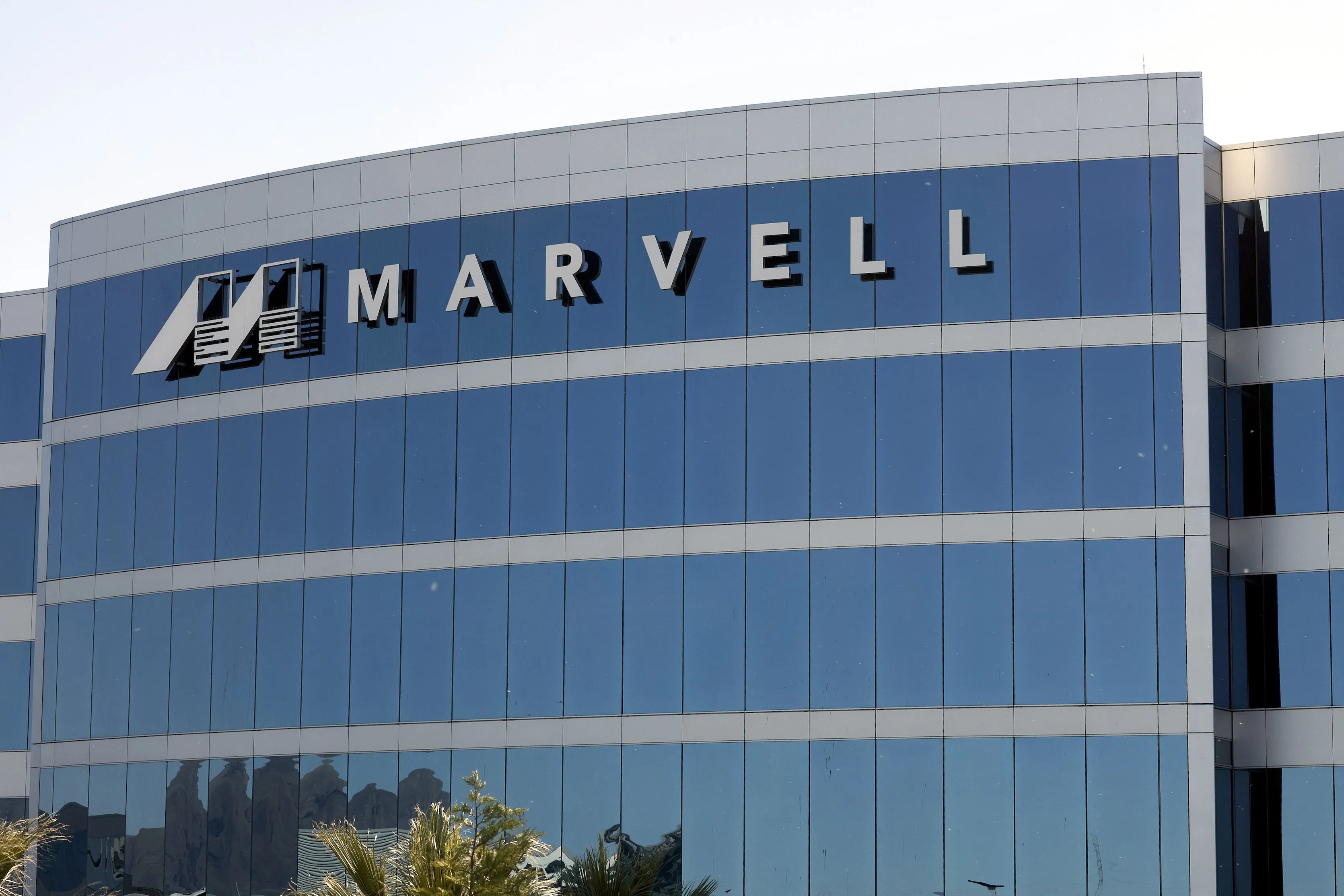
Marvell Technology Forecasts In-Line Q1 Revenue, Shares Drop 15%

Marvell Technology (MRVL.O) predicted first-quarter revenue in line with Wall Street’s expectations, but its shares fell sharply by 15% in after-hours trading. Investors were underwhelmed by the forecast, as they had hoped for more substantial growth driven by the surging demand for artificial intelligence (AI) chips.

The AI chip market has seen booming demand, particularly for sector-leader Nvidia’s (NVDA.O) AI processors. Major tech companies like Microsoft (MSFT.O), Meta Platforms (META.O), and Amazon.com (AMZN.O) have been working to reduce their reliance on Nvidia by developing their own AI chips, a trend that has benefited companies like Marvell and Broadcom (AVGO.O).

“The earnings print was generally OK, but I believe investors were expecting more given all the bullish data points in the overall AI space and the ramp of custom ASICs (AI chips) with certain hyperscalers,” said Tore Svanberg, an analyst at Stifel Nicolaus and Co.

Marvell’s data center segment performed well, with revenue up 78% year-over-year to $1.37 billion in the fourth quarter, driven by increased demand for custom AI chips as businesses work to optimize their AI workloads. In December, the company also signed a five-year chip deal with Amazon that includes custom AI chips.

“We’re engaged, we expect revenue to grow, but obviously, it’s like anything, you’ve got to show you can do it, and you’ve got to show it consistently,” Marvell COO Chris Koopmans said, emphasizing the “sticky” nature of the Amazon deal.

Marvell has pledged to focus its investments on data centers, seeing them as the best way to capitalize on the AI boom. Data center revenues accounted for 75% of its total revenue in the most recent quarter. However, Koopmans added that Marvell had not yet experienced any impact from tariffs affecting its data center business.

Despite posting solid results, Marvell’s shares dropped to $77.65 in after-hours trading, following a year-to-date increase of over 83%. In contrast, its larger competitor Broadcom saw a stock jump of around 107%. Analysts pointed to concerns over geopolitical pressures, AI monetization, and the magnitude of Marvell’s earnings beat as factors contributing to the decline.

Marvell forecast first-quarter revenue of $1.88 billion, slightly above analysts’ expectations of $1.87 billion.

IBM Surpasses Profit Estimates in Q4 as AI and Software Drive Growth

IBM (IBM.N) exceeded fourth-quarter profit forecasts on Wednesday, bolstered by strong demand in its software division as businesses increased IT spending. This growth, driven by a shift toward cloud infrastructure and the adoption of generative artificial intelligence technology, sent IBM’s shares soaring by approximately 10% in after-hours trading.

The company’s software segment saw its largest revenue increase in five years, benefiting from the heightened focus on AI-driven cloud solutions. Analyst Matt Swanson of RBC Capital Markets noted that increased software growth is associated with higher profit margins.

IBM also raised its outlook for fiscal 2025, forecasting revenue growth of at least 5% at constant currency, compared to 3% growth in 2024. This projection indicates confidence in IBM’s AI and cloud strategy, according to Michael Schulman, chief investment officer at Running Point Capital.

IBM’s “AI Book of Business” — a combination of bookings and actual sales across various AI products — reached over $5 billion, a $2 billion increase from the third quarter. The company made its “Granite” AI models open-source in May, positioning itself differently from competitors like Microsoft (MSFT.O), which charge for access to their AI models. This approach mirrors the strategy of DeepSeek, a Chinese startup that launched a free AI assistant, raising concerns over U.S. tech dominance.

Despite this, IBM’s Chief Financial Officer, James Kavanaugh, did not provide details on whether IBM intends to offer DeepSeek’s models on its Watsonx platform, which helps users deploy chatbots and other AI tools.

On the downside, IBM’s consulting division, which dominates its AI business, experienced a 2% decline in revenue, totaling $5.2 billion for the quarter. The focus on long-term AI integration consulting projects has yet to reflect in revenue figures. Overall, IBM’s total revenue remained flat at $17.55 billion for the quarter, aligning with analyst expectations. The company reported adjusted per-share earnings of $3.92, surpassing the forecast of $3.75.


Nvidia’s Engagement with Activist Hedge Fund Starboard: A Pivotal Moment in the Tech Giant’s Growth

In 2013, Nvidia faced growing pressure from its shareholders. Despite holding a strong cash reserve of $3 billion, the company’s stock had remained stagnant for years, with modest sales growth and declining earnings. The company’s market value was $8 billion, but its growth rate was slow, which led to a relatively low price-to-earnings (P/E) ratio of 14 times earnings. The company’s core assets were undervalued, according to activist hedge fund Starboard Value, which had accumulated a $62 million stake in Nvidia by June of that year.

Starboard, founded by Jeff Smith, expressed dissatisfaction with Nvidia’s performance and raised concerns over its underwhelming growth. Nvidia’s leadership, however, was wary of Starboard’s influence, fearing it might push for drastic changes, including a potential restructuring. Despite initial concerns, the relationship never escalated into a full-blown confrontation, with Nvidia’s board avoiding a “DEFCON 1” crisis. Instead, Starboard advocated for aggressive stock buybacks and a strategic de-emphasis on non-core projects like phone processors. By November 2013, Nvidia agreed to buy back $2 billion in stock, a move that triggered a 20% surge in its stock price. Starboard sold its shares by the following March, marking the end of its involvement.


The Mellanox Acquisition: A Strategic Move Prompted by Activists

Though Starboard’s direct influence on Nvidia was short-lived, it played a crucial role in a later, transformative acquisition. In 2017, Starboard invested in Mellanox Technologies, a company that specialized in high-speed networking for data centers. After Mellanox struggled to achieve strong financial returns, Starboard pressured its leadership for better performance, eventually paving the way for a potential sale.

In 2018, Mellanox received a nonbinding offer for $102 per share, prompting a bidding war between Nvidia, Intel, and Xilinx. Nvidia emerged victorious with a $6.9 billion cash offer, finalizing the deal in March 2019. Jensen Huang, Nvidia’s CEO, saw the acquisition as pivotal for Nvidia’s push into high-performance computing and AI, areas where Mellanox’s networking technology, particularly its InfiniBand products, would be indispensable for large-scale data centers.


A Game-Changing Acquisition for Nvidia

The Mellanox acquisition paid off beyond expectations. By May 2024, Nvidia’s former Mellanox division reported $3.2 billion in quarterly revenue, a sevenfold increase from the final quarter of Mellanox as an independent company. Within four years, the Mellanox business had grown into a $12 billion annual revenue stream.

Nvidia’s strategic understanding of the growing demand for high-performance computing, fueled by AI and data analytics, was key to its success. The integration of Mellanox’s advanced networking technology has become essential in scaling AI applications, where minimal latency and efficient data transfer are crucial.


A Strategic Masterstroke

Looking back, Nvidia executives and industry experts view the acquisition as a defining move in the company’s rise to dominance in the AI sector. Jay Puri, Nvidia’s head of global field operations, described it as one of the company’s best-ever acquisitions, thanks to its pivotal role in enhancing Nvidia’s position in the data-center market.

Despite not initially recognizing the potential of Mellanox, Nvidia’s ability to act decisively when the opportunity arose demonstrates its knack for capitalizing on industry trends and executing on large-scale acquisitions. For Jeff Smith of Starboard, the Mellanox acquisition stands as a reminder of the lasting impact activist investors can have on companies, even after their direct involvement ends. As Smith reflected, “We never should have exited the position.”