Yazılar

Google Bets Big on AI to Transform Search, Says Investment Chief

Alphabet Inc., the parent company of Google, is channeling its largest investments into enhancing its core search business through artificial intelligence (AI), according to Ruth Porat, Alphabet’s president and chief investment officer. Speaking at the Reuters NEXT conference in New York, Porat underscored that applying AI to search remains the company’s most significant focus.

“We’re meeting people where they want to be next,” Porat stated during her interview with Reuters Editor-in-Chief Alessandra Galloni. Search advertising generates the majority of Alphabet’s annual revenue, which exceeds $300 billion.

In recent years, Alphabet has integrated AI-powered features into its search engine, such as AI-generated overviews for queries without straightforward answers. These efforts come in response to rising competition from companies like OpenAI, the creator of ChatGPT. However, this shift has presented challenges, including the phenomenon of AI “hallucinations,” where the technology produces inaccurate or fabricated information.


CLOUD AND HEALTHCARE: ADDITIONAL INVESTMENT AREAS

In addition to its AI-driven search initiatives, Alphabet is investing heavily in Google Cloud and healthcare technologies. Porat highlighted the company’s achievements in healthcare innovation, including AlphaFold, an AI system capable of predicting protein structures. Through its Isomorphic Labs division, Alphabet is leveraging AlphaFold for drug discovery.

Porat also emphasized the transformative potential of AI in medical care, from preserving eyesight for at-risk individuals to reducing administrative burdens on doctors. “It can restore humanity into the doctor-patient relationship,” she said, drawing on her own experiences as a two-time breast cancer survivor.


BALANCING INNOVATION AND COSTS

While Alphabet sees AI as a “generational opportunity,” the investments come with substantial costs. The company is projected to spend $50 billion in 2024 on chips, data centers, and other capital-intensive projects. Despite these expenses, Porat emphasized that Alphabet is committed to grounding its investments in measurable results. “We need to generate a return,” she stated.

As Alphabet pioneers advancements in both search and broader applications of AI, the company aims to maintain its dominance in search advertising while addressing competitive and operational challenges.
OpenAI Plans Restructuring, Giving CEO Sam Altman Equity and Reducing Non-Profit Control

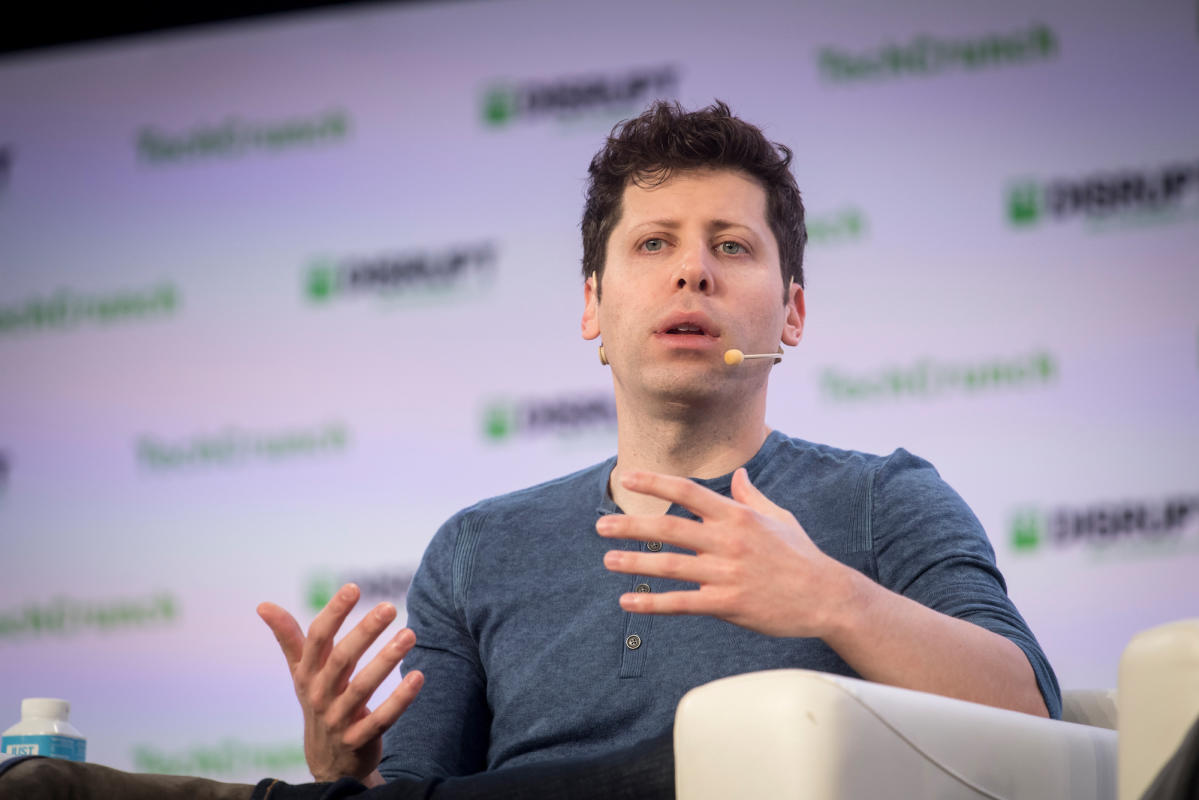
OpenAI, the company behind the widely popular AI application ChatGPT, is restructuring its business to transition from non-profit control to a for-profit benefit corporation, according to insider sources. This significant shift will make the company more attractive to investors. The non-profit arm will continue to exist, retaining a minority stake in the new for-profit entity, but will no longer hold control over it. The restructuring may also impact OpenAI’s governance of AI risks.

Sam Altman, the CEO of OpenAI, is set to receive equity in the company for the first time, which could be worth up to $150 billion. This restructuring may also remove the cap on returns for investors, further enhancing the company’s appeal. Altman, who previously chose not to hold equity, is now positioned to benefit financially from this major corporate shift.

OpenAI, originally founded as a non-profit research organization in 2015, gained global attention with the launch of ChatGPT in 2022. The AI application attracted over 200 million weekly active users and spurred immense interest in AI investments, leading to a surge in OpenAI’s valuation—from $14 billion in 2021 to $150 billion in the latest round of convertible debt financing.

Despite the success, OpenAI has experienced leadership changes. Chief technology officer Mira Murati left the company unexpectedly, while president Greg Brockman has been on leave. These changes, along with the restructuring plan, signal a broader shift within the company’s strategy and operations.

The restructuring moves OpenAI closer to a traditional startup model, resembling the structure of competitors like Anthropic and xAI. However, there are concerns about how this transition might affect OpenAI’s commitment to AI safety. The original governance structure was designed to ensure the safe development of artificial general intelligence (AGI), but with the shift away from non-profit control, some fear the company may lose accountability in managing long-term risks.

The reconfiguration of OpenAI’s governance comes nearly a year after a major internal dispute led to Altman’s brief ousting by the non-profit board. His reinstatement with overwhelming support from employees and investors has since led to a refreshed board, now chaired by former Salesforce co-CEO Bret Taylor. Approval from the nine-member non-profit board will be required for any changes to the corporate structure.

While Altman has previously stated that he has enough money and works for the love of it, this new development will offer him a stake in a company positioned at the forefront of the global AI race. Investors are largely supportive of the shift, as it could provide a clearer path for profitability, but the AI safety community remains cautious about the potential consequences for responsible AI development.


Cisco Plans Second Round of Layoffs Amid Shift to High-Growth Areas

Cisco Systems (CSCO.O) is set to initiate a second round of layoffs this year, with thousands of jobs on the line as the company pivots its focus to high-growth sectors like cybersecurity and artificial intelligence (AI), according to sources familiar with the matter. The layoffs, which could affect a similar or slightly higher number of employees compared to the 4,000 job cuts in February, are expected to be announced alongside the company’s fourth-quarter results, potentially as early as Wednesday.

Cisco, headquartered in San Jose, California, currently employs around 84,900 people, according to its July 2023 annual filing. However, this figure does not account for the February layoffs. The company has not yet responded to requests for comment.

The company’s shares dropped nearly 1% following the news of the impending layoffs, bringing its year-to-date decline to over 9%. Cisco, known as the largest producer of routers and switches that direct internet traffic, has faced challenges such as sluggish demand and supply chain issues in its core business areas. In response, the company has been diversifying its portfolio, notably through a $28 billion acquisition of cybersecurity firm Splunk, completed in March. This move aims to reduce Cisco’s dependence on one-time equipment sales by bolstering its subscription-based services.

In addition to expanding into cybersecurity, Cisco has been integrating AI into its product offerings. The company reiterated its goal of reaching $1 billion in AI product orders by 2025 and launched a $1 billion fund in June to invest in AI startups, including Cohere, Mistral AI, and Scale AI. Over the past several years, Cisco has made 20 AI-focused acquisitions and investments.

The upcoming layoffs are part of a broader trend in the tech industry, which has been aggressively cutting costs to balance significant investments in AI. According to Layoffs.fyi, a website that tracks job cuts in the tech sector, more than 126,000 people have lost their jobs across 393 tech companies since the beginning of the year. Earlier in August, chipmaker Intel (INTC.O) announced it was reducing its workforce by over 15%, impacting around 17,500 employees, as it sought to turn around its struggling manufacturing operations.