Yazılar

Nvidia and Perplexity Collaborate with European AI Firms to Enhance Local Language Models

Nvidia and AI search company Perplexity announced a partnership on Wednesday with over a dozen AI firms across Europe and the Middle East to advance AI technologies tailored to local languages and distribute them to regional businesses.

The collaboration targets countries including France, Germany, Italy, Poland, Spain, and Sweden, aiming to develop reasoning AI models capable of handling complex tasks in languages that traditionally have less training data available. Nvidia plans to assist by generating synthetic data in these languages to improve model performance.

Kari Briski, Nvidia’s Vice President of Generative AI Software for Enterprise, emphasized the importance of strong AI models that capture the unique languages and cultures of each nation. Once refined, Perplexity will facilitate deployment of these models through local data centers, enabling businesses to leverage AI for tasks like research and data analysis.

Perplexity CEO Aravind Srinivas highlighted Germany as one of the company’s largest markets, underscoring the regional demand for localized AI solutions. The partnership announcement was part of a series of updates from Nvidia at an AI conference in Paris, though financial details were not disclosed.

This initiative reflects a growing focus on decentralizing AI development, shifting from dominant English and Chinese models to diverse, localized systems that better serve different linguistic communities.

OpenAI Partners with Google Cloud in Surprising AI Rivalry Deal

OpenAI has struck a significant cloud computing deal with Alphabet’s Google Cloud to support its growing AI infrastructure needs, sources told Reuters. This collaboration, finalized in May, marks an unprecedented partnership between two major competitors in artificial intelligence.

The move signals OpenAI’s efforts to diversify beyond its longtime partner Microsoft, which had exclusively provided data center services until January. Google Cloud will now supply additional computing power to OpenAI for training and running its large language models, including ChatGPT.

The deal highlights the immense compute demands required for AI development and how competitive dynamics are evolving. Despite the fierce rivalry—OpenAI’s ChatGPT poses a strong challenge to Google’s dominant search business—both companies have chosen to cooperate in meeting infrastructure needs.

Alphabet’s stock rose 2.1% following the news, while Microsoft shares slipped 0.6%. Analysts at Scotiabank called the partnership “somewhat surprising” but a strategic win for Google Cloud, which has been aggressively expanding its AI hardware offerings, including tensor processing units (TPUs) used internally and for other customers like Apple.

OpenAI’s recent moves to reduce dependency on Microsoft include partnerships with SoftBank, Oracle, and CoreWeave, as well as plans to develop its own AI chips to cut reliance on external hardware providers. Meanwhile, Microsoft and OpenAI continue to renegotiate their multibillion-dollar investment terms.

Google’s Cloud business, generating $43 billion in sales in 2024, aims to capture market share against rivals Amazon and Microsoft by positioning itself as a neutral cloud provider favored by AI startups with costly infrastructure needs.

This deal presents a complex balancing act for Alphabet CEO Sundar Pichai, who must allocate limited chip capacity between competing demands from Google’s own AI projects and cloud customers. Despite ChatGPT’s threat to Google’s search dominance, Pichai remains confident in the company’s position.

Trump Announces $200 Billion in U.S.–UAE Deals, Inks Major AI Agreement

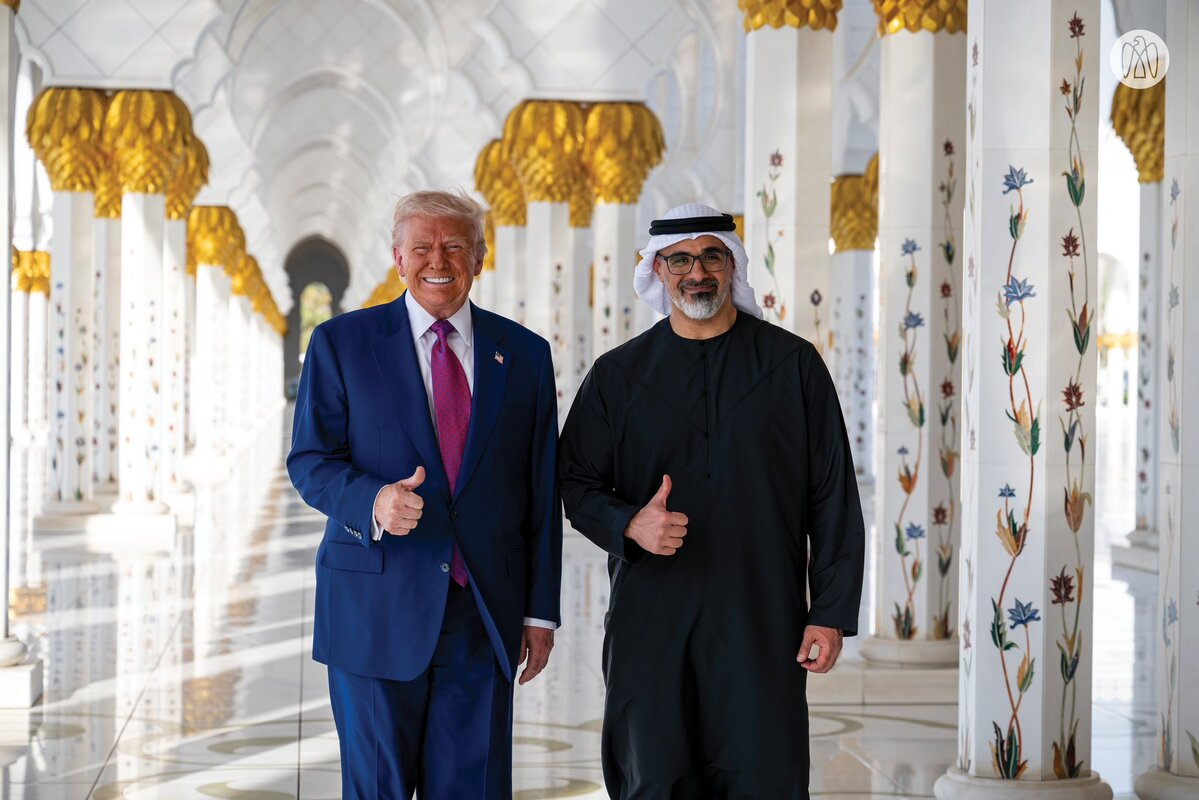
President Donald Trump, during his visit to the United Arab Emirates (UAE) on Thursday, announced over $200 billion in new deals between the two nations, including a landmark agreement to deepen cooperation in artificial intelligence (AI). The visit capped his three-nation Gulf tour, which also included Qatar and Saudi Arabia.

Following a meeting with UAE President Sheikh Mohamed bin Zayed Al Nahyan, the White House detailed major business and technology partnerships, including a $14.5 billion aircraft order by Etihad Airways for Boeing jets powered by GE Aerospace engines.

AI and Tech Cooperation:

Trump and Sheikh Mohamed also unveiled a 5-gigawatt AI campus, which will become the largest AI hub outside the U.S. A centerpiece of the visit was the signing of the U.S.–UAE AI Acceleration Partnership, which includes:

  • A commitment by the UAE to invest in U.S.-based data centers with capabilities matching or exceeding those in the UAE.

  • Import of 500,000 advanced Nvidia AI chips annually, per a prior agreement reported by Reuters.

  • UAE pledging to align its national security regulations with U.S. standards to prevent the diversion of AI technology to adversarial nations, particularly China.

Nvidia CEO Jensen Huang was seen in discussions with the leaders during the announcement.

Additional Economic Deals:

  • Emirates Global Aluminum to build a $4 billion aluminum smelter in Oklahoma.

  • $60 billion energy cooperation between UAE’s ADNOC and U.S. firms ExxonMobil, Occidental Petroleum, and EOG Resources.

  • A reaffirmation of the UAE’s $1.4 trillion, 10-year U.S. investment commitment, originally announced by Sheikh Tahnoon bin Zayed.

Broader Diplomatic and Regional Impact:

Trump’s visit follows major deals in Qatar and Saudi Arabia, including:

  • $600 billion Saudi commitment to invest in the U.S.

  • Qatar Airways’ deal to buy up to 210 Boeing widebody aircraft

  • $142 billion in U.S. arms sales to the Saudi kingdom

Trump also used the trip to announce diplomatic shifts:

  • A potential nuclear deal with Iran reportedly near completion

  • Sanctions lifted on Syria, with a meeting held with interim President Ahmed al-Sharaa

  • Encouragement for Syrian-Israeli normalization

Trump framed his Gulf tour as a strategic effort to solidify U.S. influence and transform the Middle East into a third global power center in AI, alongside the U.S. and China.