

Meta is reportedly preparing to introduce a significant change to its social media platforms by adding artificial intelligence (AI) bots that will behave like regular user accounts. According to recent reports, the tech company aims to deploy AI-powered characters that can perform actions typically carried out by human users, such as posting, liking, sharing, and interacting with content. These AI bots are expected to be integrated into both Facebook and Instagram, further expanding the role of AI in social media.
The plan follows Meta’s earlier efforts to introduce AI features, with the company already allowing users to create AI characters since last July. However, this feature has been limited to the United States, and the AI characters created by users cannot be made public. The move to introduce AI-powered accounts as part of a broader vision is seen as a significant step toward fully integrating AI into the social media experience, something Meta has been working toward for some time.
Meta has already taken initial steps to weave AI into its platforms in various ways. The company has rolled out the Meta AI chatbot, integrated AI writing tools for Instagram DMs, and introduced AI avatars for influencers and content creators. The next major development, according to Connor Hayes, Meta’s Vice President of Product for Generative AI, is the launch of AI-powered user accounts. He explained that these accounts will be designed to function similarly to human profiles, with bios, profile pictures, and the ability to generate and share content across the platforms.
The vision behind these AI accounts is to make them an organic part of the social media experience, blending seamlessly with real user accounts. As AI technology continues to evolve, Meta’s integration of AI characters could redefine user engagement on Facebook and Instagram, offering new possibilities for content creation and interaction. While details about the rollout are still emerging, the move represents Meta’s commitment to enhancing its platforms with cutting-edge AI features.
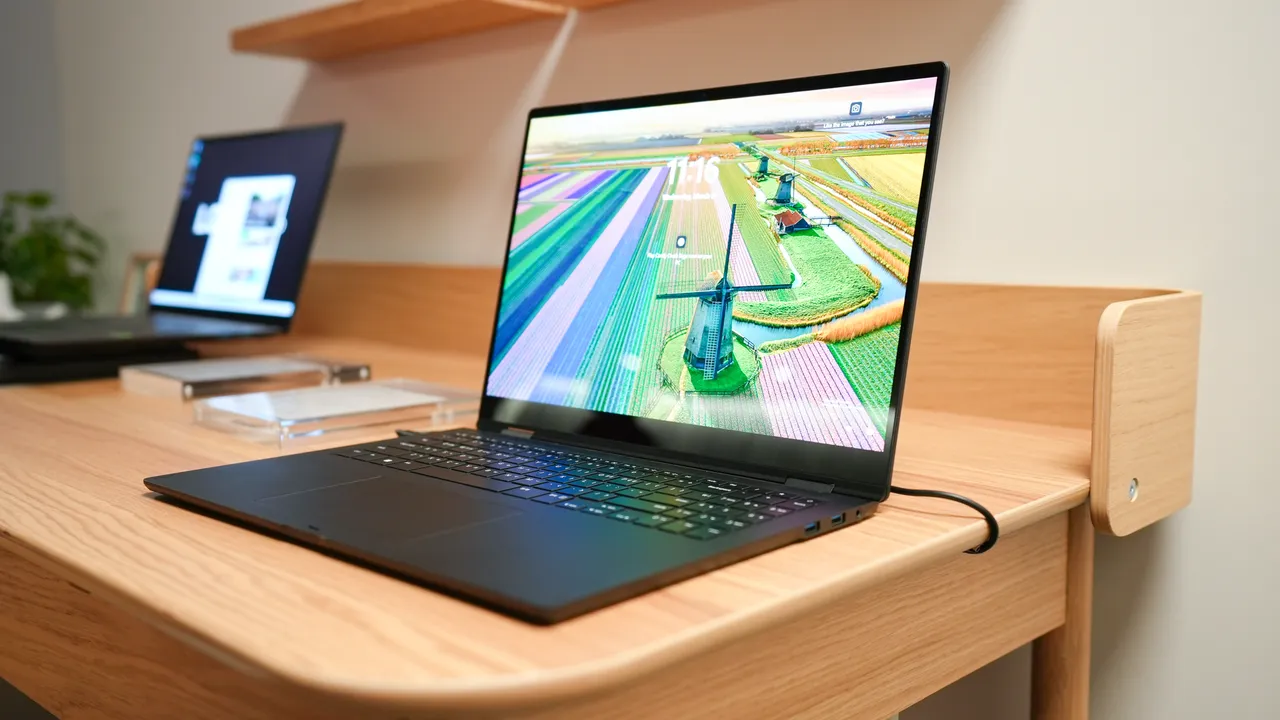
“LG Gram 2025: Hybrid AI-Powered Laptops with Intel Arrow Lake Chips and Advanced Cloud Features”
LG has introduced its latest generation of Gram laptops ahead of CES 2025, showcasing cutting-edge innovations in both hardware and artificial intelligence. The 2025 LG Gram laptops integrate on-device and cloud-based AI capabilities, offering a hybrid experience powered by Intel’s Core Ultra H-Series (Arrow Lake) processors. The lineup consists of four models: the LG Gram Pro, Gram Pro 2-in-1, Gram, and Gram Book. Notably, the LG Gram Pro 2-in-1 has already received the prestigious CES 2025 Innovation Award for its exceptional design and functionality, solidifying its position as a leader in the evolving laptop market.
The 2025 models are driven by Intel’s latest processors, with the Intel Core Ultra H-Series (Arrow Lake) ensuring robust traditional PC performance and the Intel Core Ultra V-Series (Lunar Lake) bringing optimization for AI-driven experiences. While the H-Series focuses on delivering high performance for demanding tasks, the V-Series processors are tailored for enhanced AI interactions. The Lunar Lake variants are certified by Microsoft Copilot+ and come with cutting-edge features like real-time video subtitle translation and AI-powered image generation, offering a more personalized and interactive computing experience.
A significant highlight of the 2025 LG Gram laptops is their dual approach to AI. LG incorporates both cloud-based and on-device AI technologies for an immersive user experience. The cloud-based offering, called Gram chat Cloud, leverages GPT-4o and is free for the first year, enabling detailed responses through web-based datasets and integrating with the user’s calendar and email for seamless assistance. The on-device AI features a small language model (SLM) derived from LG’s EXAONE large language model, offering quicker, offline functionality and a range of new features, including the innovative Time Travel feature. This functionality allows users to easily revisit previously accessed web pages, documents, videos, and audio files, enhancing productivity.
With these advanced AI capabilities, LG is positioning the 2025 Gram laptops as more than just computing devices—they are tools that adapt to the user’s needs, providing both performance and intelligent assistance in everyday tasks. This integration of hybrid AI is set to redefine how users interact with their laptops, offering a glimpse into the future of intelligent, adaptive computing.