Yazılar

UK Commits £250 Million to Clean Aviation Tech, Supporting Airbus and Rolls-Royce Projects

The UK government will invest £250 million ($340 million) in next-generation clean aviation technologies, aiming to advance zero-emission flying, laser-beam manufacturing, and innovations to reduce aircraft drag. The initiative is part of a broader effort to boost Britain’s aerospace sector and drive decarbonisation.

The new R&D funding, to be announced by Industry Minister Sarah Jones at the Paris Airshow, will support collaborative projects involving Airbus, Rolls-Royce, smaller firms, and academic institutions. It includes efforts to:

  • Develop infrastructure for liquid hydrogen testing

  • Advance fuel cell systems

  • Create lightweight, sustainable materials

The investment is designed to attract private capital, generate high-skill jobs, and prepare UK supply chains for the future of green aviation.

Jones emphasized the need to support not only large manufacturers but also smaller startups:

“Getting the supply chain of smaller businesses ready is the challenge, and that’s what we want to build up in the UK.”

The announcement comes ahead of a new industrial strategy to be unveiled later this month, focused on scaling up defence and advanced manufacturing.

Airbus UK chairman John Harrison welcomed the funding, calling it a crucial catalyst for innovation and sustainability:

“Initiatives like these are absolutely critical to accelerating our decarbonisation journey and advancing sustainable, cutting-edge manufacturing.”

Airbus, Thales, and Leonardo Plan New European Satellite Venture Amid Industry Challenges

INTRODUCTION:
European aerospace giants Airbus, Thales, and Leonardo are reportedly in discussions to establish a joint satellite venture, codenamed “Project Bromo.” This ambitious initiative aims to challenge Elon Musk’s Starlink network and reshape Europe’s satellite sector, which has struggled with losses and competitive pressures from low-cost satellites in low Earth orbit (LEO).

KEY DETAILS

  1. Project Bromo – A European Satellite Champion:
    • The venture, modeled on missile maker MBDA, envisions a standalone entity combining satellite assets rather than a traditional acquisition structure.
    • This collaborative effort seeks to leverage the strengths of the three companies to create a scalable and competitive European satellite enterprise.
    • Leonardo CEO Roberto Cingolani confirmed discussions about adopting the MBDA model but noted governance structures may vary.
  2. Strategic Drivers:
    • Europe’s leading satellite makers, traditionally focused on high-complexity geostationary orbit spacecraft, are adapting to the rapid rise of smaller, cost-efficient satellites in LEO.
    • Cingolani emphasized that satellites could account for 75% of the space economy in the future, highlighting the need for Europe to stay competitive in this evolving market.
  3. Job Cuts Across the Industry:
    • Parallel to the satellite initiative, Airbus plans to cut up to 2,500 jobs in its Defence and Space division, representing 7% of its workforce, by mid-2026.
    • Thales has announced plans to reduce 1,300 space-related positions as part of restructuring efforts.
    • Most Airbus cuts are expected in its €2 billion space systems business, with reductions likely in France, Germany, the UK, and Spain.
  4. Historical Challenges:
    • The European space industry has long discussed restructuring but has faced delays due to competition concerns and governance complexities.
    • Despite previous attempts, including Airbus’ 2001 pledge to restructure the space industry after forming MBDA, substantial progress has been elusive.
  5. Timeline and Implications:
    • Project Bromo is still in early stages and could take years to materialize.
    • If successful, the joint venture would provide Europe with a robust satellite manufacturing entity capable of competing with global players like Starlink.

MARKET AND COMPETITION

  • Global Satellite Trends: The space economy is shifting toward LEO satellites, driven by demand for affordable, scalable solutions for global internet connectivity and communication.
  • Challenges from Starlink: SpaceX’s Starlink dominates the LEO market with its extensive satellite network, presenting a formidable challenge to European firms.
  • European Collaboration: The MBDA-inspired model may allow for better resource pooling and coordinated competition, reducing fragmentation in the European satellite market.

CONCLUSION

Project Bromo represents a significant step toward strengthening Europe’s position in the satellite industry. However, its success depends on overcoming technical and governance hurdles and aligning the diverse interests of Airbus, Thales, and Leonardo. Simultaneously, widespread job cuts underscore the challenges facing the European space sector as it navigates competitive pressures and structural realignments.

Zhuhai Air Show Highlights COMAC Orders, New Spaceplane, and Chinese Aerospace Advances

China’s growing aerospace industry took center stage at the Zhuhai Air Show, where Commercial Aircraft Corporation of China (COMAC) showcased new partnerships and aircraft. Air China emerged as the launch customer for COMAC’s C929, China’s first domestically developed widebody jet. Additionally, COMAC revealed improvements to its ARJ21 regional jet, rebranding it as the C909 for greater brand consistency. Painted white with a blue tail, the C909 boasts enhanced efficiency with reduced weight, noise, and fuel costs, according to COMAC’s air show representatives.

Hainan Airlines confirmed orders for 60 C919 narrowbody jets and 40 C909s, while Colorful Guizhou Airlines signed agreements for 30 C909 aircraft, including 20 firm orders and 10 provisional ones. Although Air China’s exact order volume for the C929 has yet to be disclosed, this endorsement signals the expansion of China’s domestic aerospace ambitions.

The air show also saw state-owned AVIC display a model of China’s first commercial uncrewed spaceplane, designed to carry cargo to the Chinese space station. AVIC received a contract from the China Manned Space Agency for engineering and flight validation of this spaceplane, which is aimed at delivering low-cost, reusable cargo solutions for space.

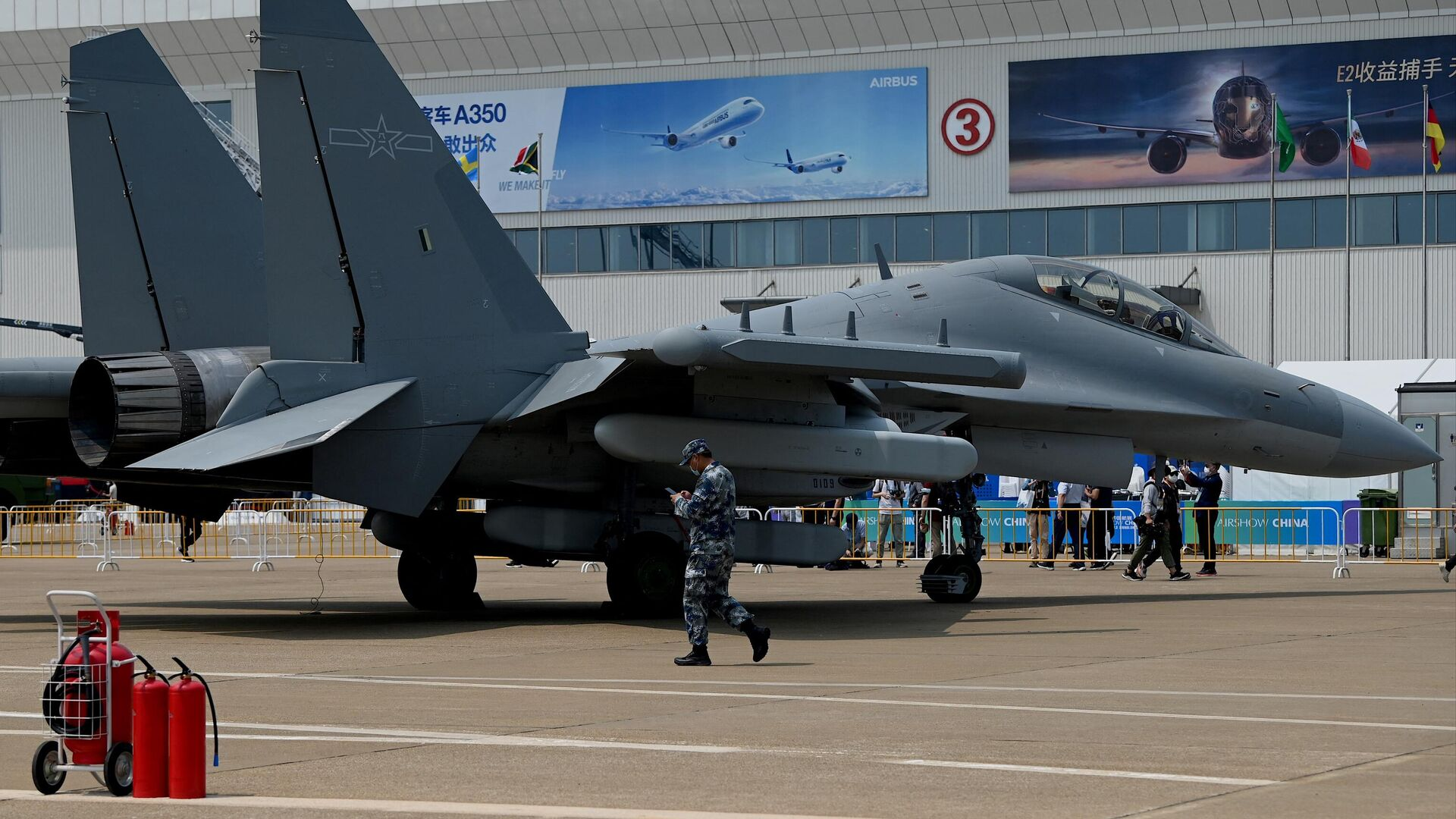
Overhead, China’s Bayi aerobatic team performed, featuring J-20 stealth jets and debuting the new J-35A stealth fighter to the public. On the ground, a Z-20 helicopter, modified for anti-submarine operations, showcased the People’s Liberation Army Navy’s capabilities in extended-range maritime security.

Airbus, present at the show, voiced its commitment to competing in the Chinese market. CEO George Xu said Airbus remains focused on collaboration with Chinese partners despite emerging EU-China trade tensions, noting that Chinese certification of Airbus’s A330neo is progressing and could result in a 2025 delivery.

The Zhuhai Air Show will continue through November 17, highlighting China’s strides in aerospace innovation and the growing impact of its commercial and defense aviation sectors.