Yazılar

Google Faces Setback as EU Court Adviser Supports Antitrust Regulators

Alphabet’s Google encountered a potential setback on Thursday after an adviser to Europe’s highest court sided with EU antitrust regulators over a landmark €4.34 billion ($4.98 billion) fine imposed seven years ago.

The European Commission ruled in 2018 that Google had abused its dominant position by using its Android mobile operating system to block competitors. While a lower court upheld the ruling in 2022, it slightly reduced the fine to €4.1 billion. Google subsequently appealed to the Court of Justice of the European Union (CJEU).

Juliane Kokott, Advocate-General at the Luxembourg-based CJEU, issued a non-binding opinion recommending the court reject Google’s appeal and confirm the reduced fine. Kokott stated, “The legal arguments put forward by Google are ineffective.”

She dismissed Google’s claim that regulators should assess the situation by comparing Google with a hypothetical, equally efficient competitor. Kokott explained, “Google held a dominant position in several markets of the Android ecosystem and thus benefited from network effects that enabled it to ensure that users used Google Search.”

Judges typically follow the Advocate-General’s opinion in about 80% of cases. A final ruling is expected in the coming months.

Google responded by emphasizing Android’s role in creating choice and supporting businesses globally, expressing disappointment with the opinion. A spokesperson said, “If followed by the Court, [the opinion] would discourage investment in open platforms and harm Android users, partners, and app developers.”

The regulators’ investigation found Google had imposed illegal practices dating back to 2011, including requiring manufacturers to pre-install Google Search and Chrome browser alongside Google Play on Android devices. Google also paid manufacturers to pre-install only Google Search and prevented the use of rival Android systems.

Google’s Android runs on approximately 73% of the world’s smartphones, according to Statcounter.

This fine is part of a broader enforcement effort against Google, which has amassed €8.25 billion in penalties across three antitrust cases over the past decade, with additional investigations ongoing.

Case Reference: C-738/22 P Google and Alphabet v Commission

Google Set to Discontinue Support for Android Instant Apps by Year-End

Google is planning to retire its Android Instant Apps feature by the end of 2025, according to recent reports. The company’s decision comes after noticing consistently low user engagement and adoption of the feature. Instant Apps, which allow users to access lightweight versions of apps without installing them, will cease functioning after December 2025. Alongside this shutdown, Google will also discontinue related API support and remove Instant Apps tooling from Android Studio, the integrated development environment used by developers.

The news surfaced when a developer noticed a warning message in the latest canary build of Android Studio, alerting users about the upcoming removal of Instant Apps support. The pop-up message stated that Google Play would stop supporting Instant Apps and their APIs, while Android Studio would drop tooling support in an upcoming update. A Google spokesperson later confirmed to The Verge that the shutdown is driven by limited usage and the growing preference among developers for alternative tools that better support app discovery and engagement.

Introduced in 2017, Android Instant Apps were designed to give users a quick, app-like experience without the need for full installation. These apps often serve specific purposes such as previewing a game or making a payment, similar to Apple’s App Clips. Despite their convenience, Instant Apps never gained widespread traction, leading Google to reconsider its investment in the feature and focus on tools that drive deeper user interaction with fully installed apps.

This move follows a similar phase-out of other Google products, such as the discontinuation of the Chromecast brand in favor of the Google TV Streamer set-top box last year. By reallocating resources away from underperforming features like Instant Apps, Google aims to better support developers and users through enhanced app experiences and more popular discovery methods.

Google Launches NotebookLM App on Android and iOS With New Audio Overviews Feature

Google Launches NotebookLM App for Android and iOS With Offline Audio Overviews

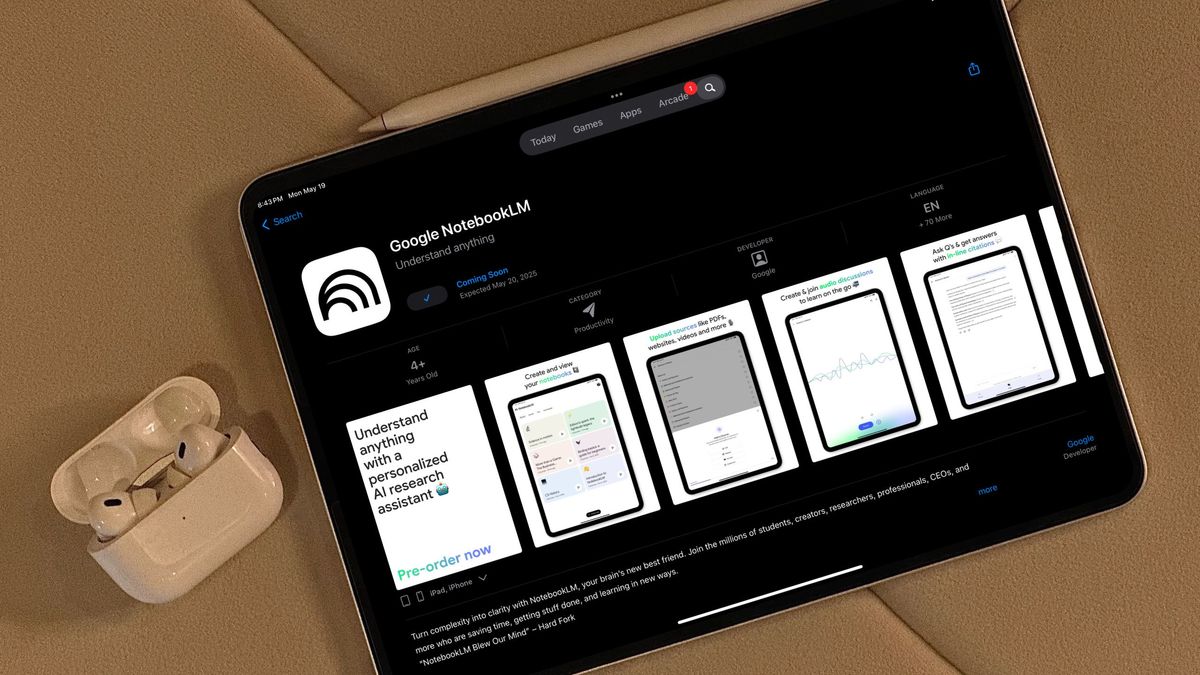
Google has officially released its standalone NotebookLM app for Android and iOS, marking a significant expansion of its AI-powered note-taking platform. Initially listed earlier this month on Google Play and the App Store with pre-registration options, the app is now widely available to download. The mobile version brings many of the core capabilities of the web platform to smartphones and tablets, along with a notable addition — the Audio Overviews feature. While there are still some limitations compared to the web version, the app aims to offer a streamlined, intelligent note organization experience on the go.

Users who had pre-registered for NotebookLM were notified on Monday as the app rolled out across both platforms. Google confirmed the launch through an official blog post, stating that while the app is still in its early stages, it includes foundational tools that users have come to rely on. More features are expected to be added in future updates, as the company continues to refine the mobile experience based on user feedback.

Upon opening the NotebookLM app, users are greeted with a home page displaying all their notebooks. Each notebook is assigned an emoji based on its content, adding a personalized touch. Users can rename notebooks and add content such as PDFs, web links, YouTube videos, and copied text. However, certain file types like audio files, markdown text, Google Docs, and Slides — which are available on the web version — are not currently supported in the app. Still, the standout feature, Audio Overviews, has made it to mobile. This allows users to generate AI-driven audio summaries of their notebooks via the Studio tab, offering an innovative way to engage with content.

Audio Overviews can typically be streamed online, but Google has also included a download option for offline listening — a valuable addition for users on the move. Furthermore, users can “join” the AI discussion within the overview and interact by asking follow-up questions. Although some features like study guide creation and MindMap are not yet available in the mobile version, NotebookLM’s core strengths — including topic summarization and AI chat for contextual queries — make it a powerful tool for students, researchers, and professionals alike.