Yazılar

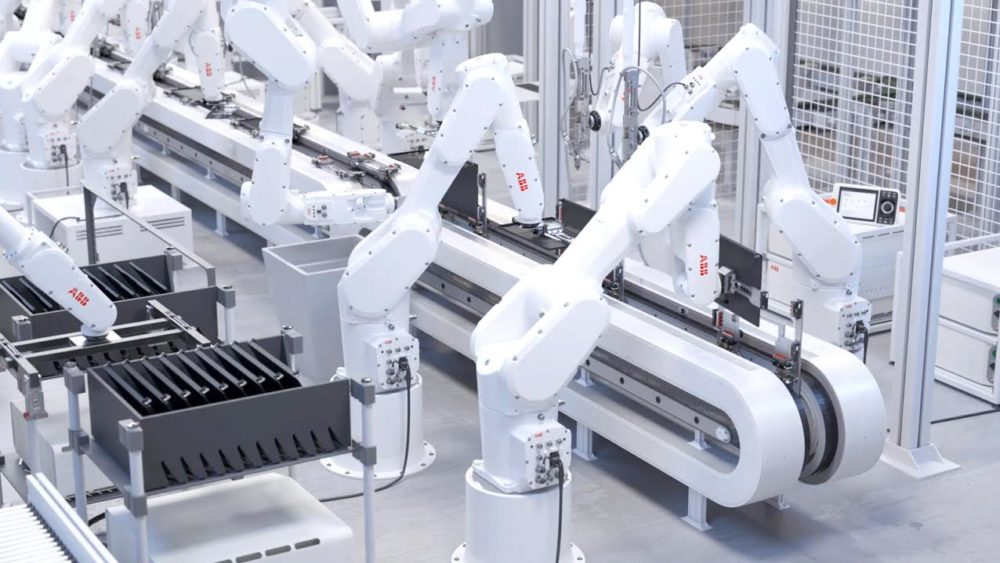
SoftBank to buy ABB’s robot unit for $5.4 billion in AI-robotics merger push

SoftBank Group has agreed to purchase the robotics division of ABB for $5.4 billion, marking a major step in CEO Masayoshi Son’s plan to unite artificial intelligence and robotics into what he calls “Physical AI.” The acquisition, announced Wednesday, gives the Japanese conglomerate control of one of the world’s leading industrial robotics makers as it deepens its bet on AI-driven automation.

The deal signals ABB’s decision to cancel its planned spin-off of the robotics unit, opting instead for a direct sale that delivers immediate liquidity. ABB CEO Morten Wierod said the sale provides stronger financial flexibility to invest in electrification, automation, and potential new acquisitions.

ABB’s robotics arm employs about 7,000 people and generated $2.3 billion in 2024 sales, roughly 7% of ABB’s total revenue. Despite its technological strength, the division struggled with volatile margins and limited overlap with ABB’s core business.

For SoftBank, the acquisition builds on a decade-long robotics journey that began with its humanoid Pepper robot and now extends into advanced factory automation. The company has recently invested in Berkshire Grey, AutoStore, and OpenAI, and earlier this year bought chip designer Ampere for $6.5 billion.

The transaction is expected to close by late 2026, subject to regulatory approvals. ABB shares rose 2% in Zurich after the announcement, while SoftBank’s stock slipped 2% in Tokyo trading.

Anthropic to open first India office in 2026 amid AI boom

Anthropic, the artificial intelligence company backed by Google and Amazon, announced plans to open its first office in India next year as demand for AI tools accelerates across the country.

The expansion marks a major step in Anthropic’s global growth, with India already standing as its second-largest market for the Claude chatbot, which rivals OpenAI’s ChatGPT. Claude is popular among developers for its strong coding capabilities and multilingual features.

The new office will be located in Bengaluru, India’s leading technology hub, and operations are set to begin in early 2026. CEO Dario Amodei will visit India this week to meet with government officials and business partners, the company said.

India’s rapidly growing tech ecosystem — fueled by a billion internet users, rising corporate investment, and a strong talent base — has drawn top AI firms into competition. OpenAI, backed by Microsoft, is also preparing to open its first Indian office in New Delhi later this year.

Dell boosts growth targets as AI server demand soars

Dell Technologies has nearly doubled its profit growth forecast for the next four years, confident that booming demand for artificial intelligence servers will sustain its momentum. The company now expects adjusted earnings per share to grow at least 15% annually, compared to its earlier projection of about 8%, according to a statement on Tuesday.

The tech giant, which counts Elon Musk’s xAI and cloud computing firm CoreWeave among its major clients, also raised its revenue growth expectations to between 7% and 9% per year, up from a prior range of 3% to 4%.

The surging need for high-performance servers powering AI platforms like ChatGPT has transformed Dell into one of the leading beneficiaries of the generative AI revolution. Analysts say Dell’s large-scale operations, global supply chain, and deep ties with major buyers give it a cost and volume edge over competitors such as Super Micro.

CEO Michael Dell emphasized that customers are “hungry for AI” and the computing infrastructure needed to deploy it at scale. He added that the company is still in the early stages of AI adoption despite two years of strong growth.

Dell reiterated its fiscal targets for the year and maintained its projection for AI server shipments to reach $20 billion in fiscal 2026. The company now forecasts 11% to 14% long-term annual revenue growth for its Infrastructure Solutions Group — which includes storage, software, and servers — up from 6% to 8% previously. Meanwhile, the client solutions segment, including personal computers, is expected to grow at a modest 2% to 3%.