Yazılar

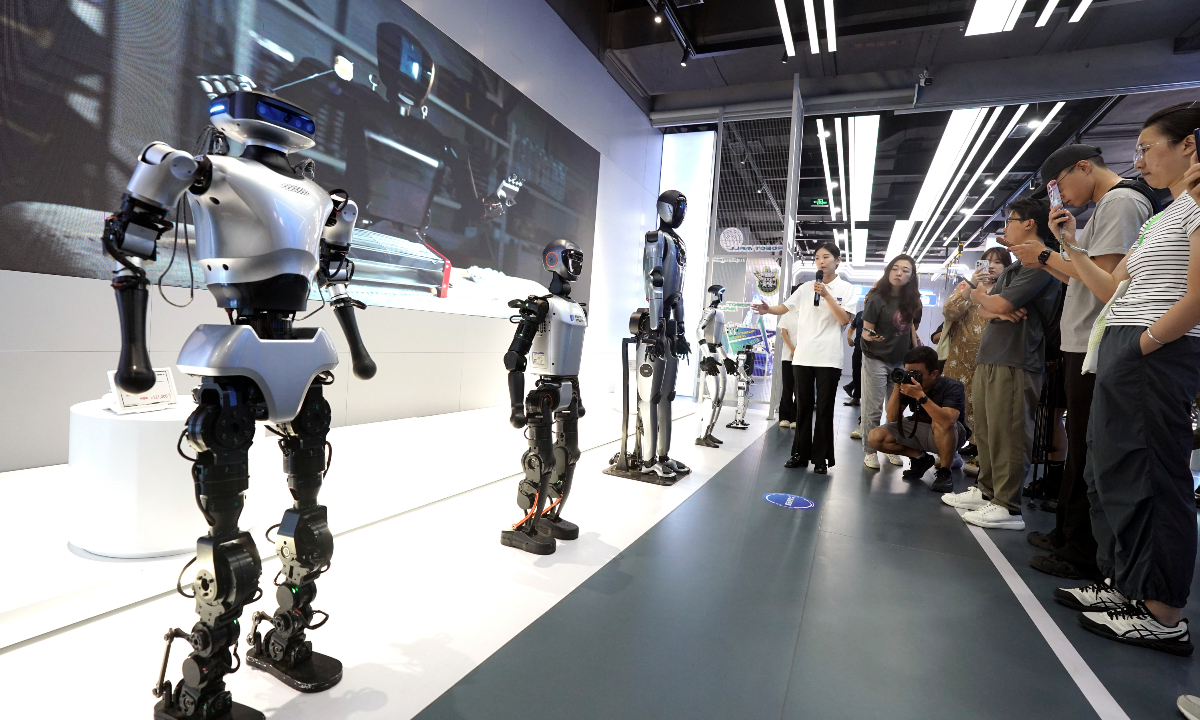
Beijing Robot Store Stocks Einstein Replicas, Chess Partners in AI Leadership Push

A new store opening in Beijing this Friday will showcase over 100 humanoid and consumer-oriented robots from more than 40 Chinese brands, including Ubtech Robotics and Unitree Robotics. Among the offerings are life-sized replicas of Albert Einstein designed to teach physics, robotic chess partners, and pet robots, highlighting China’s ambition to lead in artificial intelligence and robotics.

The store adopts a “4S” dealership model—providing sales, spare parts, maintenance, and survey services—catering to a growing consumer market with robot prices ranging from around 2,000 yuan ($278) to several million yuan. Wang Yifan, the store director, noted the importance of customized consumer solutions, stating that mass adoption of robots requires more than just manufacturers’ efforts.

China’s aggressive push into robotics aims to mitigate economic challenges such as its ageing population and slowing growth. The sector benefits from government support with subsidies exceeding $20 billion over the past year, alongside a planned one trillion yuan ($137 billion) fund to back AI and robotics startups.

Abu Dhabi’s MGX Eyes Up to $25 Billion for AI Investments

Abu Dhabi-based investment group MGX is exploring plans to raise as much as $25 billion from third-party investors to expand its artificial intelligence portfolio, Bloomberg News reported, citing sources familiar with the matter. The group, already backed by Mubadala Investment Co and AI firm G42, would retain these as its main supporters while seeking additional funding from both domestic and international financial and strategic investors.

MGX, chaired by Sheikh Tahnoon bin Zayed Al Nahyan — the UAE’s national security adviser and brother of President Sheikh Mohammed bin Zayed — has existing stakes in OpenAI and Elon Musk’s xAI. The potential fundraising aims to accelerate its role in the global AI race. No final decision on the plan has yet been made.

The news follows reports from the Financial Times that French AI startup Mistral is in talks with MGX and other investors to secure $1 billion in funding at a $10 billion valuation, further highlighting the UAE’s growing influence in AI investments.

Global M&A Reaches $2.6 Trillion in 2025, Driven by AI and Growth Ambitions

Global mergers and acquisitions (M&A) have hit $2.6 trillion in the first seven months of 2025 — the highest level since the pandemic-era peak of 2021 — as companies prioritize growth and capitalize on opportunities in artificial intelligence (AI). Despite a 16% drop in the number of transactions compared to last year, total deal value rose 28%, fueled by large-scale U.S. transactions exceeding $10 billion.

Key deals include Union Pacific Corp’s proposed $85 billion takeover of Norfolk Southern and OpenAI’s $40 billion funding round led by SoftBank. These transactions mark a shift from early-year hesitation caused by U.S. tariffs and geopolitical uncertainty, as renewed boardroom confidence and a clearer regulatory environment spur activity.

Industry experts say the M&A landscape is now heavily growth-oriented, with AI adoption and regulatory changes prompting companies to move quickly to avoid falling behind. Compared to August 2021’s $3.57 trillion, current activity is still down 27%, but bankers expect more large deals in the second half of 2025 as executives adapt to market volatility and post-election policy direction.

Healthcare dominated post-pandemic dealmaking, but over the past two years, technology and electronics have taken the lead. AI-driven needs, such as data center infrastructure and cybersecurity, are major drivers — highlighted by Samsung’s $1.7 billion purchase of FlaktGroup and Palo Alto Networks’ $25 billion acquisition of CyberArk. Private equity has also re-entered the market, with major bids like Sycamore Partners’ $10 billion move to take Walgreens Boots Alliance private and competing offers from KKR and Advent for UK firm Spectris.

The U.S. remains the world’s largest M&A market, representing more than half of global deals, while Asia Pacific’s activity doubled from last year, surpassing the pace of EMEA growth.