Yazılar

UK Judge Warns Lawyers Against Using AI to Cite Fake Cases, Threatens Sanctions

London’s High Court issued a stern warning on Friday that lawyers who rely on artificial intelligence to cite fabricated or non-existent legal cases risk being held in contempt of court or facing criminal charges. The caution comes amid growing concerns about generative AI tools, such as ChatGPT, leading legal professionals astray.

Judge Victoria Sharp condemned lawyers in two recent cases who used AI-generated arguments containing fake case law. She urged legal regulators and industry leaders to take stronger actions to ensure lawyers understand their ethical duties regarding AI use.

“There are serious implications for the administration of justice and public confidence in the justice system if artificial intelligence is misused,” Judge Sharp said in her written ruling. She stressed the need for practical, effective measures from those responsible for legal regulation and leadership within the profession.

Since generative AI tools became widely accessible over the past two years, lawyers globally have faced scrutiny for referencing false authorities in court. Sharp emphasized that lawyers who cite non-existent cases breach their duty not to mislead courts, which can amount to contempt of court.

In the most severe instances, deliberately submitting false information with intent to disrupt justice could constitute the criminal offence of perverting the course of justice, she warned.

While legal regulators and the judiciary have issued guidance on AI use by lawyers, Judge Sharp said guidance alone is insufficient to curb misuse and called for stronger enforcement and leadership.

Amazon Unveils AI Upgrades to Delivery, Logistics, and Warehouse Operations

Amazon announced a series of new artificial intelligence initiatives aimed at enhancing its delivery, logistics, and warehouse operations, showcasing how the technology could significantly speed up package delivery and improve efficiency across its sprawling supply chain.

At the center of these developments is Amazon’s creation of a new group within its Lab126 device unit, tasked with developing warehouse robots powered by “agentic AI.” Unlike today’s robots that perform single, repetitive tasks, these AI-powered machines will be capable of multitasking — such as unloading trailers, retrieving parts, and making decisions based on natural language prompts. This flexibility is expected to be particularly beneficial during peak demand periods like the holiday season.

“For our customers, it’s, of course, faster delivery,” said Yesh Dattatreya, a robotics scientist leading the initiative. The robots will also contribute to minimizing waste and reducing carbon emissions, Amazon said, aligning with its broader sustainability goals.

Agentic AI — which allows systems to autonomously make and execute decisions — has become one of the most promising investment areas in AI development. Amazon’s version aims to transform warehouse robots into multi-functional assistants capable of responding to human commands in natural language.

Smarter Mapping for Delivery Drivers

Beyond warehouses, Amazon is using generative AI to improve mapping for delivery drivers. The new software provides highly detailed information about building layouts, obstacles, and navigation routes, particularly aiding deliveries to complex locations like large office parks or apartment complexes.

“This innovation is making it easier for Amazon drivers to find the right delivery spot, especially in tricky places,” Amazon stated.

The company also confirmed, for the first time publicly, that it is exploring AI-powered eyeglasses for its delivery drivers. These smart glasses would feature embedded screens to provide turn-by-turn directions, freeing drivers’ hands while navigating and delivering packages. Although still in development, the glasses could eventually integrate the advanced mapping technology already in use.

According to Viraj Chatterjee, vice president of Amazon’s Geospatial unit, U.S. drivers are already using the AI-generated maps daily, though they are not mandated to do so. This approach may help Amazon avoid legal challenges related to excessive control over gig economy workers.

AI Enhances Inventory Forecasting and Same-Day Delivery

In addition to physical logistics, Amazon is applying AI to better predict customer demand and optimize same-day delivery operations. The new forecasting software considers multiple variables—including price, convenience, weather, and special events like Prime Day—to ensure that popular products are pre-positioned in fulfillment centers closer to where they are most likely to be ordered.

“It allows us to sell a different set of books in Boston than we would in Boise, and cater to different tastes really, really efficiently across the communities that we serve,” said Nathan Smith, director of demand forecasting for Amazon’s supply chain optimization technologies unit.

With these AI upgrades, Amazon aims to maintain its competitive edge in e-commerce by delivering packages faster, improving the delivery experience for drivers, and further automating warehouse operations.

Amazon to Test Humanoid Robots for Future Deliveries

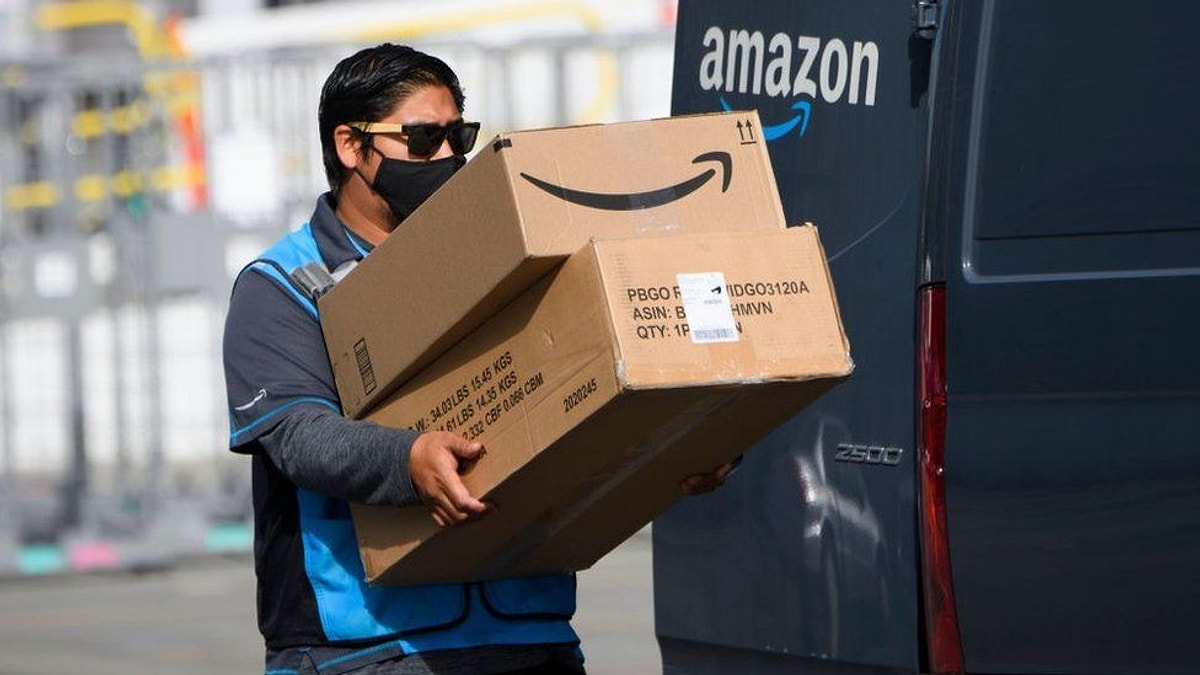
Amazon is preparing to test humanoid robots that could one day replace human delivery workers, according to a report from The Information on Wednesday. Citing a person familiar with the company’s plans, the report reveals that Amazon is building an indoor testing facility dubbed a “humanoid park” at one of its San Francisco offices.

The park will serve as an obstacle course designed to simulate the complex environments that delivery robots may face, allowing Amazon to evaluate how well the robots can navigate real-world delivery scenarios.

Currently, Amazon is focusing on developing the artificial intelligence software necessary to operate these humanoid robots, while relying on hardware provided by third-party companies during initial tests.

Amazon has not publicly commented on the report.

AI-Driven Automation Push

The humanoid robot tests are part of Amazon’s broader push to integrate AI and robotics across its logistics operations. In a series of announcements on Wednesday, Amazon showcased how it plans to use AI-powered systems in its warehouses, stockrooms, and delivery network, all aimed at improving efficiency and speeding up package deliveries.

The company already uses a wide range of automation technologies, including robotic arms, sorting machines, and warehouse bots, but humanoid robots represent a significant next step that could eventually reshape the role of human workers in Amazon’s vast delivery network.

Industry Implications

Amazon’s move reflects a growing trend in the tech and logistics sectors, where companies are investing heavily in advanced robotics to handle labor-intensive tasks amid rising costs and ongoing labor challenges.

While humanoid robots have long been seen as a futuristic concept, advances in AI, machine learning, and robotics hardware are now making human-like functionality more feasible for real-world commercial applications.

However, such developments are likely to raise new debates over job displacement, labor rights, and regulatory oversight, especially as major employers like Amazon explore ways to automate traditionally human roles.