Yazılar

Unexpected Rotational Motion Discovered in Ultra-Diffuse Galaxies of the Hydra Cluster

Astronomers have recently uncovered an unexpected phenomenon within Ultra-Diffuse Galaxies (UDGs) in the Hydra cluster, challenging long-held beliefs about their internal dynamics. Previously, UDGs were thought to exhibit random, chaotic motions due to their faint and diffuse nature. However, new research has revealed that nearly half of the UDGs observed in the Hydra cluster exhibit organized rotational motion. This finding suggests that these galaxies, typically known for their low luminosity and sparse stellar populations, may have undergone interactions that shaped their behavior in ways that were not previously understood. The study, based on high-resolution spectroscopic data, sheds new light on the role of galactic environments and gravitational interactions in the formation and evolution of these enigmatic objects.

The groundbreaking research, published in Astronomy & Astrophysics, involved detailed observations of 30 UDGs using the Multi Unit Spectroscopic Explorer (MUSE) on the Very Large Telescope (VLT) in Chile. The project, part of the LEWIS (Looking into the faintest With MUSE) program, enabled astronomers to examine the stellar movements within these galaxies with unparalleled precision. Contrary to expectations, a significant portion of the galaxies exhibited well-organized rotation, a finding that stands in stark contrast to the random internal motion previously assumed for UDGs. This discovery has prompted scientists to reconsider the processes responsible for the formation of these galaxies and to explore the possibility that tidal interactions with larger galaxies may play a key role.

A particular focus of the study was UDG32, a galaxy situated at the end of a filament that extends from the spiral galaxy NGC 3314A. Detailed spectroscopic analysis of UDG32 revealed that its rotational motion was not merely a result of its position in the cluster but was likely the product of a direct interaction with the neighboring galaxy. The study found that UDG32 contains metal-rich stars that are younger than those in other UDGs within the Hydra cluster. This suggests that the galaxy may have received material from a larger galaxy through a process such as tidal stripping, which could explain its distinct characteristics compared to other ultra-diffuse systems in the region.

These findings challenge the conventional understanding of UDGs and indicate that their formation is more complex than previously thought. The discovery of rotational motion in these galaxies opens up new avenues for understanding how galaxies form and evolve in different environments. It also raises intriguing questions about the role of gravitational interactions, such as galaxy mergers and tidal forces, in shaping the structure and behavior of faint galaxies. As research continues, these insights could reshape our understanding of galaxy formation in clusters, offering new perspectives on the dynamic and often violent processes that govern the cosmos.
Mysterious Fast Radio Bursts Emanate from Ancient Dead Galaxy, Puzzling Scientists

A distant galaxy, which ceased star formation billions of years ago, has been found emitting strange fast radio bursts (FRBs), leaving scientists puzzled and scrambling for answers. These bursts, typically associated with young, active galaxies undergoing star formation, are now being detected in an ancient, dead galaxy—posing a serious challenge to current theories on the origin of FRBs. The phenomenon, which has been observed at the outskirts of this inactive galaxy, suggests that something beyond the usual stellar explosions like supernovae might be at play.

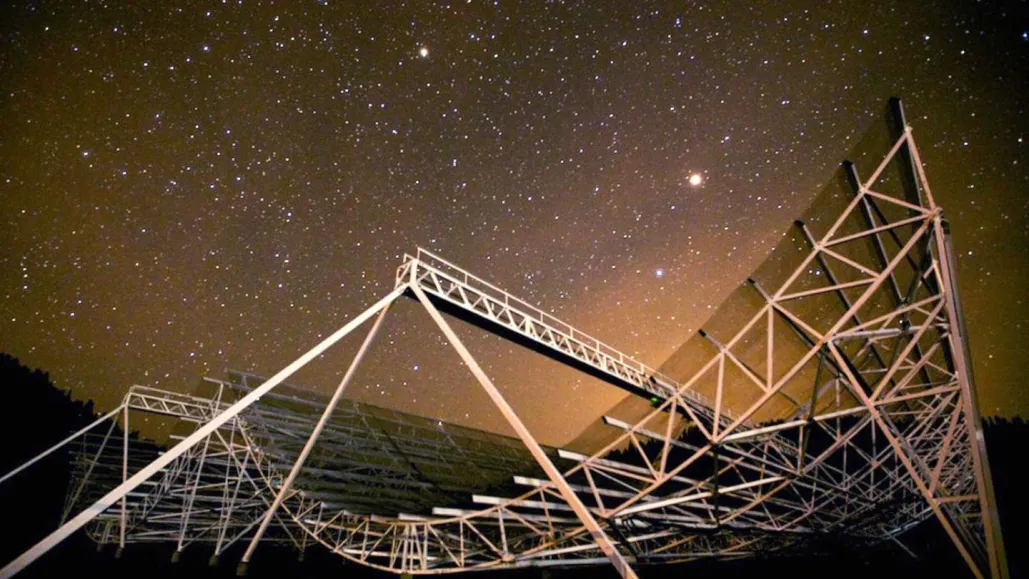
The findings, detailed in two studies published in The Astrophysical Journal Letters on January 21, 2025, reveal that astronomers detected 22 fast radio bursts between February and November 2024 using the Canadian Hydrogen Intensity Mapping Experiment (CHIME) telescope in British Columbia. These bursts were traced back to an 11-billion-year-old galaxy that had long ceased to form new stars. This discovery is especially perplexing, as FRBs are typically linked to galaxies still in the throes of stellar creation, making this ancient galaxy an unlikely source for such energetic signals.

This groundbreaking discovery forces astronomers to reconsider existing theories about FRBs. Traditionally, these bursts are thought to originate from supernovae or other energetic events in star-forming galaxies. However, this new observation raises the possibility of other unknown mechanisms that could be generating these bursts in an otherwise quiet galaxy. This revelation has opened up a new avenue of research into the nature of FRBs and their origins.

Tarraneh Eftekhari, an astronomer at Northwestern University and co-author of the study, explained in an interview with Live Science that only about a hundred FRBs have been definitively linked to their host galaxies, most of which are in regions where active star formation is occurring. The new discovery challenges the idea that FRBs are exclusively tied to such environments, suggesting that we may need to revise our understanding of these mysterious signals and explore other potential sources. This study underscores the complexity of the universe and the many phenomena still waiting to be understood.

WASP-121 b’s Atmosphere Revealed to Have Iron Rains, Jet Streams, and Other Extreme Phenomena

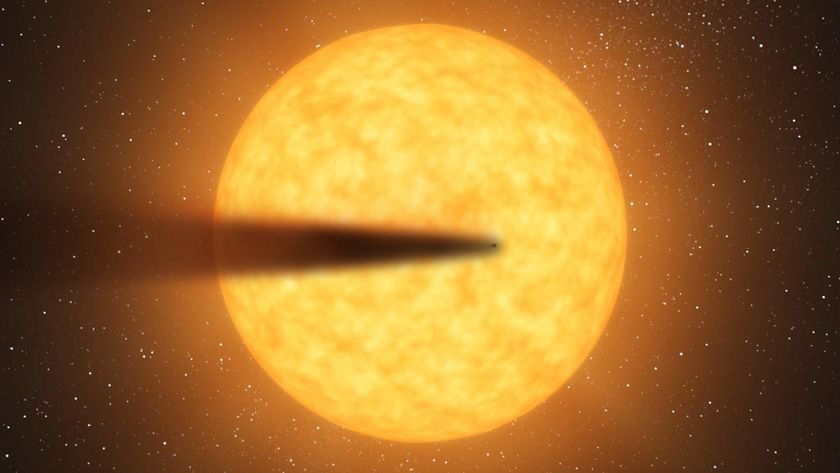
Astronomers have discovered that the exoplanet WASP-121 b, located around 900 light-years from Earth, experiences some of the most extreme weather phenomena ever observed in space. The planet, an ultra-hot Jupiter, has been found to feature intense atmospheric dynamics, including iron rains and incredibly strong winds that exceed the power of the most intense hurricanes in our own solar system. The planet’s violent weather is attributed to powerful jet streams that move vaporized metals through its atmosphere, creating a volatile and ever-changing climate.

WASP-121 b’s atmosphere has captivated scientists due to its unique and complex weather patterns. A recent study published in Nature reveals that elements like iron and titanium are not only vaporized on the planet’s scorching dayside but are also transported by fast-moving winds to the colder nightside. There, these metals condense and fall as liquid metal rain. Dr. Julia Victoria Seidel, a researcher at Observatoire de la Côte d’Azur, highlighted that the planet’s dynamic climate challenges our current understanding of meteorological processes, pushing the boundaries of what we know about planetary atmospheres.

The planet’s proximity to its host star makes it a prime example of an ultra-hot Jupiter, a class of exoplanets that experience extreme conditions. With a mass 1.2 times that of Jupiter, WASP-121 b completes an orbit in just 30 hours, making it one of the fastest orbiting exoplanets known. Because of its close distance to its star, the planet is tidally locked, meaning one side always faces the star, while the other remains in eternal darkness. On the sun-facing side, temperatures soar to extremes, causing metals to vaporize and form a toxic cloud. This heated atmosphere, combined with the planet’s rapid rotation, drives powerful winds that funnel these metal vapors across the planet.

In order to gain a deeper understanding of these phenomena, astronomers used the Very Large Telescope (VLT) in Chile’s Atacama Desert, specifically utilizing the ESPRESSO instrument. By combining light from multiple telescopes, the team was able to map different layers of the planet’s atmosphere, providing detailed insights into its chemical composition. These observations suggest that the complex weather systems on WASP-121 b may hold valuable clues for understanding the atmospheric behavior of exoplanets, further expanding our knowledge of alien worlds.