Yazılar

James Webb Space Telescope Unveils Breathtaking Detail of Hourglass Nebula LBN 483

The James Webb Space Telescope (JWST) has captured the stunning details of the Hourglass Nebula, also known as Lynds 483 (LBN 483), located around 650 light-years from Earth. This remarkable nebula is shaped by the dynamic interactions between two young stars at its core. These stars, in the early stages of their formation, drive powerful outflows that expel gas and dust into space, sculpting the surrounding nebula into a striking hourglass shape. As material from a collapsing molecular cloud feeds into these stars, energetic bursts of gas and dust are expelled, influencing the shape and evolution of the nebula. Over time, the interaction of stellar winds and jets with the surrounding matter continues to refine this fascinating structure, offering new insights into the processes involved in star formation.

The two protostars at the heart of LBN 483 are central to the formation and ongoing evolution of the nebula. The presence of a lower-mass companion star, detected in 2022 by the Atacama Large Millimeter/submillimeter Array (ALMA), suggests complex interactions within the star system. These interactions lead to periodic bursts of gas and dust as material accreted onto the stars triggers energetic outflows. These outflows, in turn, collide with the surrounding gas and dust, creating intricate structures within the nebula, such as dense pillars and shock fronts where freshly ejected material meets older expelled gas. JWST’s infrared imaging capabilities have allowed scientists to observe these features in unprecedented detail, providing a clearer picture of the dynamic processes that shape the nebula.

The role of magnetic fields in shaping the nebula’s structure has also become a focal point of recent studies. ALMA’s radio observations have detected polarized emissions from cold dust within the nebula, signaling the presence of a magnetic field that influences the direction and structure of the outflows. The magnetic field plays a crucial role in guiding the energetic jets and winds emanating from the protostars. One of the most intriguing discoveries is a 45-degree kink in the magnetic field, located about 1,000 astronomical units away from the stars. This deviation is believed to be caused by the migration of the secondary star over time, which alters the system’s angular momentum. As the stars continue to interact, the shape and direction of the nebula’s outflows are constantly influenced, providing further insight into the complex dynamics of stellar formation.

These findings emphasize the importance of both stellar interactions and magnetic fields in shaping nebulae like LBN 483. By capturing this nebula in extraordinary detail, the James Webb Space Telescope offers a rare glimpse into the dynamic processes that govern star formation. The study of such structures not only enhances our understanding of the birth and evolution of stars but also provides valuable clues about the forces that influence the development of complex cosmic structures.
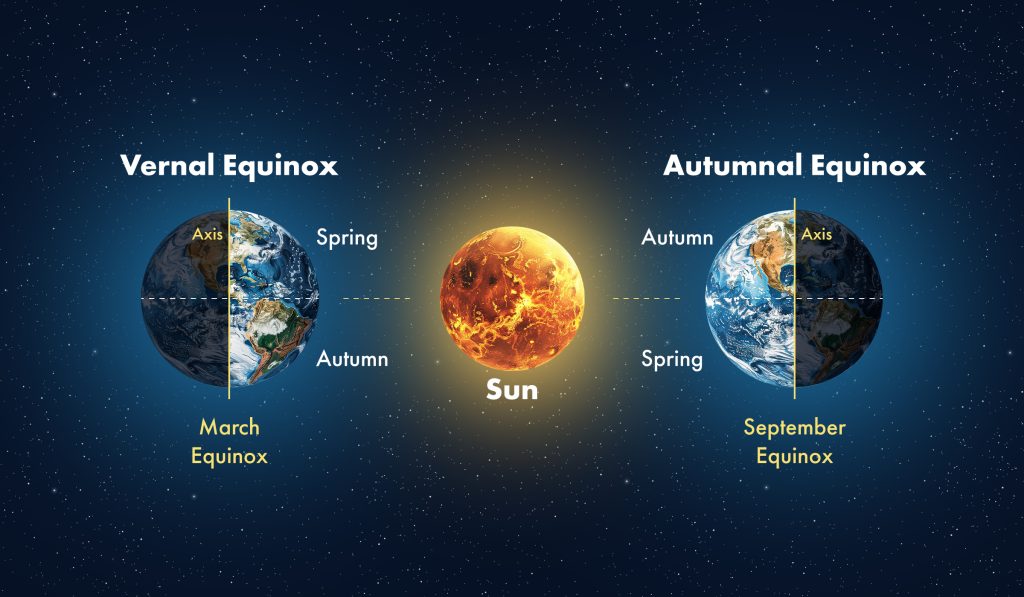
Vernal Equinox 2025: When It Happens and Why It Matters

Vernal Equinox 2025: Understanding the Science and Significance of the Event

The vernal equinox of 2025 will occur on March 20, marking the official start of spring in the Northern Hemisphere, while the Southern Hemisphere will experience the arrival of autumn. This annual event signifies the moment when day and night are nearly equal in length across the globe, offering a rare instance of balance between daylight and darkness. The occurrence of the equinox is due to Earth’s axial tilt of about 23.5 degrees, which influences how sunlight is distributed across the planet throughout the year. During the equinox, the Earth is positioned in such a way that it is neither tilted toward nor away from the Sun, resulting in almost equal durations of day and night.

The cause of the equinox lies in Earth’s orbital movement around the Sun. While orbiting, Earth maintains a fixed axial tilt, which causes the Sun to shine directly over the equator during the equinox. This alignment distributes sunlight more evenly between the Northern and Southern Hemispheres, creating a temporary balance between daytime and nighttime hours. However, complete equality is not achieved because of factors such as atmospheric refraction and the apparent size of the Sun, which lead to minor discrepancies in the exact length of daylight. Locations on the equator generally receive about 12 hours and 6 minutes of sunlight, with regions further from the equator experiencing slightly longer days.

Despite occurring around March 20 and September 22 each year, equinoxes do not always fall on the exact same date. The Earth’s orbit around the Sun is slightly longer than 365 days, and this extra fraction of a day accumulates over time, causing slight shifts in the calendar dates of the equinoxes. As a result, the timing of the equinox changes by a small amount each year, though it typically remains within a few days of the standard dates. In meteorology, spring is commonly considered to begin on March 1, while the astronomical definition of the season starts with the equinox.

The vernal equinox holds significance not only in scientific terms but also in cultural and historical contexts. It has long been a symbol of renewal and balance, marking the transition from the cold, dark winter months to the warmer, brighter days of spring. For many societies, the equinox has been celebrated as a time of new beginnings, growth, and the return of life to the natural world. Whether viewed from a scientific, cultural, or personal perspective, the equinox remains an event that connects us to the rhythms of the Earth and the cosmos.

Alpha Centauri Might Be Responsible for Millions of Asteroids Entering the Solar System

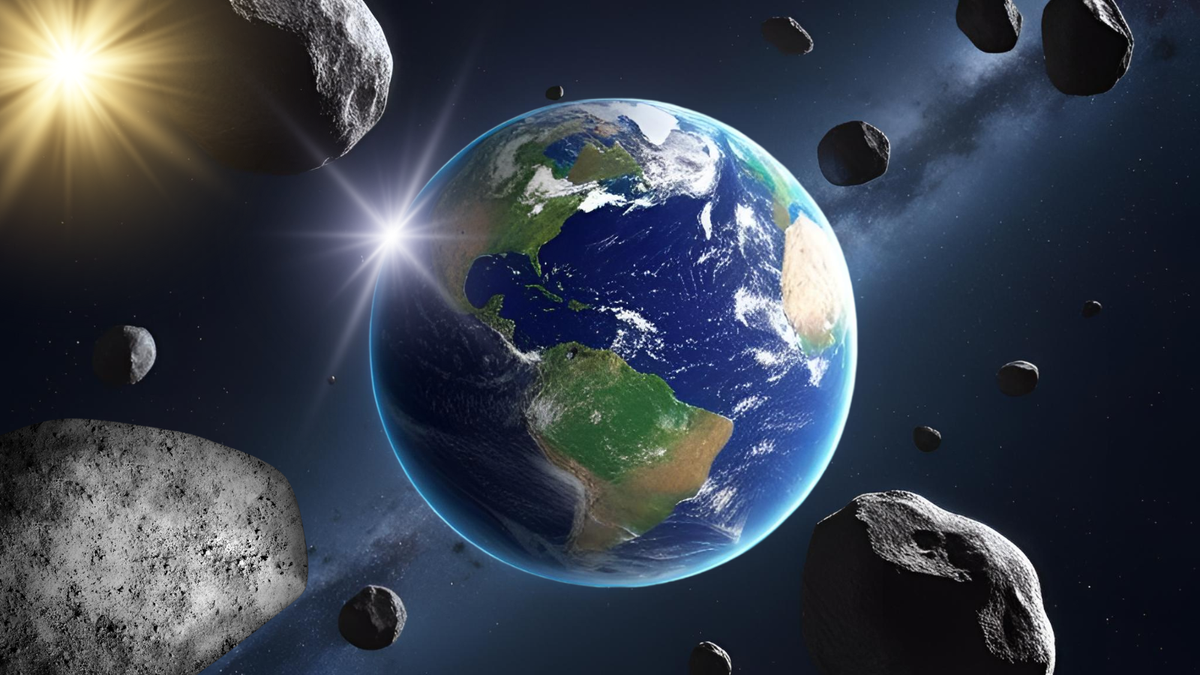
A new study suggests that a substantial number of asteroids originating from Alpha Centauri may have made their way into the solar system. Researchers estimate that if the amount of material ejected by Alpha Centauri is similar to that released by the solar system, nearly a million space rocks larger than 100 meters in diameter could be scattered throughout the Oort Cloud. Some of these interstellar objects might even migrate toward the inner solar system over time. As Alpha Centauri gradually moves closer to the solar system over the next 28,000 years, the influx of such objects is expected to increase.

According to research published on the preprint server arXiv, scientists from the University of Western Ontario conducted simulations to track the movement of Alpha Centauri’s ejected material over a span of 100 million years. Paul Wiegert, one of the researchers, explained to Space.com that detecting material from another star system at significant levels was unexpected. While space is vast, the possibility of foreign objects infiltrating the solar system in such numbers challenges previous assumptions about interstellar debris.

The study also reveals that approximately 50 objects from Alpha Centauri may enter the outer edge of the solar system each year. However, only a small fraction of these interstellar asteroids are likely to move inward. The researchers estimate that the probability of one such object currently residing within the orbit of Saturn is about one in a million. Due to their high velocities, most of these objects are unable to be captured by the sun’s gravity, making their presence within the solar system only temporary.

If confirmed, this discovery could reshape our understanding of interstellar material exchange between star systems. The potential presence of Alpha Centauri’s asteroids within our solar system raises intriguing questions about their composition and origins. Future space missions and telescope observations may provide further insights into these foreign visitors, helping scientists determine whether interstellar asteroids contribute to the chemical and physical evolution of planetary systems like our own.