Yazılar

NASA’s Hubble Space Telescope Observes Neutron Star with Unexplained Origins

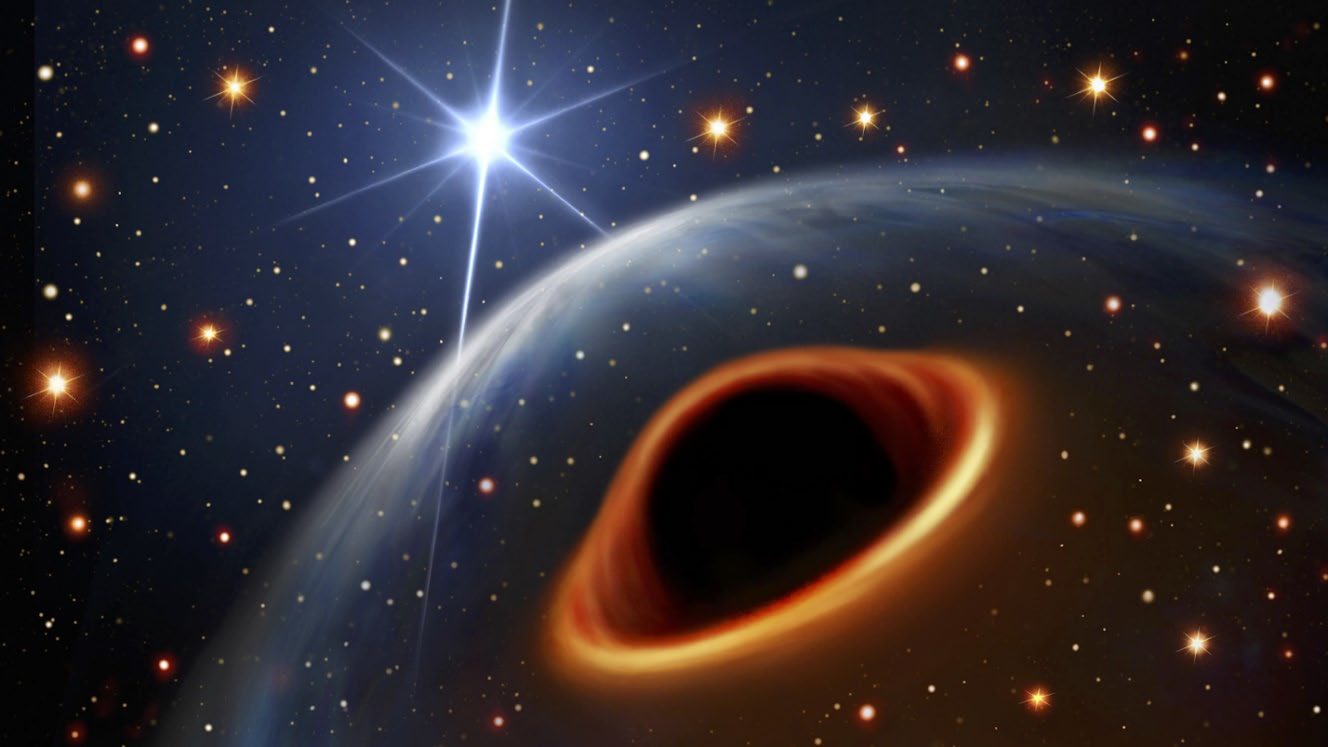
NASA’s Hubble Space Telescope has made an intriguing discovery, tracking a rogue magnetar known as SGR 0501+4516 as it roams through our galaxy. This magnetar was first detected in 2008 by NASA’s Swift Observatory, which identified intense gamma-ray flashes emanating from a distant region of the Milky Way. The unusual behavior of this magnetar suggests that not all magnetars within the galaxy may have been formed through the typical process of supernovae, leading scientists to reconsider their understanding of these extreme celestial objects. This finding could provide important clues about the enigmatic phenomenon of fast radio bursts, which have puzzled astronomers for years.

Magnetars, which are composed entirely of neutrons, are the remnants of massive stars that have exhausted their nuclear fuel and collapsed under their own gravity. What sets magnetars apart from other neutron stars is their incredibly strong magnetic fields, which can be a trillion times more intense than Earth’s magnetic field. Lead author of the study, Ashley Chrimes, explained that the magnetic forces of a magnetar are so powerful that they could potentially erase data on a credit card from a distance half the way between Earth and the Moon. If a person were to approach within 600 miles of a magnetar, the intense magnetic field could tear apart the atoms of their body.

Initially, scientists believed that SGR 0501+4516 had originated from the remnants of a nearby supernova, specifically one known as HB9. However, further observations using Hubble’s sensitive instruments, combined with data from ESA’s Gaia spacecraft, raised questions about this origin theory. Hubble’s long-term tracking of the magnetar’s movement revealed that it did not come from a supernova remnant or any star cluster. This unexpected finding has left researchers rethinking the creation process of this wandering magnetar and suggests that it may have a completely different origin.

The discovery of this rogue magnetar is particularly significant for understanding fast radio bursts (FRBs), high-energy astrophysical phenomena whose origins are still not fully understood. NASA researchers believe that the magnetar’s formation could provide insight into the nature of FRBs, which are thought to come from ancient stellar populations. To further explore this mystery, the research team plans to continue observing the magnetar with Hubble, aiming to uncover more about how magnetars form and how they might be linked to these mysterious cosmic bursts. The ongoing study could shed light on some of the most extreme and unexplained aspects of the universe.
NASA’s James Webb Space Telescope Uncovers Detailed Structure of a Planetary Nebula

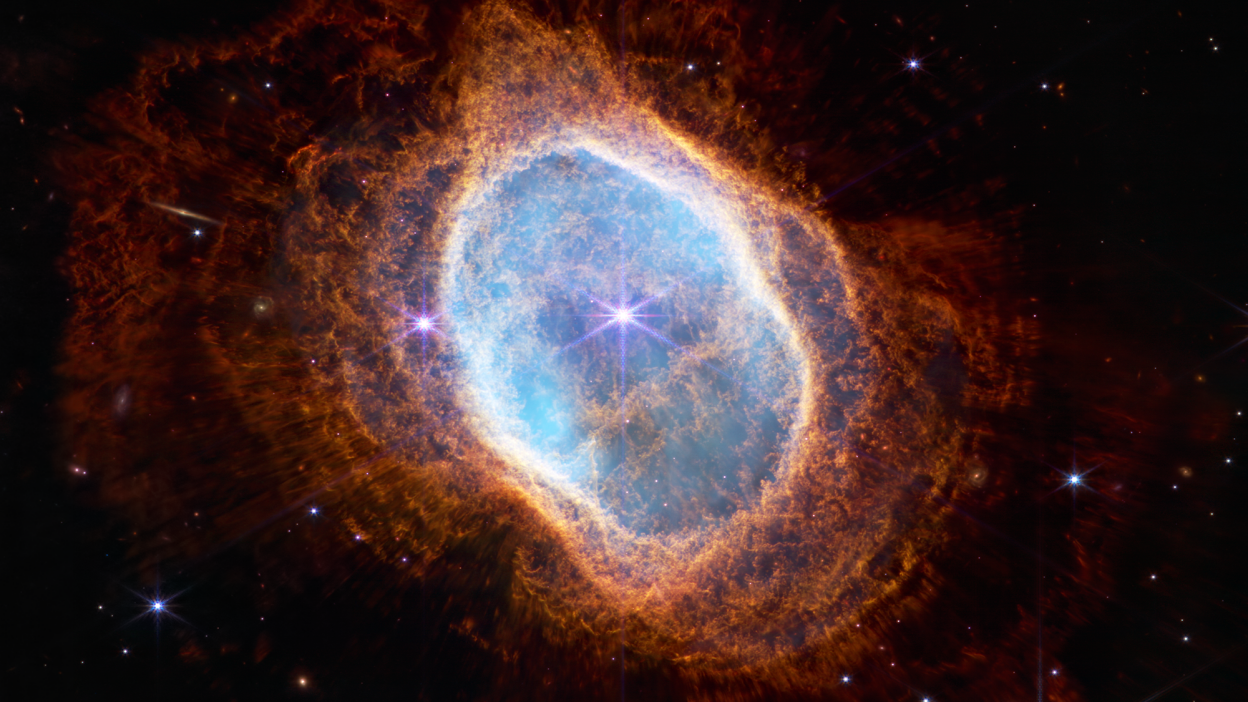
NASA’s James Webb Space Telescope (JWST) has uncovered the intricate details of NGC 1514, a planetary nebula that has been evolving over a span of at least 4,000 years. The nebula, which can only be seen in infrared light, exhibits a series of “fuzzy” clusters arranged in twisted patterns. These patterns highlight the complex structure of the nebula, revealing the presence of sharper holes near the center. These holes indicate areas where faster-moving materials have pierced through, providing insight into the dynamics of the nebula’s formation. An orange arc of dust surrounds the stars at the center of the nebula, which are in a close, elongated orbit that lasts about nine years. One of these stars, which was once several times more massive than the Sun, played a critical role in shaping the nebula’s structure.

The JWST has allowed astronomers to observe the dual gas rings that surround the dying star at the core of the nebula. The star’s interaction with its companion, as well as its evolution, is thought to have influenced the nebula’s distinctive hourglass shape. The rings of gas are unevenly illuminated, with the mid-infrared light casting a textured appearance. In particular, the clumped pink center of the nebula contains high concentrations of oxygen, particularly around the boundaries of the bubble-like holes. The nebula’s structure is of particular interest because of what it lacks: the absence of certain complex molecules. This absence may be due to the merging orbits of the two central stars, which have hindered the formation of these molecules.

NGC 1514, located in the Taurus constellation and situated 1,500 light-years from Earth, offers astronomers a valuable opportunity to study the final stages of a star’s life. The nebula’s dual rings of expelled material, traced back to the interaction of the two central stars, are particularly fascinating. The study of these rings offers a unique glimpse into the ongoing processes that shape star systems over long periods. These insights could help astronomers better understand the role of gravitational pull in shaping the dynamics of star outflows, providing key data on how stars evolve and interact over time.

The stars at the center of NGC 1514 are part of a binary system with one of the longest known orbits—about nine years. Astronomers believe that the creation of the nebula is largely attributed to the more massive of the two stars. As this star aged, it shed layers of gas and dust, producing a hot, compact core known as a white dwarf. The winds from this white dwarf likely carried away the earlier, slower-moving material, forming faint, clumped rings that are visible only in infrared light. Despite the lack of complex carbon-based molecules, JWST’s observations have revealed significant oxygen concentrations in the nebula, furthering the understanding of stellar processes. These findings underscore the importance of the JWST in advancing our knowledge of stellar evolution and the life cycles of stars.

Astronomers Discover Methane in Atmosphere of Nearest T Dwarf Star to Earth

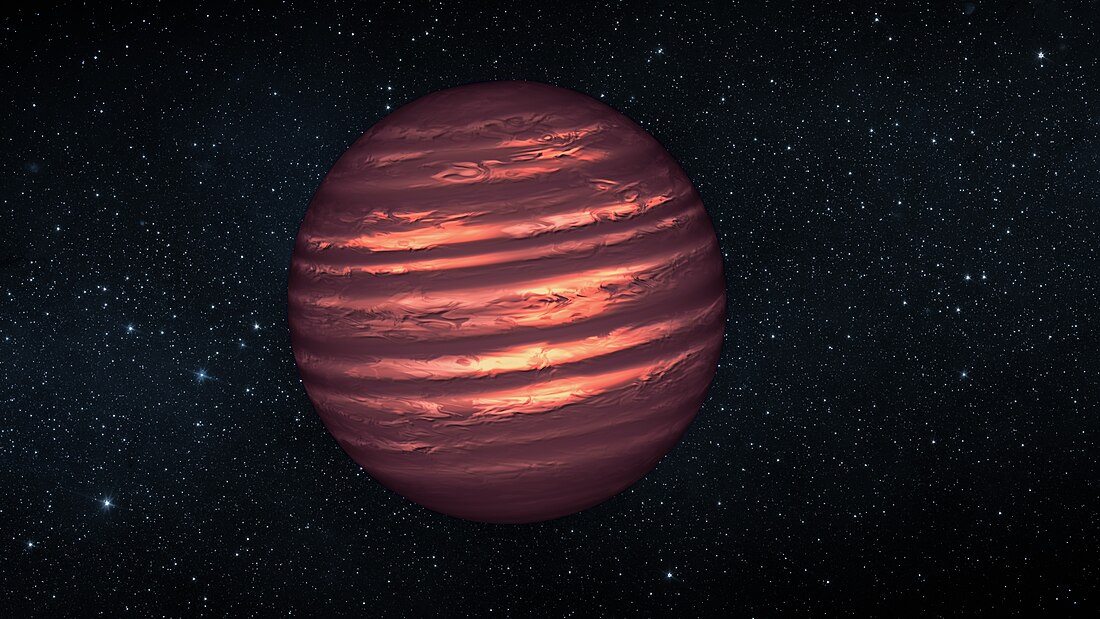
Astronomers have made an intriguing discovery in the atmosphere of WISEA J181006.18 −101000.5, a T dwarf star that holds the title of being the closest of its kind to Earth. Situated 29 light years away, this star has long intrigued scientists due to its peculiar characteristics. The most recent breakthrough came from a study published on March 28, with a revised version appearing on November 17. The research confirmed the presence of methane in the star’s atmosphere, adding another layer to its complex profile. Previously, WISEA J181006 was considered a metal-poor T dwarf, with an effective temperature range between 800–1,300 K.

This methane discovery has caught astronomers off guard, as it reshapes the classification of the star. The presence of methane was made possible through observations from the 10.4-meter Gran Telescopio Canarias (GTC), which provided the critical data. The detection of methane in the atmosphere strengthens the star’s classification as a T-type dwarf, overturning earlier suggestions that it might belong to the L-type category. The study also found that there were no detectable traces of carbon monoxide or potassium in the atmosphere of WISE1810, offering further clues about its composition.

In terms of chemical makeup, the research suggests that the carbon abundance in the star’s atmosphere is estimated to be -1.5 dex. The effective temperature is speculated to be around 1,000 K, but the star’s low metallicity might be a key factor in these readings. The absence of atomic potassium, a telltale sign of metallicity, points toward a lack of heavier elements. The study also considers how a lower temperature could potentially amplify this effect, making the star’s composition even more unusual. These findings mark a significant step forward in our understanding of T dwarfs and their atmospheric conditions.

Another interesting element in the study is WISE1810’s heliocentric velocity, recorded at -83 km/s. This gives insight into the star’s motion within the galaxy, which could be an essential piece in understanding its origin. Despite its low metallicity, the findings suggest that WISEA J181006 might be associated with the Milky Way’s thick disk, a region known for its older stars. Previous observations had hinted that the star’s atmosphere was primarily composed of hydrogen and water vapor, but the discovery of methane introduces a new dimension to its atmospheric chemistry. This breakthrough could ultimately help astronomers refine the criteria for classifying T dwarfs and offer fresh perspectives on the nature of distant celestial objects.