Yazılar

New Research Reveals Hercules-Corona Borealis Great Wall is Larger and Closer Than Previously Believed

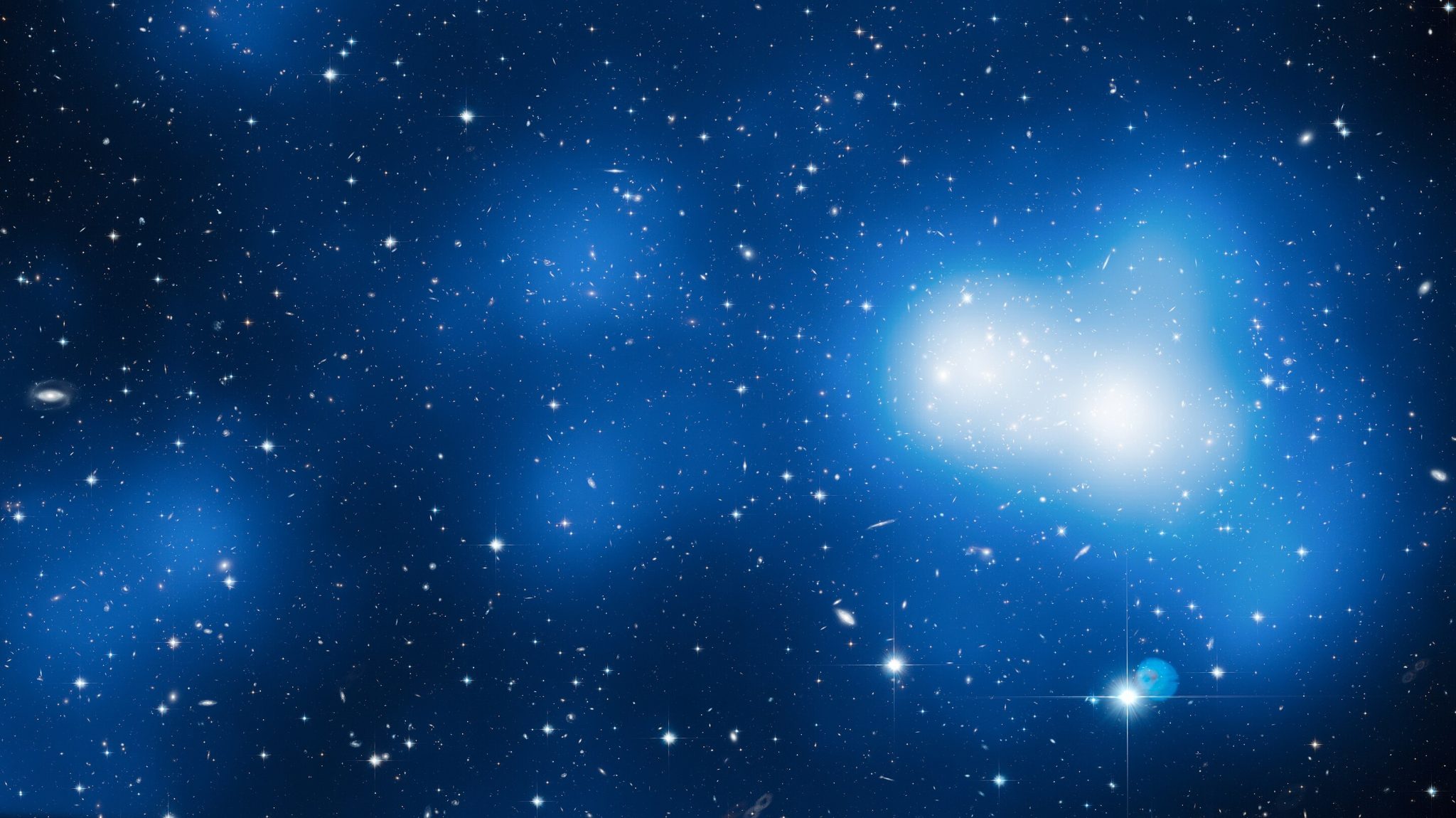
Astronomers have uncovered surprising new details about the Hercules-Corona Borealis Great Wall, a colossal structure in the universe composed of galaxies arranged in a vast network. Recent studies have shown that this galactic superstructure is not only larger than previously believed but also closer to Earth than originally estimated. By utilizing gamma-ray bursts (GRBs) — some of the brightest explosions in the universe — scientists were able to refine their understanding of the Great Wall’s size and proximity, challenging existing theories on the large-scale structure of the cosmos.

The Hercules-Corona Borealis Great Wall was first discovered in 2014, when astronomers identified a dense filament of galaxies that formed part of a supercluster. Since then, research has continued to uncover more about this mysterious feature, but it is only now that a new study has significantly expanded on these findings. By examining a broader sample of gamma-ray bursts, astronomers Hakkila and Zsolt Bagoly have been able to make more precise measurements, revealing that the structure is even more expansive and closer to our planet than initially thought.

Gamma-ray bursts play a pivotal role in the study of cosmic structures like the Great Wall. These intense explosions, resulting from the collapse of massive stars or the collision of neutron stars, emit powerful jets that can be detected across vast distances. Thanks to their extreme brightness, GRBs act as cosmic beacons, helping scientists spot galaxies that would otherwise be too faint to observe directly. This new understanding of the Great Wall, stretching over 10 billion light-years, raises questions about the uniformity of the universe and suggests that current models of cosmic structure formation might be incomplete.

To fully grasp the scope of the Hercules-Corona Borealis Great Wall, more data is needed. While NASA’s Fermi Gamma-ray Burst satellite has identified hundreds of GRB events, there are still uncertainties surrounding the origins of some of the bursts. Looking ahead, astronomers are hopeful that the upcoming ESA mission, THESEUS (Transient High Energy Sources and Early Universe Surveyor), will provide the necessary observational data to map the Great Wall in its entirety. This mission promises to expand the catalogue of known GRBs, particularly those from extreme distances, and could offer critical insights into the formation of the universe’s largest structures.
Hydrogen Gas Cloud Could Hold Key to Unraveling the Mystery of Missing Non-Dark Matter in the Universe

For years, scientists have struggled to account for a significant portion of the universe’s matter. While stars, galaxies, and visible structures make up a portion of the cosmos, it’s been observed that about half of the matter remains unaccounted for. Recent discoveries point toward hydrogen gas clouds as the missing piece of the puzzle, potentially unveiling what has been referred to as the “missing” normal matter of the universe. This missing matter, which isn’t dark matter, could account for as much as 15% of the universe’s total mass.

A groundbreaking study led by Simone Ferraro from the University of California, Berkeley, suggests that hydrogen gas clouds surrounding most galaxies are far more extensive than previously understood. This newfound expansiveness could be the key to solving the mystery of the universe’s missing matter. The study, published in the online preprint journal arXiv, presents compelling evidence that these gas clouds may hold the answer to one of the most perplexing questions in modern astrophysics.

To explore this mystery, Ferraro and her team utilized data from the Dark Energy Spectroscopic Instrument (DESI), which gathered images of approximately 7 million galaxies. By studying the faint halos of ionized hydrogen gas at the outer edges of these galaxies—structures that are invisible to traditional observation methods—the team was able to detect signs of this missing matter. The halos, when connected across galaxies, form a cosmic web that could span vast distances, offering a potential explanation for the undetected matter that has eluded scientists for decades.

This discovery not only sheds light on the missing matter but also offers new insights into the behavior of black holes. Initially, researchers believed black holes emitted a large amount of gas during their early life cycles. However, the study suggests that these cosmic giants may be far more active than previously thought, with some black holes potentially switching on and off in cycles. The next step for astronomers is to integrate these new findings into existing models of the universe, potentially transforming our understanding of both matter and the dynamic role of black holes in cosmic evolution.

Farthest Spiral Galaxy Unveiled by James Webb Telescope, Offering New Insights Into Galactic Evolution

In a groundbreaking discovery, NASA’s James Webb Space Telescope (JWST) has revealed a galaxy that closely mirrors our own Milky Way—yet it formed much earlier in the universe’s history. This newly identified galaxy, named Zhúlóng, features hallmark traits of a mature spiral galaxy: a dense central bulge of ancient stars, a bright disk of ongoing star formation, and two clearly defined spiral arms. Its remarkable resemblance to the Milky Way—despite existing in the early universe—challenges long-standing cosmological models that suggest such massive galaxies evolve through a gradual process of smaller galaxy mergers over billions of years.

Zhúlóng’s impressive scale further intensifies the mystery. Estimated to contain about 100 billion solar masses—making it slightly more massive than the Milky Way—the galaxy’s star-forming disk spans roughly 60,000 light-years. What sets this discovery apart is not just its size, but its timing: Zhúlóng existed more than a billion years earlier than Ceers-2112, another early spiral galaxy, and at a time when the universe was only a quarter of its current age. This raises crucial questions about how such complex structures could have emerged so soon after the Big Bang.

The findings, published in Astronomy & Astrophysics, underscore the transformative power of JWST in exploring the deep past of our cosmos. The telescope’s sensitive instruments have captured the swirling spiral arms of Zhúlóng with astonishing clarity, allowing researchers to trace its structure and composition across billions of light-years. These observations contradict the prevailing belief that well-ordered, Milky Way-like galaxies are the end products of chaotic evolutionary histories stretching over eons. Instead, Zhúlóng appears as a fully formed spiral galaxy just a billion years after the universe’s birth.

This discovery not only shakes the foundation of current galaxy formation theories but also reinforces the notion that our understanding of cosmic history is still evolving. Scientists are now calling for follow-up observations using both JWST and the Atacama Large Millimetre/submillimetre Array (ALMA) in Chile. By examining galaxies like Zhúlóng more closely, astronomers hope to uncover how such early, massive spirals came to exist—and in doing so, may rewrite key chapters of how the universe, and ultimately galaxies like our own, came to be.