
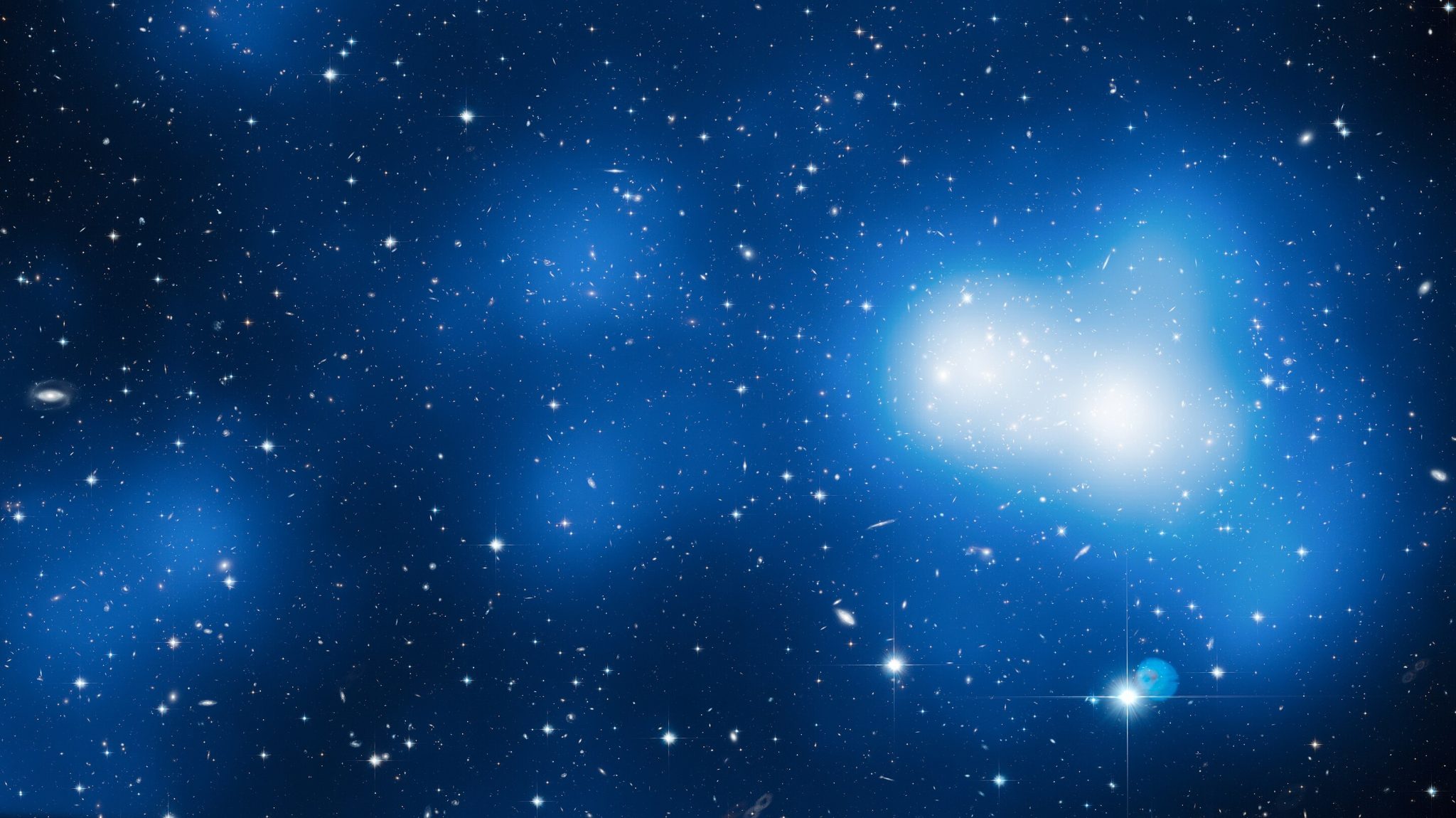
Astronomers have uncovered surprising new details about the Hercules-Corona Borealis Great Wall, a colossal structure in the universe composed of galaxies arranged in a vast network. Recent studies have shown that this galactic superstructure is not only larger than previously believed but also closer to Earth than originally estimated. By utilizing gamma-ray bursts (GRBs) — some of the brightest explosions in the universe — scientists were able to refine their understanding of the Great Wall’s size and proximity, challenging existing theories on the large-scale structure of the cosmos.
The Hercules-Corona Borealis Great Wall was first discovered in 2014, when astronomers identified a dense filament of galaxies that formed part of a supercluster. Since then, research has continued to uncover more about this mysterious feature, but it is only now that a new study has significantly expanded on these findings. By examining a broader sample of gamma-ray bursts, astronomers Hakkila and Zsolt Bagoly have been able to make more precise measurements, revealing that the structure is even more expansive and closer to our planet than initially thought.
Gamma-ray bursts play a pivotal role in the study of cosmic structures like the Great Wall. These intense explosions, resulting from the collapse of massive stars or the collision of neutron stars, emit powerful jets that can be detected across vast distances. Thanks to their extreme brightness, GRBs act as cosmic beacons, helping scientists spot galaxies that would otherwise be too faint to observe directly. This new understanding of the Great Wall, stretching over 10 billion light-years, raises questions about the uniformity of the universe and suggests that current models of cosmic structure formation might be incomplete.
To fully grasp the scope of the Hercules-Corona Borealis Great Wall, more data is needed. While NASA’s Fermi Gamma-ray Burst satellite has identified hundreds of GRB events, there are still uncertainties surrounding the origins of some of the bursts. Looking ahead, astronomers are hopeful that the upcoming ESA mission, THESEUS (Transient High Energy Sources and Early Universe Surveyor), will provide the necessary observational data to map the Great Wall in its entirety. This mission promises to expand the catalogue of known GRBs, particularly those from extreme distances, and could offer critical insights into the formation of the universe’s largest structures.