
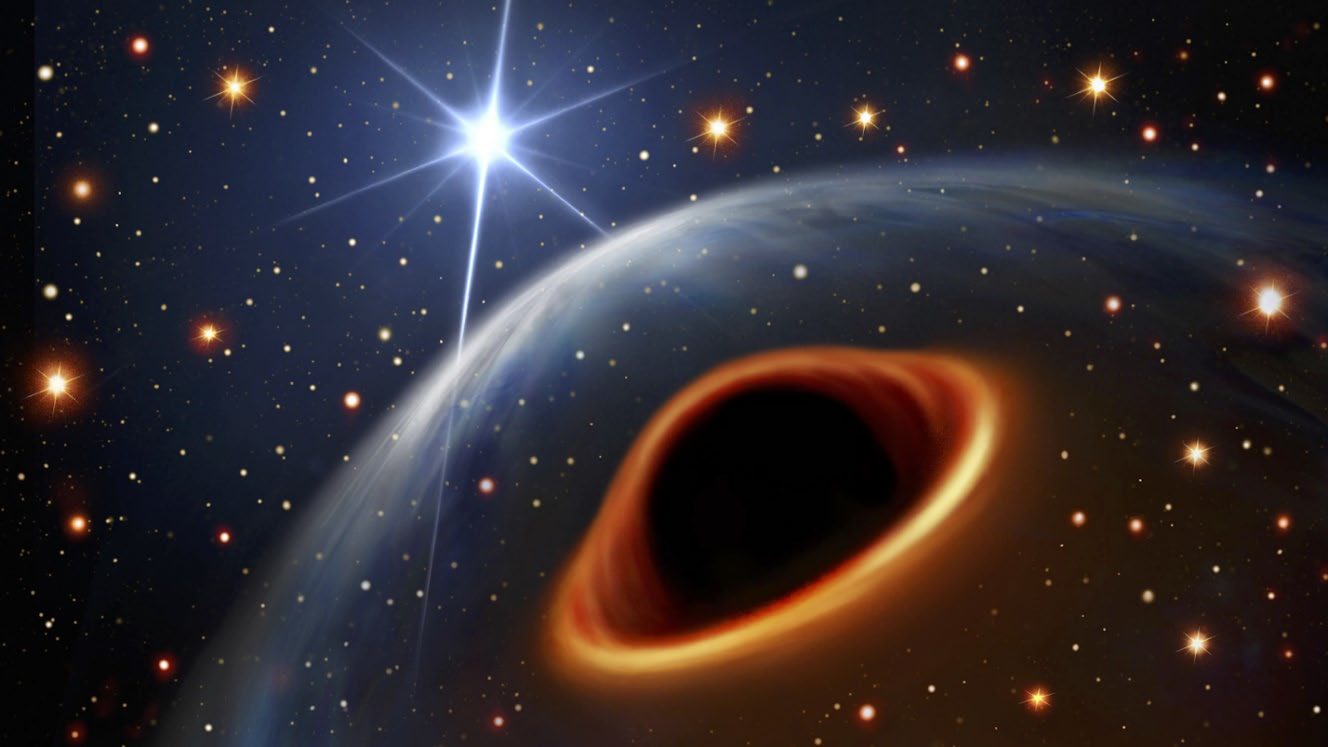
NASA’s Hubble Space Telescope has made an intriguing discovery, tracking a rogue magnetar known as SGR 0501+4516 as it roams through our galaxy. This magnetar was first detected in 2008 by NASA’s Swift Observatory, which identified intense gamma-ray flashes emanating from a distant region of the Milky Way. The unusual behavior of this magnetar suggests that not all magnetars within the galaxy may have been formed through the typical process of supernovae, leading scientists to reconsider their understanding of these extreme celestial objects. This finding could provide important clues about the enigmatic phenomenon of fast radio bursts, which have puzzled astronomers for years.
Magnetars, which are composed entirely of neutrons, are the remnants of massive stars that have exhausted their nuclear fuel and collapsed under their own gravity. What sets magnetars apart from other neutron stars is their incredibly strong magnetic fields, which can be a trillion times more intense than Earth’s magnetic field. Lead author of the study, Ashley Chrimes, explained that the magnetic forces of a magnetar are so powerful that they could potentially erase data on a credit card from a distance half the way between Earth and the Moon. If a person were to approach within 600 miles of a magnetar, the intense magnetic field could tear apart the atoms of their body.
Initially, scientists believed that SGR 0501+4516 had originated from the remnants of a nearby supernova, specifically one known as HB9. However, further observations using Hubble’s sensitive instruments, combined with data from ESA’s Gaia spacecraft, raised questions about this origin theory. Hubble’s long-term tracking of the magnetar’s movement revealed that it did not come from a supernova remnant or any star cluster. This unexpected finding has left researchers rethinking the creation process of this wandering magnetar and suggests that it may have a completely different origin.
The discovery of this rogue magnetar is particularly significant for understanding fast radio bursts (FRBs), high-energy astrophysical phenomena whose origins are still not fully understood. NASA researchers believe that the magnetar’s formation could provide insight into the nature of FRBs, which are thought to come from ancient stellar populations. To further explore this mystery, the research team plans to continue observing the magnetar with Hubble, aiming to uncover more about how magnetars form and how they might be linked to these mysterious cosmic bursts. The ongoing study could shed light on some of the most extreme and unexplained aspects of the universe.