Austria’s Freedom Party Wins First Far-Right National Election Since World War II
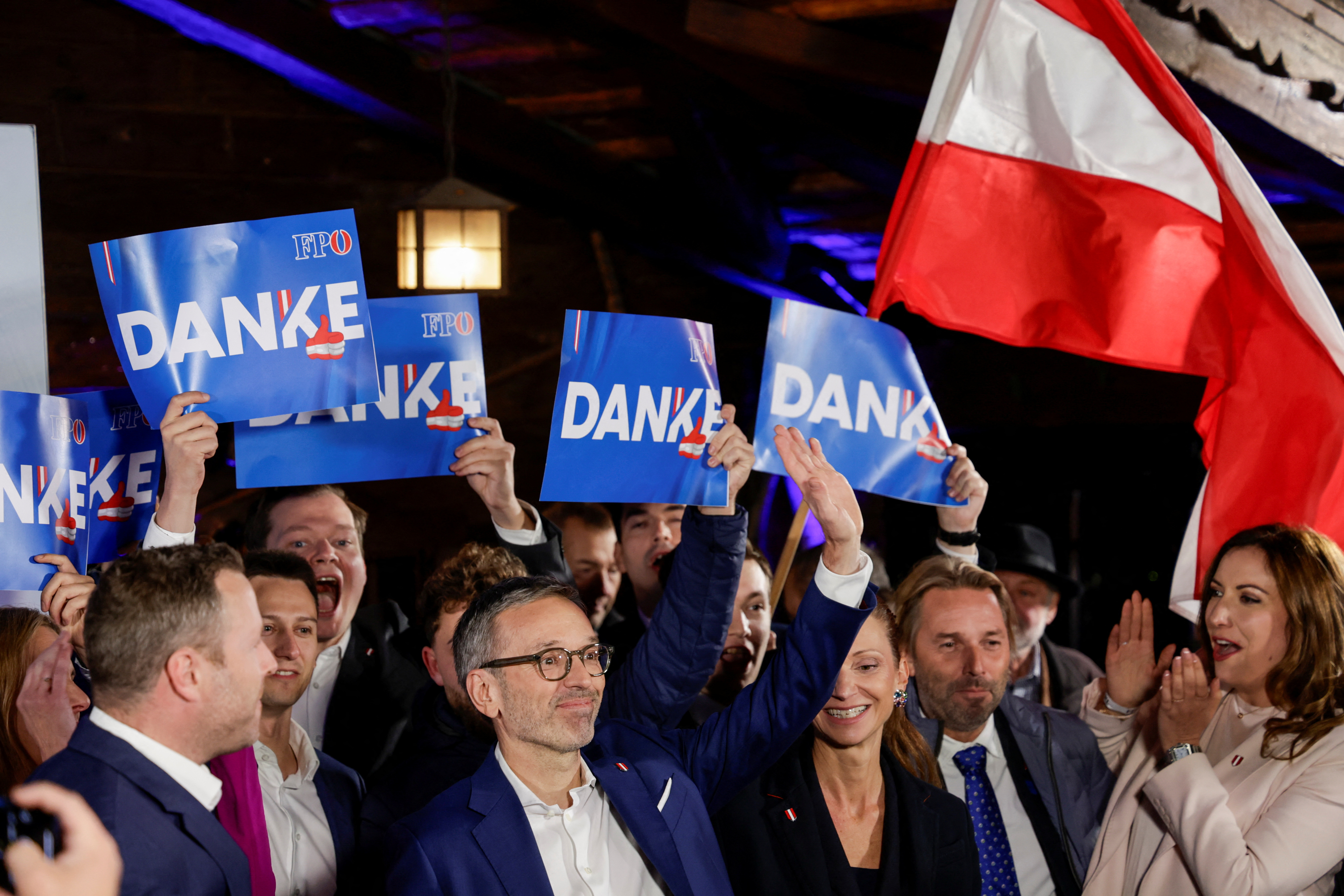
The Freedom Party (FPÖ) has achieved a historic victory in Austria’s national parliamentary elections, marking the first far-right win since World War II. Preliminary results showed the FPÖ capturing 29.2% of the vote, surpassing Chancellor Karl Nehammer’s Austrian People’s Party (ÖVP), which came in second with 26.5%. The Social Democrats (SPÖ) finished third with 21%. The current coalition government of Nehammer’s ÖVP and the environmentalist Greens has now lost its majority in parliament.
Herbert Kickl, the FPÖ leader and former interior minister, aims to become Austria’s new chancellor, but his path to power remains uncertain. He would need a coalition partner to form a majority government, but many political rivals have already indicated they are unwilling to work with him. Nehammer, who previously ruled out a coalition with Kickl, reaffirmed his stance after the election.
The FPÖ’s victory reflects growing public frustration over a range of issues including immigration, inflation, and the war in Ukraine. The party’s nationalist platform, outlined in their manifesto “Fortress Austria,” advocates for stringent border controls, the suspension of asylum rights, and the “remigration” of foreigners. The FPÖ also opposes sanctions against Russia, criticizes Western military support for Ukraine, and seeks to exit the European Sky Shield Initiative, a missile defense project led by Germany.
Despite his controversial views, Kickl’s message has resonated with many voters, especially amid rising concerns over economic instability and the cost of living. His success comes as part of a broader European trend, with far-right parties also gaining ground in countries like the Netherlands and Germany. Geert Wilders, the Dutch far-right leader, and Alice Weidel, co-leader of Germany’s Alternative for Germany (AfD), congratulated the FPÖ on social media following their victory.
This election marks a significant rebound for the Freedom Party after a series of setbacks, including a 2019 scandal involving then-party leader Heinz-Christian Strache, who resigned after being caught in a corruption sting. Despite the fallout, the FPÖ has managed to rebuild its support base under Kickl’s leadership, securing its best-ever national election result.
While Nehammer expressed disappointment in not securing first place, he highlighted that his party had made gains from lower poll ratings. However, forming a stable government now presents a challenge, with limited coalition options available. The possibility of an alliance between the ÖVP and SPÖ has been floated as an alternative to including the far-right in government, though such a partnership could face significant obstacles.
The final election results are expected later this week after the remaining postal ballots are counted, though they are unlikely to affect the overall outcome. Meanwhile, public protests erupted in Vienna, with demonstrators opposing Kickl’s far-right agenda and holding signs accusing him of being a “Nazi.”