Yazılar

Amazon Unveils “Buy with AWS” Button for Cloud Software Vendors

Amazon is expanding its cloud business by introducing a new feature called the “Buy with AWS” button, aimed at streamlining the purchasing process for cloud software vendors and their customers. This feature, announced at Amazon Web Services’ (AWS) Reinvent conference in Las Vegas, allows software vendors to embed a payment option on their websites that enables customers with AWS accounts to buy services directly, taking advantage of pre-agreed discounts.

AWS, the leading cloud provider, brings in over $100 billion in annual revenue, and many software vendors, including Databricks, Wiz, and Workday, host their products on AWS. Now, these vendors can simplify the transaction process, providing a more seamless buying experience for users who are already part of the AWS ecosystem.

Matt Yanchyshyn, AWS’ vice president of marketplace and partner services, emphasized that the new button is designed to increase both customer and partner loyalty, ultimately improving sales conversion rates. The integration is simple for software companies, with the only requirement being that they sell through the AWS Marketplace, where Amazon has recently reduced fees to 3% or lower in some cases.

On the consumer side, the introduction of the “Buy with AWS” button mirrors Amazon’s successful “Buy with Prime” program, which allows retailers to integrate Amazon’s fulfillment network into their own websites. However, the AWS button offers a key difference—there are no fees for software vendors to embed it on their sites. This arrangement results in more revenue for Amazon, as the purchases are tied to services running on AWS.

“Buy with Prime is a separate initiative, but we work closely with that team,” said Yanchyshyn, highlighting the distinction between the two programs. “Buy with AWS is focused on a different use case.”

For cloud software vendors like Databricks, the new feature promises to simplify the purchasing process and increase AWS usage. David Meyer, senior vice president of product management at Databricks, noted that “Buy with AWS” will likely lead to a higher share of revenue from AWS deployments, as it simplifies the buying process.

Workday, which provides finance and human resources software, plans to implement the button for its Adaptive Planning product, acquired in 2018. The company hopes that the button will expedite procurement and make it easier for customers to adopt their software through the AWS Marketplace.

“If this works well, we may expand its use to more products,” said Matthew Brandt, Workday’s senior vice president of global partners. He also mentioned that buyers who are familiar with AWS may be more inclined to choose Workday as a provider.

Industry analysts, such as Ed Anderson from Gartner, believe that the “Buy with AWS” button could prompt other cloud providers to introduce similar features for third-party websites, a move that could further simplify cloud software transactions and increase cloud providers’ market share.

 

Microsoft Faces £1 Billion UK Lawsuit Over Alleged Overcharging on Rival Cloud Platforms

INTRODUCTION

Microsoft is facing a collective lawsuit in the UK, accused of unfairly leveraging its dominance in the cloud-based server market to overcharge customers of competing cloud providers like Amazon Web Services (AWS), Google Cloud Platform, and Alibaba Cloud. The lawsuit, representing thousands of British businesses, seeks over £1 billion in damages for alleged anti-competitive practices.


KEY DETAILS

  1. Allegations Against Microsoft:
    • Microsoft is accused of charging higher licensing fees for its Windows Server software when used on competitors’ cloud platforms compared to its own Azure cloud service.
    • The lawsuit claims these practices penalize businesses for choosing alternative cloud providers and force them towards Azure, reducing competition.
  2. Legal Representation and Claimant:
    • The collective action, led by competition lawyer Maria Luisa Stasi from Article19, is an “opt-out” lawsuit, meaning all affected UK businesses are automatically included unless they opt out.
    • Stasi argues that Microsoft’s practices result in unfair penalties and seeks compensation for organizations that were overcharged.
  3. Context and Industry Implications:
    • Earlier this year, Microsoft settled a €20 million case with CISPE in the EU, agreeing to equalize prices for its software across smaller cloud platforms and Azure.
    • Despite this, Google filed a fresh EU antitrust complaint in September, accusing Microsoft of software licensing practices that lock customers into Azure and hinder competition.
  4. Competition and Markets Authority (CMA) Investigation:
    • The UK’s CMA is preparing behavioral remedies for anti-competitive practices in the cloud industry, with a provisional decision expected soon.
    • The CMA has previously set a timeline for final decisions by late 2024.

ANALYSIS

  1. Market Impact:
    Microsoft’s pricing strategies could potentially stifle competition by creating financial barriers for businesses to choose alternative cloud solutions. This undermines the competitive landscape, favoring Azure over rivals like AWS and Google Cloud.
  2. Legal and Regulatory Landscape:
    • The ongoing CMA investigation and EU antitrust actions highlight increasing regulatory scrutiny of dominant players in the tech industry.
    • The outcome of this lawsuit could set a precedent for how licensing practices are regulated in the cloud market globally.
  3. Challenges for Microsoft:
    • While Microsoft has attempted to address concerns through settlements, continued allegations and lawsuits underscore the persistence of its licensing controversies.
    • With potential damages exceeding £1 billion, this case poses significant reputational and financial risks.

CONCLUSION

The lawsuit against Microsoft represents a critical moment for competition in the cloud computing industry. If successful, it could lead to broader changes in licensing practices, ensuring fairer competition among cloud providers and benefiting businesses reliant on these technologies.


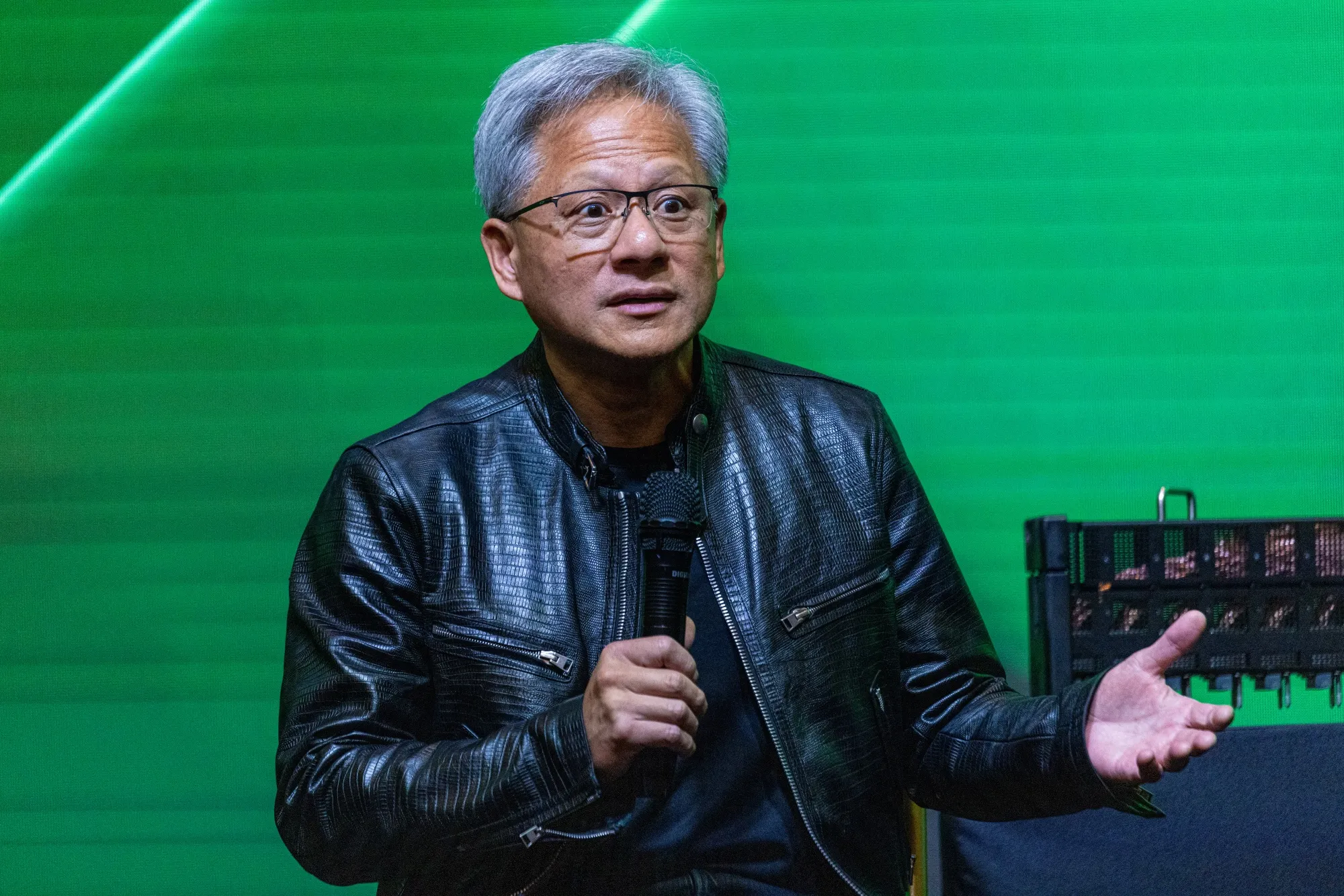
Nvidia CEO Highlights Need for Affordable Computing to Drive ‘Reasoning’ AI

Nvidia CEO Jensen Huang has outlined a vision for the future of Artificial Intelligence (AI), where AI systems will be capable of “reasoning” rather than simply responding to inputs. Speaking during a podcast with Arm Holdings CEO Rene Haas, Huang emphasized that achieving this advanced level of AI will depend on making computing more affordable. Current AI tools, like OpenAI’s ChatGPT, which Huang personally uses daily, are powerful but still limited in their ability to carry out complex reasoning processes. To reach the next stage, AI will need to be able to analyze queries through hundreds or even thousands of steps, reflecting on its conclusions.

This capability would represent a significant leap forward from current AI models, which are highly efficient at generating responses but lack the depth of self-reflection and reasoning. Huang explained that future AI systems will differ by being able to process and interpret information with a much greater degree of complexity. This new form of AI will be more dynamic, capable of reasoning through multiple scenarios before arriving at conclusions, making it more adaptive and intelligent.

To make this vision a reality, Nvidia plans to continue enhancing its hardware capabilities. Huang stated that Nvidia will increase the performance of its chips by two to three times annually, while keeping the cost and energy consumption at current levels. This continuous improvement in chip technology is essential to lowering the cost of computing and making advanced AI systems more accessible. Huang believes that this will lay the foundation for AI models capable of handling inference, or the ability to spot patterns and draw conclusions, at a much more sophisticated level.

The transition to reasoning AI will be transformative, reshaping how AI systems operate and interact with the world. However, Huang noted that this leap will only be possible once the infrastructure required to support such advanced computation becomes affordable. With Nvidia at the forefront of this technological advancement, the company is positioning itself to play a pivotal role in making reasoning AI a mainstream reality.