Yazılar

Biden to Order Tougher Cybersecurity Standards Amid Growing China Hacking Threat

President Joe Biden is preparing to issue an executive order aimed at enhancing cybersecurity standards for federal agencies and contractors, as part of efforts to combat the escalating threat of cyberattacks linked to China and cybercriminal organizations. The new executive order, expected to be published in the coming days, seeks to address several high-profile cyberattacks attributed to China, targeting critical infrastructure, government agencies, major telecom firms, and most recently, the U.S. Treasury Department. While the U.S. government has attributed these hacks to China, Beijing has consistently denied involvement.

The proposed order emphasizes stricter standards for secure software development, including the need for vendors to provide detailed documentation that verifies adherence to these standards. The Cybersecurity and Infrastructure Security Agency (CISA) will be tasked with evaluating and validating this documentation through its software attestation program. Vendors whose software fails validation may face further legal action, as per the draft.

Tom Kellermann, Senior Vice President of Cyber Strategy at Contrast Security, expressed support for the effort to push for more secure software development but warned that the proposed attestation process might not go far enough. Kellermann pointed out that the timeline outlined in the order appears arbitrary given the urgency of the threat posed by China, Russia, and cybercriminal syndicates. “They’re already here,” Kellermann said, stressing the ongoing cyberattacks against U.S. critical infrastructure and government agencies, which have been fueled by foreign state actors.

The executive order also includes guidelines for the secure management of access tokens and cryptographic keys used by cloud providers. In 2023, Chinese-linked hackers exploited vulnerabilities in this area to access email accounts belonging to senior U.S. government officials, an issue that was highlighted by Microsoft.

Brandon Wales, Vice President of Cybersecurity Strategy at SentinelOne, acknowledged that the order builds on efforts from the past five years to strengthen cybersecurity capabilities, and emphasized that the Chinese threat is a major focus. However, he also noted that the U.S. faces a broad range of cybersecurity challenges that require ongoing attention.

The White House has declined to comment on the forthcoming order, and CISA did not respond to requests for comment.

 

Biden Signs Executive Order to Support AI Data Centers with Federal Power and Land

On Tuesday, President Joe Biden signed an executive order designed to bolster the infrastructure needed for advanced artificial intelligence (AI) data centers. The order, according to the White House, aims to address the growing energy demands of AI by leveraging federal land, particularly from the Departments of Defense and Energy, to host gigawatt-scale AI data centers and new clean power facilities.

Biden emphasized that the initiative would accelerate the development of AI infrastructure in the U.S., promoting economic competitiveness, national security, AI safety, and clean energy. “The next generation of AI infrastructure will be built here in America,” Biden stated, underscoring the importance of aligning the country’s energy and technological sectors.

A key provision of the order mandates that companies using federal land for AI data centers must purchase a portion of American-made semiconductors. The exact number of chips required will be determined on a case-by-case basis for each project. This comes as part of the Biden administration’s broader push to invest over $30 billion in subsidizing U.S. chip production.

Tarun Chhabra, White House technology adviser, pointed out that the increasing demand for computational power to train and operate advanced AI models necessitates the creation of robust infrastructure. By 2028, leading AI developers will require data centers with up to five gigawatts of capacity to support the most sophisticated models.

The executive order also addresses national security concerns by ensuring AI technology remains within the U.S. and allied nations, as the Commerce Department moves forward with additional restrictions on AI chip and technology exports. Chhabra noted that AI systems already present substantial risks, including potential military applications and threats related to biological, chemical, radiological, or nuclear weapons.

The order also instructs agencies to expedite electric grid interconnection, permitting processes, and transmission development surrounding the newly designated federal sites.

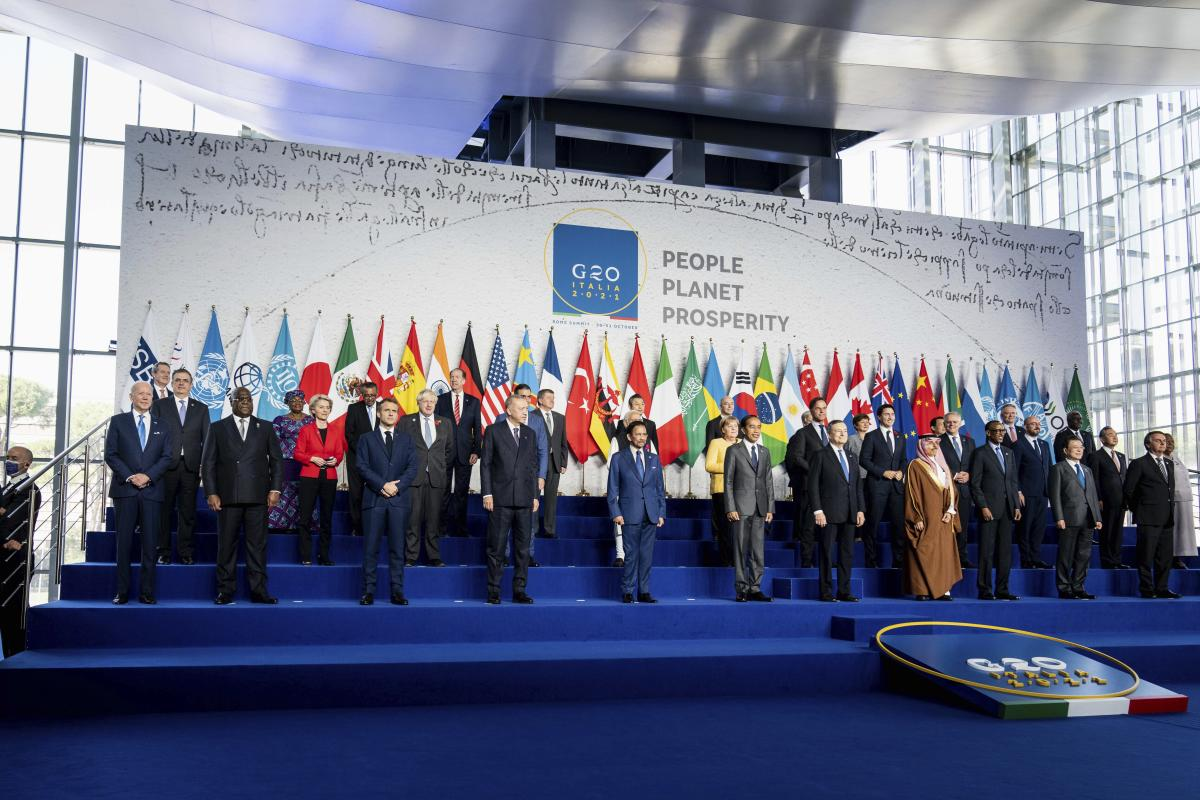
G20 Summit Kicks Off with Global Pact to Fight Hunger and Poverty

Global Alliance Against Hunger and Poverty

Brazil’s President Luiz Inacio Lula da Silva opened the Group of 20 (G20) summit on Monday with the launch of a groundbreaking global alliance aimed at combating hunger and poverty. A total of 81 countries have agreed to support this initiative, which emphasizes coordinated efforts to address these challenges globally.

  • Alliance Backed by Major Entities: The alliance is supported by the African Union, European Union, international organizations, development banks, and major philanthropies such as the Rockefeller Foundation and the Bill & Melinda Gates Foundation.
  • Lula’s Message: In his opening remarks, Lula, who rose from poverty and organized a metalworkers union, stressed that hunger and poverty are political decisions, not the result of scarcity or natural events.

G20 Agenda Amid Global Shifts

As leaders gathered in Rio de Janeiro for two days of talks, their discussions on trade, climate change, and international security are expected to clash with shifting U.S. policies under President-elect Donald Trump.

  • U.S. Policy Changes: Trump’s stance on tariffs, the war in Ukraine, and other issues is set to reshape the global agenda once he takes office in January.
  • Escalating Ukraine Conflict: A recent Russian airstrike on Ukraine and a new U.S. decision to allow Ukraine to use U.S. weapons to target deeper into Russia have created challenges for diplomats trying to reach consensus on the war.

Tensions and Security Concerns in Rio

Security in Rio has been heightened with the presence of Brazilian troops and police reinforcements. Despite this, a Brazilian army patrol came under gunfire near a slum in Rio de Janeiro, though no one was injured.

  • Geopolitical Tensions: Amid these tensions, the summit is being held against the backdrop of escalating conflicts in Gaza and Ukraine, with discussions focused on the global governance system and economic inequalities.

New White House Priorities and China’s Role

While U.S. President Joe Biden is seen as a lame duck with only two months left in office, China’s President Xi Jinping is poised to play a central role at the summit.

  • Biden’s Contributions: Biden is expected to announce a significant pledge to the World Bank’s International Development Association fund and launch a clean energy partnership with Brazil.
  • China’s Economic Influence: Xi is expected to promote China’s Belt & Road initiative, although Brazil has opted not to join.
  • U.S.-China Tensions: The G20 summit’s trade talks are also set to be impacted by Trump’s plans to escalate the U.S.-China trade war.

Brazil’s Push for Reform Faces Obstacles

Brazil’s efforts to push for reform in global governance and multilateral financial institutions could face challenges under Trump’s administration, particularly in areas like taxing the super-rich, an issue close to Lula’s agenda.

  • Opposition from Allies: Argentine President Javier Milei, a new ally of Trump in Latin America, has already rejected including a mention of taxing the wealthy in the summit’s joint communique.