
Yazılar

Aligned Data Centers Completes Capital Raise of Over $12 Billion

Aligned Data Centers, a key player in AI-related infrastructure, announced on Wednesday that it had successfully completed a capital raise totaling more than $12 billion. The funding aims to support the growing demand for specialized data centers, driven by the massive computing power requirements of artificial intelligence (AI) technologies.

Breakdown of the Capital Raise

The capital raise includes $5 billion in new primary equity, with funds managed by Macquarie Asset Management, and over $7 billion in new debt commitments. This significant funding boost will enable Aligned to expand its operations and develop new capacity for AI infrastructure.

Strategic Use of Funds

The proceeds from the capital raise will primarily be directed toward Aligned’s ambitious plans to develop more than 5 gigawatts of data center capacity across North America, Canada, and Latin America. These data centers will be essential in supporting the increasing demands of AI, which require vast amounts of computing power to link thousands of chips into large-scale clusters for processing.

AI’s Impact on Data Center Demand

The surge in AI adoption, from business applications to consumer products, has created a massive market for data centers. Companies ranging from startups to industry giants like Microsoft and Blackrock are heavily investing in the infrastructure necessary to support AI technologies. This has led to a broader trend of significant capital investments in AI data centers.

For example, Microsoft recently committed to spending approximately $80 billion in fiscal 2025 to develop data centers to support AI models and cloud applications. Similarly, in September, Microsoft and Blackrock announced a joint initiative to establish a $30 billion fund aimed at developing AI infrastructure and related energy projects.

Broader Trends in AI Infrastructure Investment

The demand for AI infrastructure is creating opportunities for both established players and new entrants in the space. One such example is Crusoe, an AI infrastructure startup that secured $600 million in a funding round last month, which brought its valuation to $2.8 billion.

 

Vanguard Reaches Agreement with FDIC on Bank Stake Control

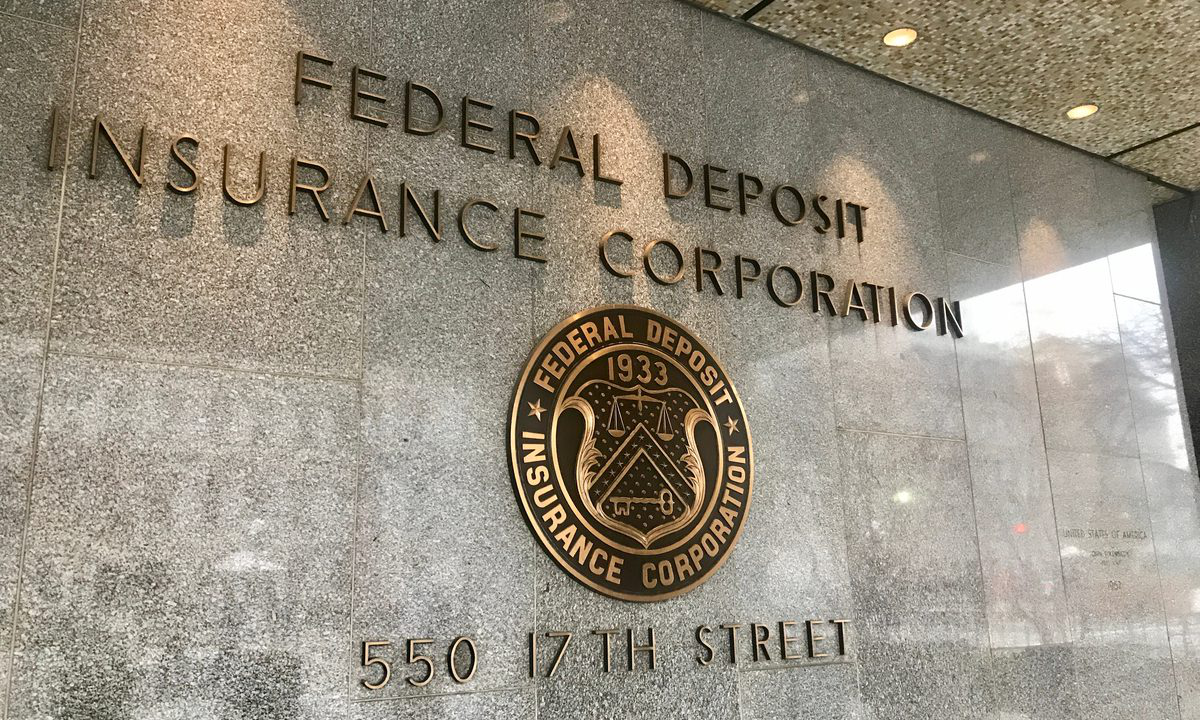
The U.S. Federal Deposit Insurance Corporation (FDIC) has reached an agreement with Vanguard to implement stricter rules regarding the firm’s ability to take large stakes in U.S. financial institutions. This deal, made public on Friday, strengthens the FDIC’s ability to monitor Vanguard’s investment activities, ensuring that the firm’s passive investment strategy in FDIC-supervised banks does not lead to undue influence over the banks’ operations.

The agreement is designed to prevent the largest asset management firms, such as Vanguard and BlackRock, from affecting the decision-making processes of major U.S. banks, even when they acquire significant stakes through passive investment funds. In a statement, Jonathan McKernan, an FDIC director, highlighted academic concerns regarding the risks of concentrated ownership and the concentration of power among institutional investors.

Under the terms of the agreement, Vanguard is prohibited from engaging in activities that could influence the management or policies of FDIC-regulated banks or their subsidiaries. Vanguard confirmed that this prohibition aligns with its existing practices, as the firm is built around passive investing and has long pledged to maintain a non-interfering approach.

To ensure compliance, Vanguard will be monitored by the FDIC, particularly regarding any informal interactions it might have with the management of FDIC-regulated banks. The deal with Vanguard does not mention a similar arrangement with BlackRock, and BlackRock has not yet responded to requests for comment.


BlackRock’s ETF Chief Highlights the Rise of Bitcoin ETFs and Crypto Investors New to Wall Street

Samara Cohen, BlackRock’s chief investment officer for exchange-traded funds (ETFs) and index investments, shared her insights at the Permissionless Conference in Utah about the growing demand for bitcoin among crypto enthusiasts new to Wall Street. A year after launching one of the first spot bitcoin ETFs in the U.S., Cohen noted that a large portion of investors flocking to these products are crypto fans with little experience in traditional finance.

Cohen emphasized that investors were looking for a better and more accessible way to invest in bitcoin. “It was for the ETF wrapper,” she explained, referring to the demand for ETFs as an easier way to invest in the cryptocurrency. As of now, the total market cap for the eleven available spot bitcoin ETFs exceeds $63 billion, with nearly $20 billion in flows. In the last five trading days alone, spot bitcoin ETFs have brought in over $2.1 billion, with BlackRock accounting for half of those sales.

Bitcoin’s recent performance has been remarkable, trading above $68,300 this week, its highest level since July, and ending the third quarter with a 140% rise year-over-year. The surge is reflected in crypto-related stocks like Coinbase, which saw its best performance since February, closing up 24% for the week.

BlackRock’s strategy in attracting customers to its funds has centered around educating crypto investors on the benefits of ETFs. According to Cohen, 13F filings show that 80% of U.S. buyers of these new spot bitcoin ETFs are direct investors, and 75% of them had never owned an iShares ETF, BlackRock’s popular ETF brand, prior to this.

Cohen reflected on how BlackRock entered this space with the intention of educating traditional ETF investors on bitcoin, but instead found themselves educating crypto investors about the advantages of ETFs. This approach has contributed to the strong adoption of BlackRock’s bitcoin ETF offerings.

Before the introduction of U.S. spot bitcoin ETFs in January, centralized exchanges like Coinbase were among the most user-friendly platforms for purchasing and holding cryptocurrencies. However, Cohen and others have noted that crypto exchanges weren’t providing digital asset investors with everything they needed, further driving demand for ETF alternatives.

New data from Chainalysis reinforces the U.S.’s strong market position for digital assets, with North America accounting for nearly 23% of global crypto trading volume. Between July 2023 and July 2024, $1.3 trillion in on-chain value was received, according to Chainalysis. Additionally, a16z’s State of Crypto report revealed that over 40 million Americans now hold cryptocurrency.

Adoption of spot bitcoin ETFs has primarily come through wealth management clients, with firms like Morgan Stanley allowing their financial advisors to pitch BlackRock and Fidelity bitcoin ETFs to clients with a net worth exceeding $1.5 million. However, many firms are still in the due diligence phase before fully adopting the new products.

Jan van Eck, CEO of VanEck, pointed out that wealth managers in the U.S. have been slow to embrace these products, comparing the situation to Europe, where the firm has seen success with its 12 token-based products. VanEck has about $2 billion in European crypto ETPs, with significant trading volume coming from individual investors.

Cohen believes that ETFs and blockchain technology share similar goals, particularly around increasing transparency and accessibility. She highlighted the role ETFs played in transforming traditional finance (TradFi) markets after the 2008 financial crisis and compared it to the decentralizing impact of decentralized finance (DeFi) today.

In Cohen’s view, the launch of bitcoin ETFs represents a win for investors, as the integration of traditional finance and decentralized ecosystems continues to evolve, benefiting both worlds.