Yazılar

Blue Origin Delays New Glenn Rocket Launch Over Anomalies

Blue Origin, the space company founded by Jeff Bezos, postponed the inaugural launch of its New Glenn rocket on Monday due to “a few anomalies” identified during the countdown. The launch, initially scheduled for 1:00 am ET (0600 GMT), was delayed as the team worked to resolve the issues. Despite the rocket being prepared on the launchpad at Cape Canaveral Space Force Station, the liftoff time was pushed back repeatedly as the team reviewed the situation.

Blue Origin confirmed that the issues were related to a vehicle subsystem, leading to the postponement of the mission, which is now expected to take place at least 24 hours later, though further delays are possible. The New Glenn rocket, which stands 30 stories tall, is designed to compete with SpaceX in the satellite launch market and includes a high-stakes attempt to land its booster on a sea-faring barge in the Atlantic Ocean 10 minutes after takeoff.

The first stage of the rocket would separate and land on the barge while the second stage continues its journey to orbit. Bezos admitted that the company was especially cautious about the booster landing, acknowledging the high risk of potential anomalies during the first flight. The mission also carries the Blue Ring spacecraft prototype, which Blue Origin plans to offer to the Pentagon and commercial clients for satellite servicing and national security tasks.

Despite the delay, the mission remains a significant milestone for Blue Origin, with numerous customer launch contracts lined up for the future. The development of New Glenn has faced multiple delays, but the rocket’s massive potential, with more than double the power of SpaceX’s Falcon 9, places Blue Origin in a competitive position in the space industry.

 

Bezos’ Blue Origin Secures FAA License for First New Glenn Rocket Launch

The Federal Aviation Administration (FAA) announced on Friday that it has granted a commercial space launch license to Blue Origin, Jeff Bezos’ aerospace company, for its New Glenn rocket. This marks a significant milestone for Blue Origin as it enters a highly competitive sector, joining SpaceX and United Launch Alliance (ULA) in vying for national security space missions.

The New Glenn rocket, named after astronaut John Glenn, received a five-year license allowing orbital launches from Cape Canaveral Space Force Station in Florida. The rocket’s reusable first stage is designed to land on a barge in the Atlantic Ocean, showcasing a focus on sustainability similar to SpaceX’s Falcon 9.

The inaugural New Glenn mission will serve as a certification test for the U.S. Space Force, a prerequisite for launching national security satellites. Initially, the debut mission was slated to carry a pair of NASA spacecraft to Mars, but delays in New Glenn’s development led NASA to shift the payload to another rocket. Instead, the first mission will carry technology for Blue Origin’s Blue Ring program, which focuses on maneuverable spacecraft for the Department of Defense.

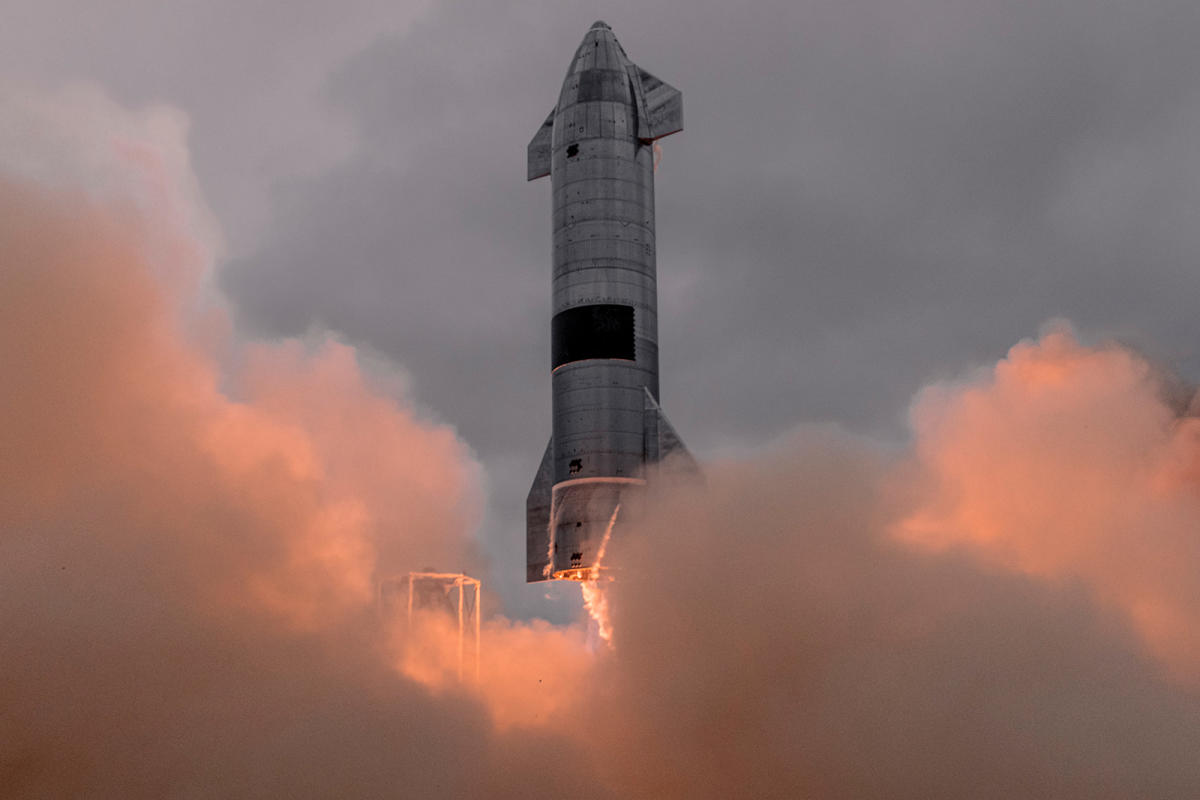
Blue Origin joins an industry dominated by SpaceX, which has successfully used its partially reusable Falcon 9 for numerous missions and is developing its fully reusable Starship rocket. SpaceX achieved a major milestone in October when Starship’s first-stage booster returned to its Texas launch pad during a flight test.

Blue Origin has faced challenges in bringing New Glenn to market. To accelerate progress, the company hired Amazon veteran Dave Limp in late 2022 to oversee the rocket’s development. The Pentagon’s selection of Blue Origin as one of the contenders for a $5.6 billion national security space program signals a vote of confidence in the company’s potential.

With this FAA approval, Blue Origin takes a critical step toward establishing itself as a competitor in the commercial and government launch markets.


ULA Plans Vulcan Rocket Upgrade to Compete with SpaceX’s Starship

United Launch Alliance (ULA), the rocket venture between Boeing and Lockheed Martin, is planning an upgrade to its Vulcan rocket in a bid to compete with SpaceX’s Starship in the growing low Earth orbit (LEO) satellite launch market. According to ULA CEO Tory Bruno, the company aims to develop a version of the Vulcan rocket specifically designed to meet the demands of the LEO market, which has been largely dominated by SpaceX’s Starlink satellite deployments.

“We recently completed a major trade study for what we need to be competitive in the future LEO market,” Bruno told Reuters at a military space conference in Orlando. “We’ve selected a modification to Vulcan that gives us significantly more mass to LEO and puts us in a competitive range.”

The Vulcan rocket, powered by engines from Jeff Bezos’ Blue Origin, has already completed its first two launches this year. Initially designed for Pentagon missions, the Vulcan is now being reconfigured to cater to the commercial LEO satellite market. One potential upgrade is the “Vulcan Heavy,” a version with three core boosters for increased payload capacity. Bruno also mentioned other “unique” configurations, including propulsion placements in unconventional locations.

SpaceX’s Starship, which is primarily designed for crewed missions to the Moon and Mars, has turned its attention to accelerating its Starlink satellite launches into LEO. This has intensified competition for launch providers, as companies like Amazon also aim to deploy large satellite networks to challenge Starlink’s dominance. ULA aims to complete the Vulcan upgrade before SpaceX’s Starship becomes fully operational for LEO satellite launches, which Bruno suggests could take several years.

ULA has secured several Vulcan missions with Amazon, aimed at launching the company’s Kuiper satellite network. This makes the Vulcan an integral part of Amazon’s strategy to rival SpaceX’s Starlink. SpaceX has already conducted six test flights of Starship, demonstrating its commitment to testing and improving the rocket’s capabilities, while ULA plans to finalize the Vulcan design before launching it commercially.

In 2024, ULA is set to conduct eight Vulcan missions and 12 Atlas V missions, its predecessor. The Vulcan’s starting launch price is about $110 million, slightly above SpaceX’s Falcon 9, and ULA has a backlog of roughly 70 missions, including those for Amazon.

Although ULA has been considering a sale, drawing interest from companies such as Sierra Nevada Corp and Blue Origin, Bruno has declined to comment on any acquisition discussions.