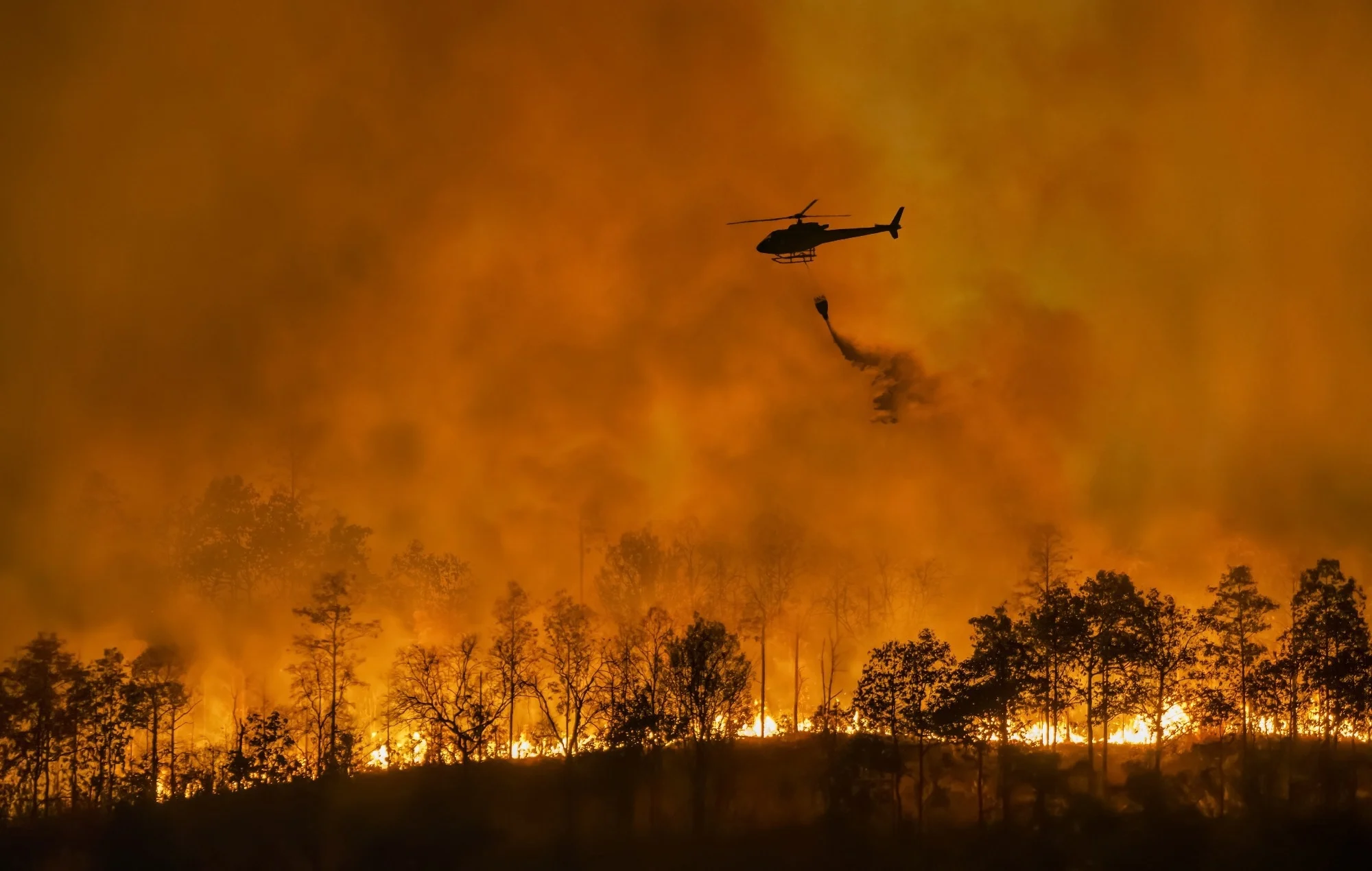
In January, wildfires in California caused widespread devastation, leaving a trail of destruction across communities and ecosystems. In an effort to improve wildfire monitoring and response, NASA has deployed an advanced scientific instrument designed to provide detailed, real-time data on active fires. The Compact Fire Infrared Radiance Spectral Tracker (c-FIRST) was tested aboard NASA’s B200 King Air aircraft over fire-ravaged areas such as Pacific Palisades and Altadena. This technology, originally developed for satellite missions, aims to enhance wildfire understanding and improve strategies for fire mitigation by capturing high-resolution thermal infrared images.
The c-FIRST instrument was created by NASA’s Jet Propulsion Laboratory (JPL) and is managed with support from NASA’s Earth Science Technology Office. Its compact design allows it to be easily deployed on airborne platforms, simulating the capabilities of satellite-based observation systems while providing near-instantaneous data. The technology has the ability to capture an extensive range of fire characteristics, including temperature variations across vast areas. Unlike traditional infrared imaging systems, c-FIRST can detect temperatures exceeding 1,000 degrees Fahrenheit (550 degrees Celsius) with significantly improved clarity, offering a much more detailed picture of fire dynamics.
According to Sarath Gunapala, the principal investigator for c-FIRST at NASA JPL, traditional fire monitoring instruments have limitations that prevent them from fully capturing the full scope of wildfire behavior. In particular, previous technologies have struggled to provide comprehensive data on fire size, frequency, and intensity. This gap in information can hinder timely response and accurate predictions about fire growth and behavior. Gunapala’s team hopes that the enhanced capabilities of c-FIRST will bridge these gaps, providing more precise and timely information for decision-makers and emergency responders.
The potential applications for c-FIRST go beyond immediate fire response. Scientists aim to use the technology to enhance their understanding of wildfire behavior and its impact on ecosystems. By monitoring fires in greater detail, researchers can gain valuable insights into how different fire conditions interact with the environment, potentially leading to better prediction models and more effective fire management strategies. As wildfires continue to pose a growing threat in many parts of the world, innovations like c-FIRST could play a critical role in safeguarding both communities and the environment from the devastating effects of these natural disasters.