
Yazılar

Google and Chile Ink Deal for Trans-Pacific Submarine Cable to Boost Digital Connectivity

Alphabet’s Google has signed a landmark agreement with the Chilean government to deploy a 14,800-kilometer (9,196-mile) submarine data cable linking Chile with Australia and Asia. The cable is expected to be operational by 2027 and marks the first submarine cable project in the South Pacific, reinforcing Chile’s ambitions to become a regional digital hub for Latin America.

“This is an important commitment with an extraordinary strategic partner,” said Chile’s Transport Minister Juan Carlos Muñoz, emphasizing the cable’s role in improving connectivity with Asian nations, particularly China, which is Chile’s largest trading partner.

Open Access and Broader Goals

Cristian Ramos, head of telecommunications infrastructure for Alphabet’s Latin America operations, confirmed that the cable will be open for use by other entities, allowing technology firms operating in Chile to benefit from the improved infrastructure.

The cable’s deployment comes amid escalating technological competition between the U.S. and China in Latin America, with submarine cables becoming increasingly significant in their geopolitical rivalry.

Though exact costs have not been disclosed, Chilean authorities had previously estimated the project’s cost to range between $300 million and $550 million, with Chile contributing $25 million through its state-owned partner Desarrollo País.

Applications in Mining, Science, and Industry

The cable is expected to deliver a range of benefits, including better performance for Asian tech platforms like TikTok, enhanced astronomical data transmission, and improved coordination for mining operations shared between Chile and Australia.

“Mining companies with operations in both countries can consider shared command centers where teams can support each other in real-time,” noted Deputy Secretary of Telecommunications Claudio Araya.

Deployment will begin next year from the Chilean port city of Valparaiso. Chile is also evaluating an additional link connecting the cable to Argentina, further expanding the project’s regional impact.

Future Expansion and Antarctic Ambitions

The agreement could encourage similar projects connecting South America with Asia, further strengthening Chile’s digital infrastructure. Separately, Chile is planning another submarine cable project to link the southern tip of South America with Antarctica, mainly for scientific research purposes.

The partnership between Google and Chile is not only a technological milestone but also a reflection of broader strategic interests as digital infrastructure becomes central to global economic and political influence.
Telescope with World’s Largest Digital Camera Set to Transform Astronomy

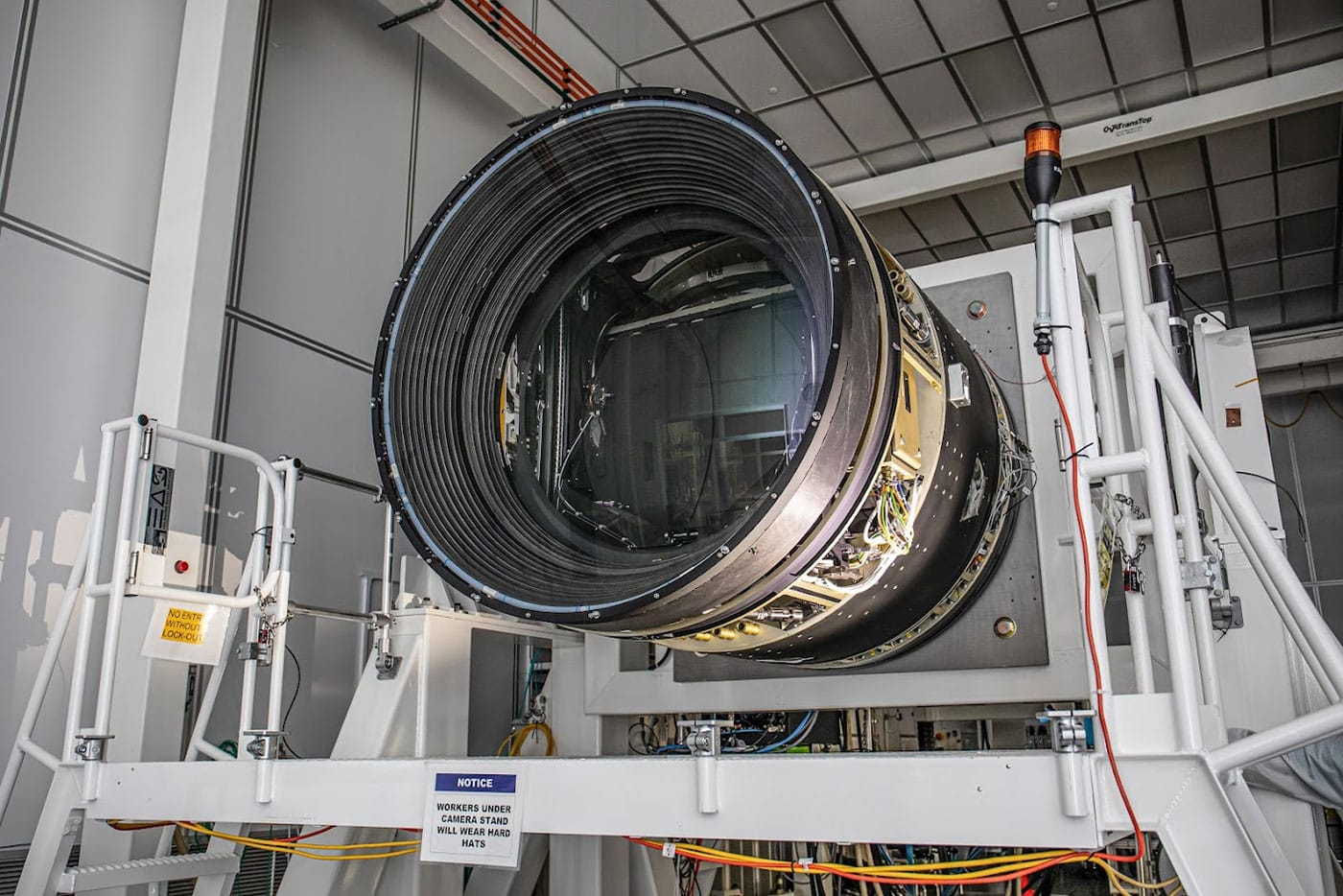
On a mountaintop in northern Chile, the world’s largest digital camera is gearing up for an ambitious mission: to photograph the entire night sky in unprecedented detail, unlocking some of the universe’s most profound secrets. This monumental project, housed within the Vera C. Rubin Observatory, is poised to revolutionize our understanding of the cosmos.

Overview of the Vera C. Rubin Observatory

Located on Cerro Pachón, a mountain standing 2,682 meters (8,800 feet) tall, the observatory features a groundbreaking camera with a resolution of 3,200 megapixels—equivalent to about 300 smartphones. Each image captured will encompass a sky area as large as 40 full moons.

The telescope aims to conduct a complete survey of the visible sky every three nights, generating thousands of images that will reveal celestial movements and brightness changes. Over its ten-year mission, the Vera Rubin Observatory expects to identify approximately 17 billion stars and 20 billion galaxies previously unseen.

“There’s so much that Rubin will do,” explains Clare Higgs, the observatory’s astronomy outreach specialist. “We’re exploring the sky in a way that we haven’t before, giving us the ability to answer questions we haven’t even thought to ask.”

Construction and Purpose

Under construction since 2015, the observatory is named after Vera Rubin, a pioneering American astronomer who confirmed the existence of dark matter before her passing in 2016. Initially funded through private donations from notable figures like Bill Gates and Charles Simonyi, the project later received support from the U.S. Department of Energy and the National Science Foundation.

The observatory’s location in the Chilean Andes is ideal for optical astronomy, with its high altitude, dry climate, and minimal light pollution enhancing the sensitivity of the instruments. Higgs notes, “You want a very still and well-understood atmosphere, and the quality of the night sky in Chile is exceptional.”

Expected to begin operations in 2025, the observatory is currently in its final construction stages. The team is working diligently to assemble and align all components, with plans to commence initial observations by late 2025, contingent on successful testing.

The Legacy Survey of Space and Time (LSST)

The primary mission of the Vera Rubin Observatory is the Legacy Survey of Space and Time (LSST). This ten-year project aims to capture the southern sky every night and repeat that every three nights, essentially creating a “movie” of the southern sky.

The camera can take an image every 30 seconds, generating an astonishing 20 terabytes of data daily. By the end of the survey, it is anticipated that more than 60 million gigabytes of raw data will be collected. Images will be transferred to California for analysis using AI and algorithms, resulting in about 10 million alerts per night for any observable changes in the sky.

Research Areas and Potential Discoveries

The data collected will cover four main research areas:

  1. Inventory of the Solar System: Including the search for Planet Nine.
  2. Mapping the Milky Way: Understanding our galaxy’s structure.
  3. Exploring Transients: Observing objects that change position or brightness over time.
  4. Understanding Dark Matter: Investigating the nature of this elusive substance.

Higgs notes, “We’ll go from a couple of observed events to statistically large samples, and the science impact of what that can do is huge.”

Excitement in the Astronomical Community

The astronomical community is abuzz with anticipation for the Vera Rubin Observatory. According to David Kaiser, a physics professor at MIT, the telescope will enable unprecedented mapping of dark matter through gravitational lensing, allowing for better understanding of how dark matter interacts with visible matter.

Professor Konstantin Batygin from Caltech adds that the observatory could provide critical insights into the Planet Nine hypothesis, helping astronomers to better understand the dynamics of the outer solar system.

Dr. Kate Pattle from University College London highlights that the observatory will make significant strides in studying astronomical transients, tracking supernova remnants, and monitoring high-energy gamma-ray bursts.

Conclusion

As the Vera C. Rubin Observatory prepares for its groundbreaking mission, astronomers are poised to gain insights that may redefine our understanding of the universe. With its advanced technology and ambitious goals, the observatory is not just a project; it is a potential game-changer for the field of astronomy.