Yazılar

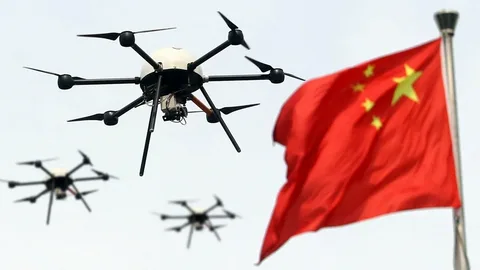
U.S. to Restrict Chinese Drone and Heavy-Duty Vehicle Imports Over Security Concerns

The Trump administration is preparing new rules that could restrict or ban imports of Chinese-made drones and medium-to-heavy duty vehicles, citing national security risks tied to foreign technology. The Commerce Department said Friday it expects to issue the regulations as soon as this month but did not provide details on the scope of the restrictions.

Chinese firms currently dominate the U.S. drone market, with DJI alone accounting for over half of all commercial drone sales. Washington has grown increasingly wary of Chinese technology embedded in vehicles and aircraft, warning that onboard computers, communications systems, flight controls, and data storage could expose U.S. infrastructure to espionage or cyberattacks.

The move builds on earlier measures targeting Chinese cars and trucks, with rules finalized in January under the Biden administration that will bar nearly all Chinese-made vehicles from the U.S. by late 2026. The Commerce Department has also opened national security probes into both drones and heavy-duty vehicles, which could pave the way for new tariffs.

Trump has already signed executive orders this year to boost domestic drone manufacturing and harden defenses against “threatening drones.” Meanwhile, Congress passed legislation in December, under Biden, that could eventually ban DJI and Autel from selling new drone models in the U.S.

The latest restrictions underscore bipartisan concern in Washington over supply chain dependence on China, as well as the push to secure strategic sectors like transportation and aerospace against foreign influence.

Chinese Tech Firms Still Pursuing Nvidia Chips Despite Government Pressure

Chinese tech giants including Alibaba (9988.HK) and ByteDance remain eager to secure Nvidia’s (NVDA.O) artificial intelligence chips despite regulators in Beijing discouraging such purchases, according to four sources familiar with procurement talks.

The companies are pressing for assurance that their orders for Nvidia’s H20 model—which regained U.S. approval for sale in China in July—are being processed. They are also closely tracking Nvidia’s development of a more advanced chip, tentatively called the B30A, based on its Blackwell architecture. Sources said the B30A could cost roughly twice as much as the H20’s current $10,000–$12,000 price tag but may deliver up to six times more power, making it an attractive option if cleared by Washington.

Both the H20 and B30A are downgraded versions of Nvidia’s global products, designed to comply with U.S. export restrictions. The issue of whether Chinese firms can access advanced chips remains a central flashpoint in the U.S.–China technology rivalry. While Washington has relaxed some curbs, U.S. President Donald Trump recently struck a deal requiring Nvidia to give 15% of its H20 revenue to the U.S. government.

China, meanwhile, is urging its companies to reduce reliance on U.S. chips. Regulators have summoned Tencent (0700.HK), ByteDance, and others to question their H20 purchases, citing potential information security risks. However, Beijing has not formally banned Nvidia products.

Strong demand persists due to limited domestic chip supply. Products from Huawei and Cambricon (688256.SS) remain constrained and, according to engineers at Chinese firms, perform less effectively than Nvidia’s. Nvidia itself acknowledged rising competition from local rivals but declined further comment.

Uncertainty over its China sales led Nvidia to issue a cautious forecast in August, excluding potential revenue from the world’s second-largest economy. The company’s shares have since fallen about 6%. CEO Jensen Huang has reassured Chinese customers about H20 availability and is reportedly preparing B30A samples for delivery to China as early as September. Nvidia is estimated to hold 600,000–700,000 H20 units in inventory and has asked TSMC to produce more.

Huang has previously said China could represent a $50 billion market for Nvidia if it maintains access to competitive products.

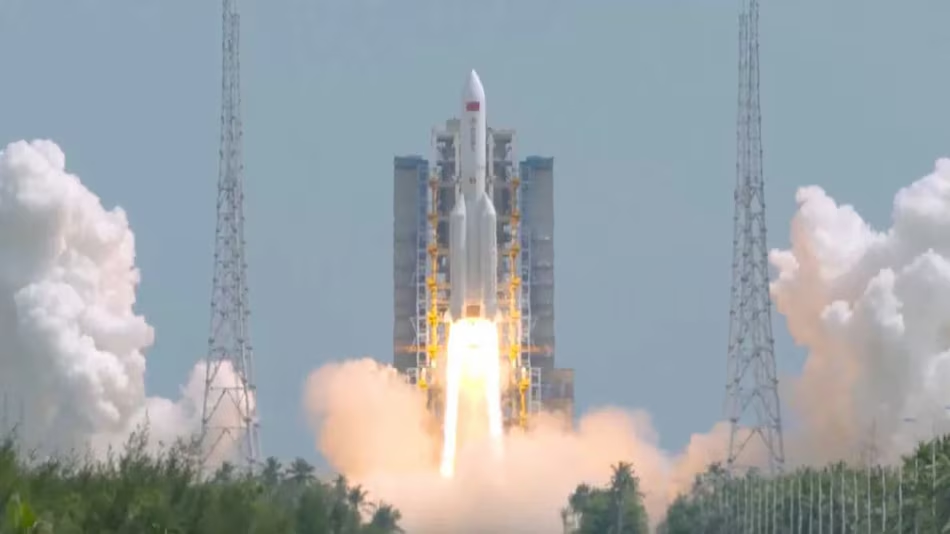
China Expands Guowang Internet Constellation with New Satellite Launch

China launched the eighth batch of Guowang satellites on August 13 using a Long March 5B rocket, progressing toward its goal of a 13,000-satellite internet network. Devamını Oku