Yazılar

Skyworks Beats Q2, Offers Upbeat Q3 Forecast; Names New CFO Amid Chip Demand Strength

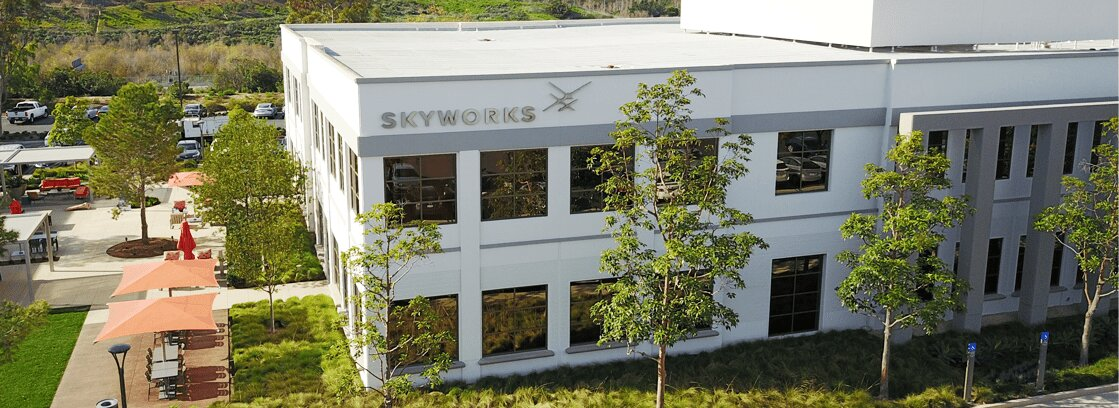
Skyworks Solutions (SWKS.O), a key Apple supplier, reported stronger-than-expected second-quarter results and issued an upbeat Q3 forecast, signaling resilient demand for its analog and mixed-signal chips despite ongoing global trade tensions. The company also announced the appointment of Mark Dentinger as its new Chief Financial Officer, effective June 2, succeeding Kris Sennesael, who is stepping down to pursue another opportunity.

Shares rose 2.7% in extended trading following the announcements.

Q2 Results:

  • Revenue: $953M (vs. $951.5M expected)

  • Adjusted EPS: $1.24 (vs. $1.20 expected)

Q3 Outlook:

  • Revenue guidance: $920M–$960M (midpoint > $922M estimate)

  • Adjusted EPS guidance: $1.24 (vs. $1.06 estimate)

  • Mobile chip business: Expected to decline low single digits sequentially

  • Broad markets: On track for another quarter of sequential growth

We remain encouraged by ongoing momentum in our broad markets,” the company said in its earnings release, citing improving year-over-year trends across industrial, automotive, and consumer segments.

Leadership Change:

  • Mark Dentinger, former CFO of Veritas, will step in as Skyworks CFO on June 2

  • Kris Sennesael, outgoing CFO, to exit on Friday

Skyworks continues to compete with chipmakers like NXP Semiconductors (NXPI), Qorvo (QRVO), and Texas Instruments (TXN) in supplying key components for wireless communications and IoT-driven applications.

Despite macroeconomic uncertainty and tech-sector volatility, the company’s stable mobile business and growth in diversified markets underscore investor confidence going into the back half of 2025.

ABB Confident in Data Center Growth Despite DeepSeek’s Energy-Efficient AI

ABB CEO Morten Wierod expressed confidence in the continued growth of the data center market, despite concerns over the impact of DeepSeek’s low-energy AI models. Speaking on Thursday after ABB reported its fourth-quarter results, Wierod reassured investors that demand for the company’s electrification products remains strong.

DeepSeek, a Chinese AI startup offering a more energy-efficient alternative to U.S. rivals, caused a selloff in tech stocks earlier in the week after surpassing OpenAI’s ChatGPT in downloads on Apple’s App Store. The AI model’s ability to operate with significantly fewer chips raised fears that it could reduce demand for data center infrastructure, impacting suppliers like ABB. ABB’s stock dropped nearly 6% on Monday amid these concerns.

However, Wierod said discussions with major partners and customers indicated that capital expenditure plans for data centers remain unchanged. ABB has significantly benefited from data center expansion, with its orders in this sector growing by an average of 23% per year between 2019 and 2023. The pace accelerated in 2024, with data center-related revenue now contributing 15% to ABB’s electrification business, up from 12% in 2023 and 8% in 2022.

While Wierod declined to provide a forecast for 2025, he emphasized ABB’s strong positioning in the industry, particularly in China. He also highlighted the company’s role in improving data center energy efficiency, an increasingly important factor as AI computing demand surges. ABB’s motors and variable speed drives can reduce electricity consumption by up to 60%, while its uninterrupted power supply systems operate at 97.4% efficiency when converting electricity.

The company also expects to benefit from the $500 billion AI infrastructure investment announced last week by U.S. President Donald Trump, reinforcing the long-term demand for data center solutions.

“The need for data centers and AI will be very strong in the coming years,” Wierod said. “I have no doubt.”


ASML CEO Discusses Positive Impact of DeepSeek AI Launch on Chip Demand

Christophe Fouquet, CEO of ASML, shared his perspective on the growing influence of AI technologies, such as China’s DeepSeek, on the global chip market. He emphasized that efficient AI models are ultimately a positive force for the semiconductor industry, countering the perception that AI spending is primarily driven by large-scale investments from tech giants like Google, Meta, and Microsoft. These companies are pouring billions into building advanced data centers, but according to Fouquet, the actual demand for chips driven by this sector remains relatively small.

Fouquet argued that the broader chip demand will come from the integration of AI into various consumer and industrial applications. He highlighted examples, such as AI-enabled phones, cars, and robotics, noting that for these products to reach mass adoption, the cost of the chips must be affordable. If the cost of chips remains high, only a small number of expensive units would be sold, limiting widespread access to AI technology.

When discussing the recent launch of DeepSeek’s AI product, which had a significant impact on tech stock prices, Fouquet remained optimistic, stating that anything that helps drive down costs is beneficial for ASML in the long run. While the potential of DeepSeek’s technology remains uncertain, he believes that cost reduction is key to enabling AI to be more accessible to a wider audience.

Analyst Sara Russo from Bernstein agreed with Fouquet’s viewpoint but noted that the effects of DeepSeek’s launch are still unfolding. She pointed out that ASML’s role as a supplier will depend on how AI applications evolve and influence chip demand, as well as the needs of chip manufacturers.