Yazılar

GlobalFoundries Appoints Tim Breen as New CEO

GlobalFoundries, the world’s third-largest contract chipmaker, announced on Wednesday that Tim Breen will be its new CEO. Breen, who joined the company in 2018 and has served as its Chief Operating Officer since 2023, succeeds Thomas Caulfield, who will transition to the role of executive chairman.

Shares of GlobalFoundries remained mostly unchanged following the announcement. Before his tenure at GlobalFoundries, Breen held a senior executive position at Mubadala Investment Company, Abu Dhabi’s sovereign wealth fund and GlobalFoundries’ largest stakeholder.

In addition to Breen’s appointment, GlobalFoundries also announced that Niels Anderskouv, a former executive at Texas Instruments, will be the company’s new president. Anderskouv will replace Breen as Chief Operating Officer and will oversee manufacturing and product strategy.

Caulfield, who led the company through its 2021 IPO and had been CEO since 2018, praised Breen and Anderskouv for their leadership and vision, stating that together they are well-positioned to drive GlobalFoundries forward.

The company, which stepped back from the high-cost race to produce the most advanced chips—opting instead to focus on specialized markets such as radio-frequency chips and automotive semiconductors—has seen increased demand for its products, especially due to a recovery in the smartphone market. Despite this growth, GlobalFoundries continues to face challenges in the industrial and automotive sectors.

In 2024, GlobalFoundries also benefited from government support, receiving approximately $1.5 billion in subsidies aimed at boosting U.S. chip manufacturing.

 

Infineon Upgrades Revenue Outlook After Stronger-Than-Expected Q1

Infineon, the German chipmaker, has slightly revised its full-year revenue outlook upwards, citing currency effects, after its first-quarter revenue came in better than expected. The company now expects revenue for the fiscal year ending September 2025 to be flat to slightly higher compared to the prior year, an improvement from its previous forecast of a slight decline, which was based on a weaker euro-to-dollar exchange rate.

CEO Jochen Hanebeck expressed confidence, stating that the company performed well despite a challenging market environment, with first-quarter results exceeding expectations. Infineon reported a revenue drop of 8% for the first quarter, amounting to 3.4 billion euros ($3.5 billion), though it had anticipated a more significant dip, with analysts forecasting 3.2 billion euros.

Additionally, Infineon’s segment result margin, a key measure of profitability, was also a pleasant surprise, coming in at 16.7%, surpassing the forecast of 15%.


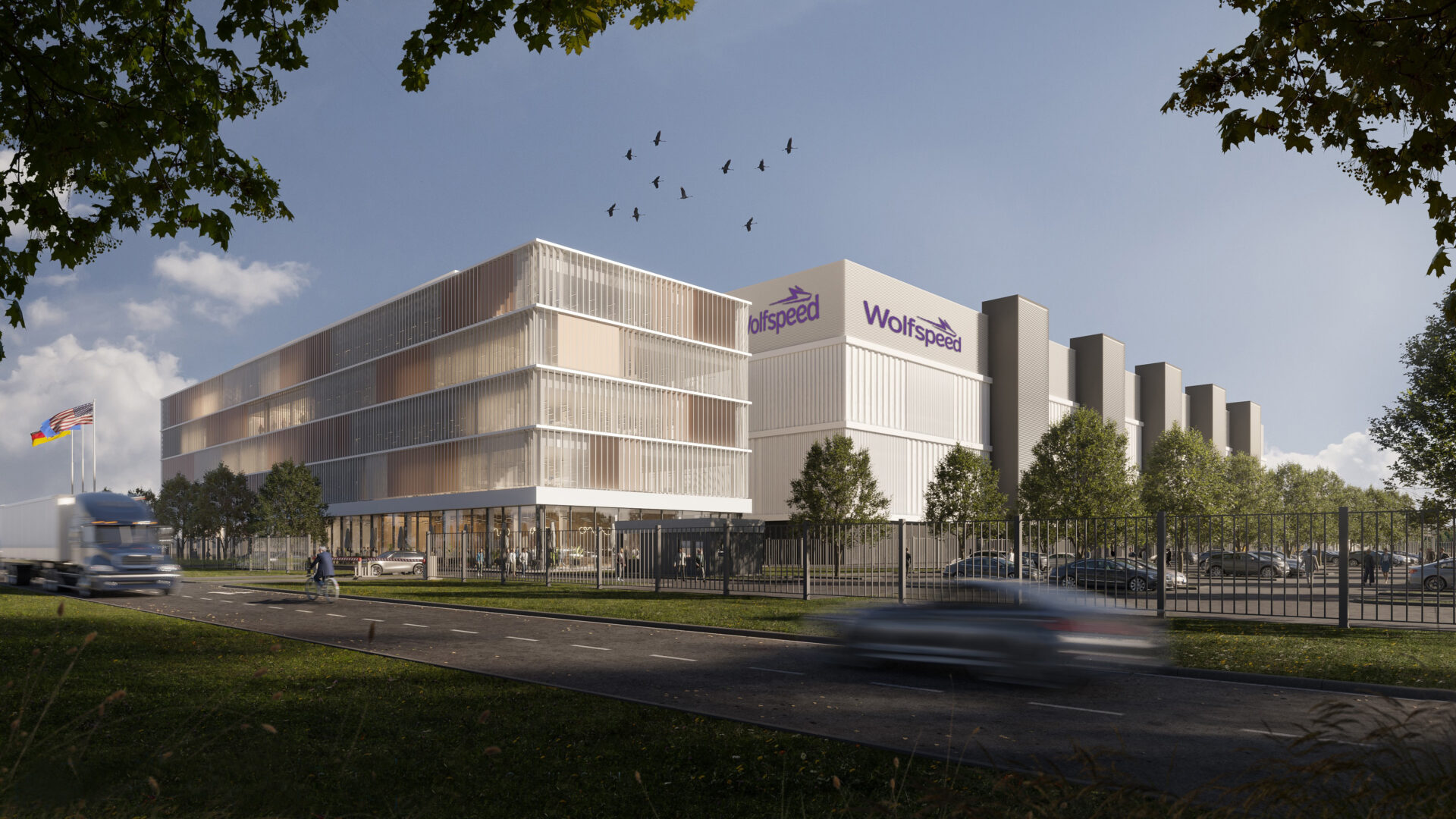
Wolfspeed Exceeds Q2 Revenue Expectations Amid Operational Shifts

Wolfspeed (WOLF.N) outperformed Wall Street expectations for second-quarter revenue and reported a smaller-than-anticipated net loss, demonstrating progress as the company implements changes to enhance profitability.

In the first quarter of 2025, Wolfspeed shut down some facilities and transitioned its device business to a 200-millimeter silicon carbide fab. This move aims to improve product efficiency and increase production capacity, especially in response to the growing demand for chips utilizing silicon carbide technology. These chips are critical for high-power applications such as electric vehicle powertrains, e-mobility, renewable energy systems, battery storage, and AI data centers.

For Q2, Wolfspeed reported revenue of $180.5 million, slightly exceeding the average analyst estimate of $179.9 million. The company’s net loss per share was 95 cents, better than the expected loss of $1.02 per share. The Mohawk Valley Fab facility contributed around $52 million in revenue.

Despite weak demand from automotive clients, Wolfspeed made leadership changes in November, replacing CEO Gregg Lowe with Thomas Werner, who took on the role of executive chairman as the company searches for a permanent CEO.

Looking ahead, Wolfspeed projects third-quarter revenue from continuing operations to range from $170 million to $200 million, with the midpoint falling short of analysts’ expectations of $193.6 million. The company anticipates an adjusted quarterly loss per share between 88 cents and 76 cents, compared to estimates of a loss of 86 cents. It also expects restructuring-related costs of $72 million for the third quarter.