Yazılar

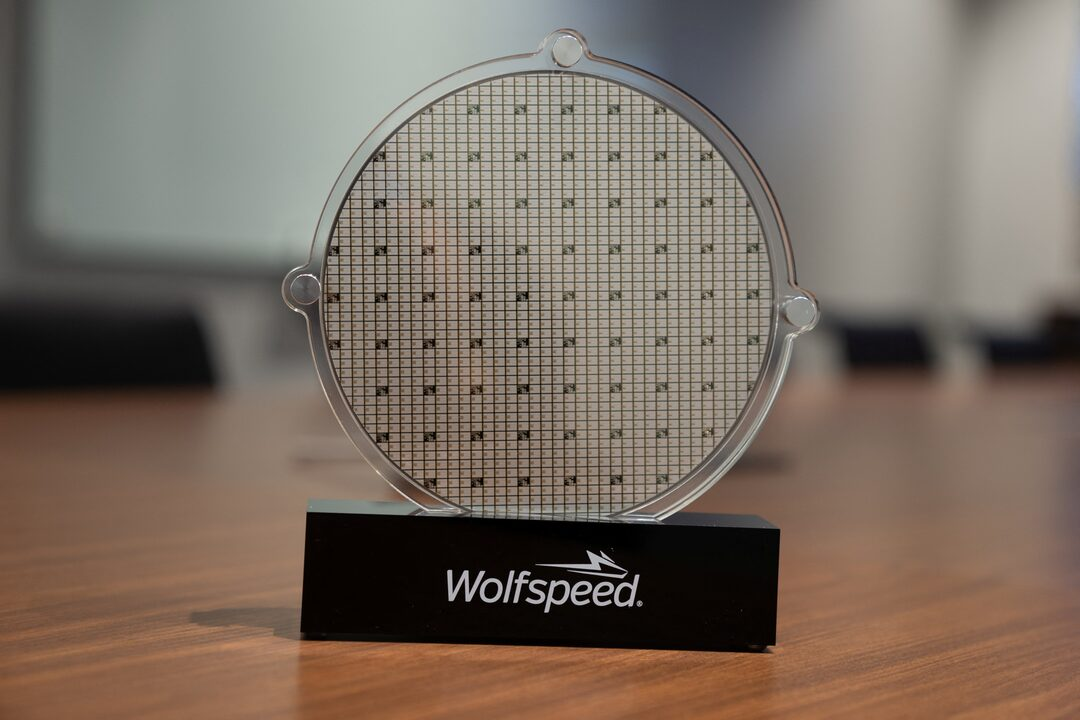
Wolfspeed Eyes Bankruptcy Filing Amid Debt Struggles and Weak Demand

Wolfspeed, a leading U.S. semiconductor firm specializing in silicon carbide chips, is reportedly preparing to file for Chapter 11 bankruptcy within weeks, according to sources cited by The Wall Street Journal. The move comes as the company faces mounting debt, weakened demand, and heightened market uncertainty due to tariffs and macroeconomic pressures.

Shares of Wolfspeed (WOLF.N) plunged more than 57% in after-hours trading following the news.

The company, which serves industrial and automotive markets, has been wrestling with declining demand and recently rejected multiple out-of-court debt restructuring proposals. It is now seeking a court-supervised process with the backing of a majority of its creditors, as part of a pre-packaged bankruptcy strategy.

Earlier this month, Wolfspeed signaled financial distress by raising “going-concern” doubts and significantly lowering its revenue outlook. It forecast $850 million in revenue for fiscal 2026, falling short of analysts’ consensus of $958.7 million.

Wolfspeed declined to comment on the bankruptcy report when contacted by Reuters.

As one of the few major U.S. producers of silicon carbide chips — vital for electric vehicles and renewable energy systems — the company’s financial woes could ripple across the supply chain, especially as global chipmakers face persistent economic headwinds and shifting trade dynamics.
Marvell Technology Forecasts In-Line Q1 Revenue, Shares Drop 15%

Marvell Technology (MRVL.O) predicted first-quarter revenue in line with Wall Street’s expectations, but its shares fell sharply by 15% in after-hours trading. Investors were underwhelmed by the forecast, as they had hoped for more substantial growth driven by the surging demand for artificial intelligence (AI) chips.

The AI chip market has seen booming demand, particularly for sector-leader Nvidia’s (NVDA.O) AI processors. Major tech companies like Microsoft (MSFT.O), Meta Platforms (META.O), and Amazon.com (AMZN.O) have been working to reduce their reliance on Nvidia by developing their own AI chips, a trend that has benefited companies like Marvell and Broadcom (AVGO.O).

“The earnings print was generally OK, but I believe investors were expecting more given all the bullish data points in the overall AI space and the ramp of custom ASICs (AI chips) with certain hyperscalers,” said Tore Svanberg, an analyst at Stifel Nicolaus and Co.

Marvell’s data center segment performed well, with revenue up 78% year-over-year to $1.37 billion in the fourth quarter, driven by increased demand for custom AI chips as businesses work to optimize their AI workloads. In December, the company also signed a five-year chip deal with Amazon that includes custom AI chips.

“We’re engaged, we expect revenue to grow, but obviously, it’s like anything, you’ve got to show you can do it, and you’ve got to show it consistently,” Marvell COO Chris Koopmans said, emphasizing the “sticky” nature of the Amazon deal.

Marvell has pledged to focus its investments on data centers, seeing them as the best way to capitalize on the AI boom. Data center revenues accounted for 75% of its total revenue in the most recent quarter. However, Koopmans added that Marvell had not yet experienced any impact from tariffs affecting its data center business.

Despite posting solid results, Marvell’s shares dropped to $77.65 in after-hours trading, following a year-to-date increase of over 83%. In contrast, its larger competitor Broadcom saw a stock jump of around 107%. Analysts pointed to concerns over geopolitical pressures, AI monetization, and the magnitude of Marvell’s earnings beat as factors contributing to the decline.

Marvell forecast first-quarter revenue of $1.88 billion, slightly above analysts’ expectations of $1.87 billion.

Chipmakers Surge on Optimism Fueled by AI Demand

Shares of chipmakers saw significant gains on Monday, driven by optimism surrounding strong AI-driven demand. Microsoft’s plan to invest $80 billion in AI-enabled data centers in fiscal 2025 sparked expectations that semiconductor demand will remain robust. Micron (MU.O) led the charge with a 10.6% rise in its stock, while other key players like Applied Materials (AMAT.O), Lam Research (LRCX.O), and KLA Corp (KLAC.O) saw increases between 5.1% and 5.5%.

The Philadelphia Semiconductor Index (.SOX) surged 3.9%, reaching its highest point since mid-October, and has risen over 19% in 2024. The broader Nasdaq (.IXIC) also advanced, leading Wall Street’s major indexes higher, while semiconductor stocks in Europe and South Korea saw similar gains.

Citigroup noted that while Microsoft’s spending plan was in line with analysts’ expectations, it was seen as a “modest positive” for the sector, alleviating concerns about a potential drop in capital expenditure.

“AI data centers are very chip hungry, that’s why you have people running towards the chip sector right now,” said Michael Matousek, head trader at U.S. Global Investors.

The strong demand for AI servers, evidenced by Foxconn’s (2317.TW) record revenue for Q4, further fueled the sector’s positive momentum. Nvidia (NVDA.O), a key Foxconn customer, added 5.1%, with CEO Jensen Huang scheduled to deliver a keynote speech at the CES trade show later in the day. AI server manufacturer Super Micro Computer (SMCI.O) saw a 10.3% surge.

Although Nvidia’s quarterly results in November pointed to a slowdown in revenue growth, the surge in demand for the company’s AI chips, which dominate the market, has mitigated those concerns.