
Yazılar

Hottest Summer on Record for the Second Year Running Signals Escalating Climate Crisis

The summer of 2024 has officially become the hottest on record, continuing an alarming trend that points to the likelihood of this year being the hottest in human history. According to data released by the European Union’s Copernicus Climate Change Service (C3S), the global average temperature for the Northern Hemisphere’s summer months, from June through August, was the highest ever recorded. This year’s temperatures were found to be 0.69 degrees Celsius above the 1991-2020 average, surpassing the previous record set just a year earlier by 0.03 degrees Celsius.

C3S deputy director Samantha Burgess emphasized that the world witnessed a series of record-breaking temperature events within the span of just three months, including the hottest day, June, and August on record. These extreme heat events have significantly increased the likelihood of 2024 being the hottest year on record, Burgess stated in a written release.

The extreme heat seen this summer is a direct consequence of the climate crisis, driven largely by the continued burning of fossil fuels. Climate scientists have long warned that rising global temperatures are linked to an increase in extreme weather events, such as the unprecedented heatwaves observed across several continents this year. These events are expected to intensify further if decisive action is not taken to reduce greenhouse gas emissions, which are the key drivers of climate change.

As global temperatures continue to rise, the impact on ecosystems, economies, and public health is becoming increasingly severe. The sweltering conditions have already shattered national heat records and underscored the urgent need for governments to commit to more aggressive emissions reductions. Without meaningful intervention, the escalating climate crisis will only worsen, posing significant risks for future generations and the planet.

Experts agree that while the data provided by C3S underscores the gravity of the situation, it also serves as a critical call to action for policymakers worldwide. Immediate and sustained efforts to reduce greenhouse gas emissions are essential if we are to prevent global temperatures from reaching even more dangerous levels in the years to come.

Wildfires Near Athens Prompt Mass Evacuations and International Assistance

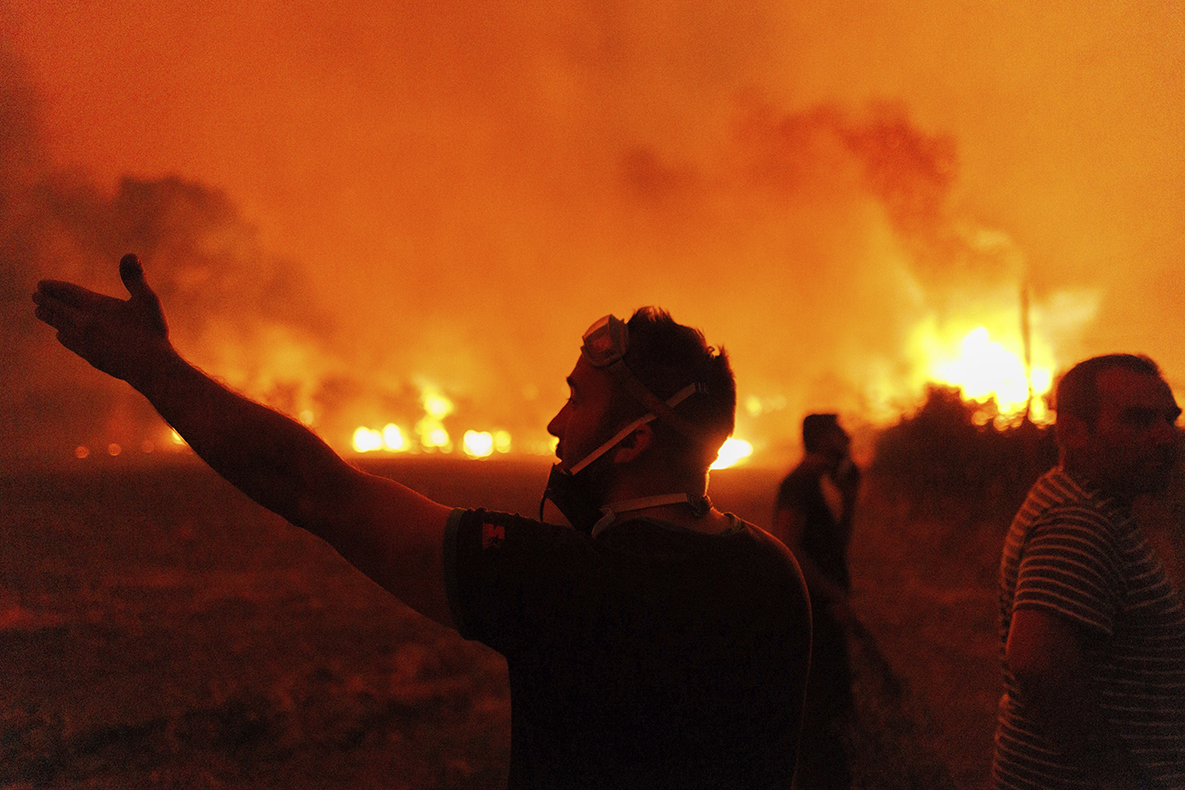
A rapidly spreading wildfire near Athens, Greece, has forced authorities to order evacuations from several neighborhoods. The blaze, which began on Sunday near Varnavas, north of the capital, has intensified, with 685 firefighters and 32 water-bombing aircraft deployed to control the situation. The fire, exacerbated by strong winds, prolonged drought, and challenging terrain, has continued for over 20 hours, showing no signs of abating.

The fire has significantly impacted the area, with Greek public broadcaster ERT estimating its size at over 30 kilometers (19 miles). The flames are advancing towards Penteli, located approximately 16 kilometers (10 miles) northeast of Athens, threatening residential areas and the National Observatory of Athens.
Despite wildfires being a common occurrence in Greek summers, climate scientists attribute the increased intensity and frequency of these fires to unusually hot and dry weather linked to global warming. This summer has seen Greece endure its hottest June and July on record, with numerous wildfires already reported.

Local residents have described harrowing scenes, including animals struggling to escape the flames and thick smoke making it nearly impossible to breathe. Reports indicate that at least 13 citizens and two firefighters have been treated for burn and respiratory injuries. The Greek government has requested assistance from the European Union, with France, Italy, the Czech Republic, Spain, and Turkey responding to aid in firefighting efforts.

The situation has raised concerns about a repeat of last summer’s devastating fires, which ravaged several regions and islands. The Greek government has also heightened health and emergency measures, with three hospitals in the Attica region on alert and children evacuated from a hospital in Penteli.

As the crisis unfolds, international support continues to pour in, and the Greek government remains on high alert, urging residents to heed evacuation orders and stay safe amid the ongoing emergency.