Yazılar

Global companies pour billions into AI infrastructure with mega-deals

A wave of multi-billion dollar investments is reshaping the AI landscape as chipmakers, cloud providers, and tech giants race to secure computing power for next-generation artificial intelligence. The surge follows OpenAI’s launch of ChatGPT in 2022, which sparked unprecedented demand for GPUs, cloud infrastructure, and data centers.

Key deals fueling the AI boom:

  • Nvidia & OpenAI – Nvidia to invest up to $100B in OpenAI and supply advanced AI chips, cementing its dominance in the AI ecosystem.

  • Nvidia & Intel – Nvidia invests $5B for a ~4% stake in Intel.

  • Oracle & Meta – In talks on a $20B cloud deal to boost Meta’s AI compute.

  • Oracle & OpenAI – Landmark deal worth $300B over five years for OpenAI to buy Oracle cloud capacity.

  • CoreWeave & Nvidia$6.3B order ensuring Nvidia-backed startup CoreWeave absorbs unused cloud demand.

  • Nebius Group & Microsoft$17.4B, five-year GPU deal to bolster Microsoft’s infrastructure.

  • Meta & Google – Six-year, $10B cloud agreement signed in August.

  • Intel & SoftBank – SoftBank injects $2B into Intel, becoming a top-10 shareholder.

  • Tesla & Samsung$16.5B chip supply deal for Tesla’s next-gen AI6 chip, produced in Texas.

  • Meta & Scale AI – Meta takes 49% stake ($14.3B) in Scale AI, elevating CEO Alexandr Wang’s role in Meta’s AI strategy.

  • Google & Windsurf$2.4B licensing deal for AI code generation tech.

  • CoreWeave & OpenAI$11.9B, five-year contract signed before CoreWeave’s IPO.

  • Stargate Datacenter Project – Joint venture by SoftBank, OpenAI, Oracle, backed by U.S. President Donald Trump, with up to $500B in AI infrastructure funding.

  • Amazon & Anthropic – Amazon doubles down with a total $4B investment in Anthropic, developer of the Claude chatbot.

Why it matters:

  • Capital intensity: AI development is now measured in hundreds of billions, with infrastructure demands rivaling traditional energy projects.

  • Strategic alliances: Tech giants are securing long-term chip and cloud capacity to avoid bottlenecks.

  • Geopolitical edge: Governments, particularly the U.S., are encouraging private-public mega-projects like Stargate to keep ahead in the AI race.

The investment frenzy highlights a simple truth: the future of AI hinges not just on algorithms, but on who controls the world’s computing power.
Oracle appoints Clay Magouyrk and Mike Sicilia as co-CEOs, Safra Catz steps aside

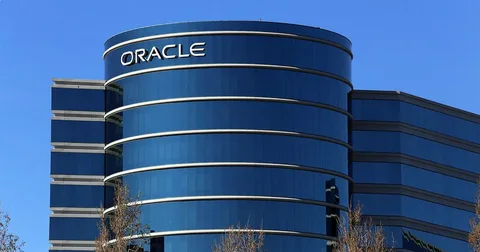
Oracle announced a surprise leadership shakeup on Monday, naming insiders Clay Magouyrk and Mike Sicilia as co-CEOs, replacing longtime chief executive Safra Catz. Catz, who helped transform Oracle into a cloud powerhouse over her 11-year tenure, will remain with the company as vice chair of the board.

Catz’s legacy includes steering Oracle from its roots as a database provider into a global competitor in cloud computing, securing massive AI-related contracts, and driving the company’s market capitalization close to $1 trillion. Shares of Oracle have soared about 85% this year, outpacing rivals Microsoft and Alphabet, buoyed by the AI boom.

  • Mike Sicilia (54) currently oversees Oracle’s cloud-based applications and AI products.

  • Clay Magouyrk (39) manages Oracle’s cloud infrastructure platform, which underpins the company’s AI and data services.

Both executives are well-known to investors, and analysts say their promotion highlights cloud and industry solutions as Oracle’s main growth engines. Evercore ISI noted that with co-founder Larry Ellison staying on as CTO and Catz as executive vice chair, the leadership transition should be smooth.

Oracle is currently central to U.S. data security discussions, hosting TikTok’s U.S. user data on its cloud systems. The company also recently signed one of the largest cloud deals in history with OpenAI, worth an estimated $300 billion in computing power over five years.

Safra Catz, one of the most influential women in tech, first became co-CEO alongside the late Mark Hurd in 2014 after Ellison stepped back from daily operations. Under her leadership, Oracle shares climbed more than 586%. Trained in finance and law, Catz joined Oracle in 1999 after a career on Wall Street and today holds a net worth of $3.3 billion, according to Forbes.

Magouyrk, who joined Oracle from Amazon Web Services in 2014, will receive stock options worth $250 million, while Sicilia, who came via Oracle’s acquisition of Primavera Systems, will receive $100 million in stock options.

The co-CEO model, while less common, is being adopted by several global firms, including investment giant KKR and, briefly, Intel. For Oracle, the dual leadership underscores the scale of its ambitions as cloud and AI reshape the tech landscape.

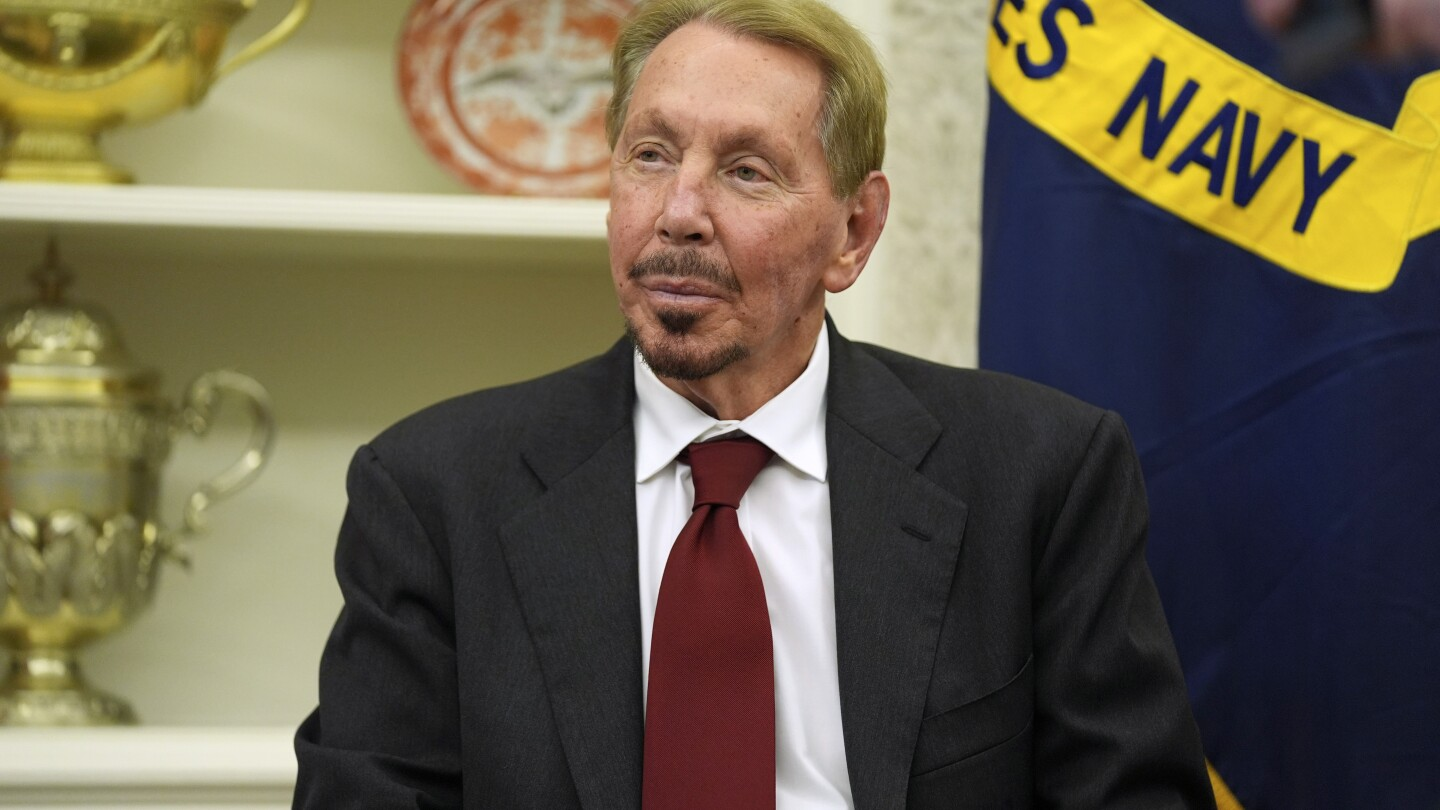
Larry Ellison reemerges as tech and media power player

Forty-eight years after co-founding Oracle, Larry Ellison is once again at the center of global business headlines. Oracle’s stock surged 35.9% on the back of blockbuster cloud computing deals tied to AI, propelling Ellison’s net worth to nearly $400 billion—second only to Elon Musk.

Adding to his influence, Ellison’s family-controlled Paramount is preparing a bid for Warner Bros Discovery, a move that could dramatically reshape Hollywood. At the same time, his son David Ellison has begun steering CBS News with a more conservative tilt, hiring former Hudson Institute CEO Kenneth Weinstein as ombudsman and reportedly courting journalist Bari Weiss for a leadership role.

Ellison has also entrenched Oracle in the TikTok saga, providing U.S. infrastructure for the Chinese-owned app since 2022 amid national security scrutiny. Behind the flash of yachts, Hawaiian islands, and movie cameos—he played himself in Iron Man 2—Ellison has steadily bet big on AI.

Oracle became a major AI landlord, securing marquee clients including Meta, Elon Musk’s xAI, and OpenAI, which committed to a $300 billion compute deal over five years. This pivot helped Oracle’s booked revenue soar more than four-fold to $455 billion.

Unlike rivals Microsoft, Amazon, and Google, Oracle chose not to build custom AI chips, instead deepening ties with Nvidia. At a 2024 dinner with Musk and Nvidia CEO Jensen Huang, Ellison reportedly said, “Please take our money”—and soon after, Oracle secured GPU supplies that fueled the Stargate project with OpenAI.

Oracle’s cloud revival—after a failed 2016 launch—has proven cheaper and more adaptable. Its rapid scaling during the Zoom pandemic traffic surge and smooth takeover of TikTok’s U.S. user data in 2022 highlighted technical strength.

Still, huge risks remain. Oracle outsources critical infrastructure like land, data centers, and power, making it reliant on partners. Analysts warn that dependence on a small group of AI clients—particularly OpenAI—could expose Oracle to shocks if those firms stumble.

Ellison’s career has long swung between hubris and vindication, but with AI reshaping the tech landscape, the Silicon Valley “bad boy” may yet have the last laugh.