Yazılar

NSF NOIRLab’s Dark Energy Camera Captures Breathtaking Image of Galaxies in the Antlia Cluster

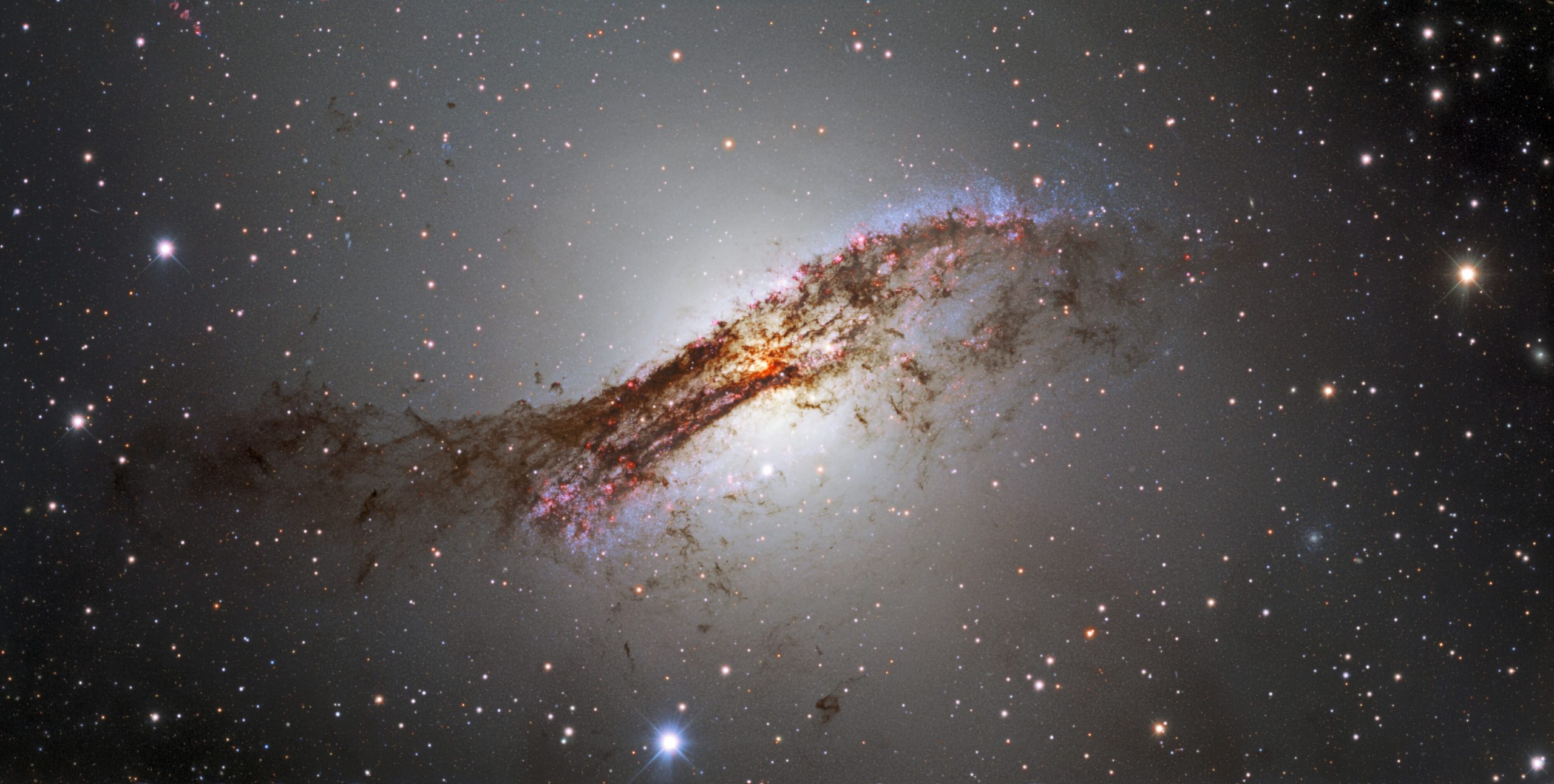
The Dark Energy Camera (DECam) has captured a breathtaking image of the Antlia Cluster, offering an unprecedented view of the diverse array of galaxies located about 130 million light-years from Earth in the Antlia constellation. This stunning visual showcases over 230 galaxies, including lenticular, irregular, and ultra-compact dwarf galaxies. The image highlights two dominant elliptical galaxies, NGC 3268 and NGC 3258, which stand out in the cluster. Produced at the Cerro Tololo Inter-American Observatory in Chile, this detailed image provides astronomers with a deeper understanding of the complex structure of the cluster.

The Antlia Cluster, also known as Abell S636, has been the subject of extensive study under the Antlia Cluster Project. This project includes observations from both ground-based telescopes and space observatories, aiming to uncover the secrets of galaxy evolution and dark matter. By identifying faint dwarf galaxies, compact ellipticals, and blue compact dwarfs, researchers have gained valuable insights into the nature of galaxy formation. X-ray studies of the cluster have further suggested that its formation may involve the merging of smaller galaxy groups, with a “rope” of globular clusters detected near its central galaxies, supporting the hypothesis of a dynamic merger history.

Within the Antlia Cluster, a variety of galaxy types are present, each offering clues about the evolutionary processes of galaxies in such environments. Lenticular galaxies, which are characterized by their disk-like structure and low star formation rates, are particularly common in this cluster. These galaxies bridge the gap between elliptical and spiral galaxies, making them an important subject of study for understanding the lifecycle of galaxies. Additionally, the presence of ultra-diffuse and dwarf spheroidal galaxies, although not yet fully confirmed, suggests that the cluster may host some of the most rare and enigmatic types of galaxies known to astronomers.

The advancements in observational technology, such as the high-resolution imaging capabilities of DECam, have allowed astronomers to detect and study low-luminosity galaxies that were previously difficult to observe. These discoveries are helping to unravel the mysteries of galaxy formation, shedding light on how different types of galaxies evolve and interact within clusters. As the Antlia Cluster Project continues, it promises to enhance our understanding of the role of dark matter and the complex processes that govern galaxy formation in the universe.
New Study Suggests Dark Matter May Be Connected to a ‘Dark Big Bang

A groundbreaking hypothesis proposes that dark matter, one of the universe’s most enigmatic components, could have originated from a separate event referred to as the “Dark Big Bang.” This idea, first introduced in 2023 by Katherine Freese, Director of the Texas Center for Cosmology and Astroparticle Physics, and Martin Wolfgang Winkler of the University of Texas, challenges the conventional understanding that all matter and energy in the universe were created at the same time during the Big Bang. Recent work by researchers at Colgate University has built upon this theory, offering new perspectives on how this “Dark Big Bang” could have unfolded and how we might uncover supporting evidence.

In their study, published in Physical Review D, physicists Cosmin Ilie, Assistant Professor of Physics and Astronomy, and Richard Casey, a scientist at Colgate University, elaborated on the mechanisms behind a potential Dark Big Bang. The theory proposes that dark matter may have been introduced into the cosmos up to one year after the traditional Big Bang event. Ilie explained in an interview with Space.com that their research explores a broader array of possibilities than previously considered, making the concept of a Dark Big Bang increasingly plausible. This idea, if proven, would fundamentally alter our understanding of both dark matter and the early universe.

The Dark Big Bang theory presents a significant departure from the widely accepted view that dark matter and ordinary matter share a common origin. The prevailing hypothesis suggests that both types of matter emerged from the same cosmic event. However, by proposing that dark matter could have come from a distinct source, this new theory opens the door to a more complex cosmological model. While Occam’s Razor typically favors simpler explanations, Ilie argues that the universe may not necessarily follow our preference for simplicity, and we must be open to more intricate possibilities.

As scientists continue to explore the origins of dark matter, this theory could provide a fresh avenue for research, with the potential to reshape our understanding of the cosmos. The next steps will involve gathering observational data to test these ideas and search for evidence that might confirm the existence of a Dark Big Bang. If the theory holds, it could offer profound insights into the nature of dark matter and its role in the formation of the universe as we know it.

Telescope with World’s Largest Digital Camera Set to Transform Astronomy

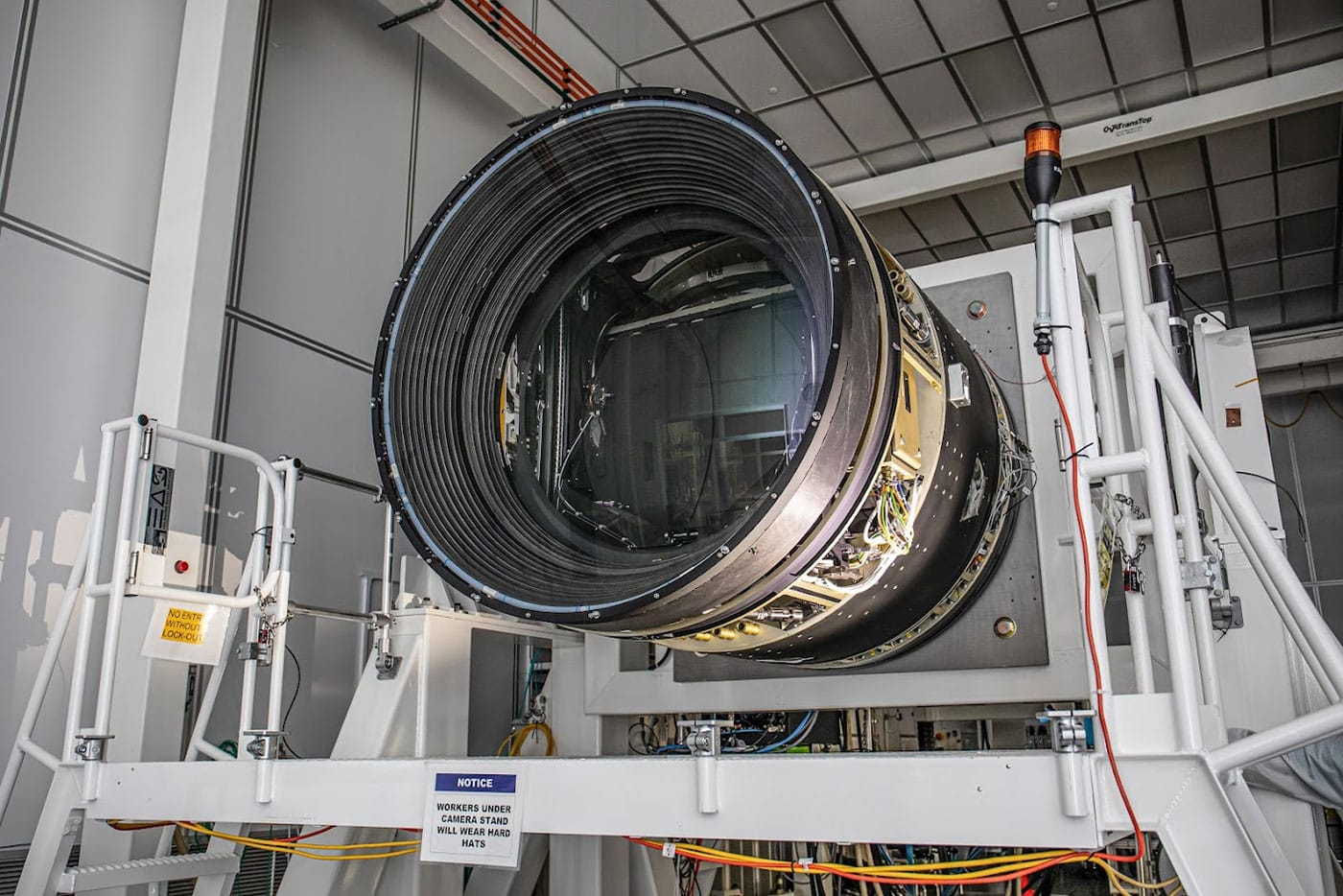
On a mountaintop in northern Chile, the world’s largest digital camera is gearing up for an ambitious mission: to photograph the entire night sky in unprecedented detail, unlocking some of the universe’s most profound secrets. This monumental project, housed within the Vera C. Rubin Observatory, is poised to revolutionize our understanding of the cosmos.

Overview of the Vera C. Rubin Observatory

Located on Cerro Pachón, a mountain standing 2,682 meters (8,800 feet) tall, the observatory features a groundbreaking camera with a resolution of 3,200 megapixels—equivalent to about 300 smartphones. Each image captured will encompass a sky area as large as 40 full moons.

The telescope aims to conduct a complete survey of the visible sky every three nights, generating thousands of images that will reveal celestial movements and brightness changes. Over its ten-year mission, the Vera Rubin Observatory expects to identify approximately 17 billion stars and 20 billion galaxies previously unseen.

“There’s so much that Rubin will do,” explains Clare Higgs, the observatory’s astronomy outreach specialist. “We’re exploring the sky in a way that we haven’t before, giving us the ability to answer questions we haven’t even thought to ask.”

Construction and Purpose

Under construction since 2015, the observatory is named after Vera Rubin, a pioneering American astronomer who confirmed the existence of dark matter before her passing in 2016. Initially funded through private donations from notable figures like Bill Gates and Charles Simonyi, the project later received support from the U.S. Department of Energy and the National Science Foundation.

The observatory’s location in the Chilean Andes is ideal for optical astronomy, with its high altitude, dry climate, and minimal light pollution enhancing the sensitivity of the instruments. Higgs notes, “You want a very still and well-understood atmosphere, and the quality of the night sky in Chile is exceptional.”

Expected to begin operations in 2025, the observatory is currently in its final construction stages. The team is working diligently to assemble and align all components, with plans to commence initial observations by late 2025, contingent on successful testing.

The Legacy Survey of Space and Time (LSST)

The primary mission of the Vera Rubin Observatory is the Legacy Survey of Space and Time (LSST). This ten-year project aims to capture the southern sky every night and repeat that every three nights, essentially creating a “movie” of the southern sky.

The camera can take an image every 30 seconds, generating an astonishing 20 terabytes of data daily. By the end of the survey, it is anticipated that more than 60 million gigabytes of raw data will be collected. Images will be transferred to California for analysis using AI and algorithms, resulting in about 10 million alerts per night for any observable changes in the sky.

Research Areas and Potential Discoveries

The data collected will cover four main research areas:

  1. Inventory of the Solar System: Including the search for Planet Nine.
  2. Mapping the Milky Way: Understanding our galaxy’s structure.
  3. Exploring Transients: Observing objects that change position or brightness over time.
  4. Understanding Dark Matter: Investigating the nature of this elusive substance.

Higgs notes, “We’ll go from a couple of observed events to statistically large samples, and the science impact of what that can do is huge.”

Excitement in the Astronomical Community

The astronomical community is abuzz with anticipation for the Vera Rubin Observatory. According to David Kaiser, a physics professor at MIT, the telescope will enable unprecedented mapping of dark matter through gravitational lensing, allowing for better understanding of how dark matter interacts with visible matter.

Professor Konstantin Batygin from Caltech adds that the observatory could provide critical insights into the Planet Nine hypothesis, helping astronomers to better understand the dynamics of the outer solar system.

Dr. Kate Pattle from University College London highlights that the observatory will make significant strides in studying astronomical transients, tracking supernova remnants, and monitoring high-energy gamma-ray bursts.

Conclusion

As the Vera C. Rubin Observatory prepares for its groundbreaking mission, astronomers are poised to gain insights that may redefine our understanding of the universe. With its advanced technology and ambitious goals, the observatory is not just a project; it is a potential game-changer for the field of astronomy.