Yazılar

Former Trump Adviser Dina Powell McCormick Appointed Meta President and Vice Chairman

Meta Platforms on Monday named former Trump administration official Dina Powell McCormick as its president and vice chairman, a move widely seen as strengthening the company’s lobbying and political ties in Washington.

U.S. President Donald Trump congratulated Powell McCormick shortly after the announcement in a post on Truth Social, calling her “fantastic” and praising her service in his administration with “strength and distinction.”

Her appointment comes amid a broader strategic realignment at Meta that has brought the company closer to Trump and Republican leadership. Chief Executive Mark Zuckerberg has been seeking political backing for Meta’s expanding investments in frontier artificial intelligence and so-called personal superintelligence, including plans to build massive data centers and secure long-term energy capacity. Ahead of Trump’s second inauguration, Zuckerberg visited him at his Mar-a-Lago resort in Florida.

Over the past year, Meta has taken several steps that have appealed to Trump, including scrapping its U.S. fact-checking program, promoting Republican executive Joel Kaplan to chief global affairs officer, ending diversity programs, and hiring former Trump trade adviser C.J. Mahoney to lead its legal team. Meta declined to say whether Powell McCormick’s appointment was intended to curry favor with Trump.

Dina Powell McCormick Joins Meta as President and Vice Chairman

According to the company, Powell McCormick will focus on expanding Meta’s data center footprint, building new strategic capital partnerships, and increasing the firm’s long-term investment capacity—areas critical to its AI ambitions. Meta has committed up to $72 billion in capital spending for 2025 as it works to regain momentum in Silicon Valley’s AI race after a muted reception to its Llama 4 model.

Powell McCormick brings extensive experience in both finance and government. She spent 16 years in senior leadership roles at Goldman Sachs, served as deputy national security adviser during Trump’s first term, and previously held a senior White House advisory role under former President George W. Bush. She is married to David McCormick, a Republican senator from Pennsylvania who chairs a Senate subcommittee overseeing energy policy—an area relevant to Meta’s data center expansion.

A spokesperson for Senator McCormick said he will continue to comply with all Senate ethics rules. However, critics raised concerns about potential conflicts of interest. Sacha Haworth, executive director of the Tech Oversight Project, said the senator should recuse himself from any votes or committee actions involving Meta’s business.

Powell McCormick’s new role echoes the influence once wielded by former Chief Operating Officer Sheryl Sandberg, who used deep ties to Washington and the Democratic Party to help Meta navigate regulatory scrutiny. Notably, Powell McCormick had resigned from Meta’s board in December, just eight months after joining, before being elevated to her new executive position.

Trump Says Microsoft to Make Changes to Limit Data Center Power Costs for Americans

U.S. President Donald Trump said on Monday that Microsoft will introduce “major changes” this week aimed at preventing American consumers from facing higher electricity bills due to the growing power demands of data centers.

In a post on social media, Trump said his administration is working closely with major U.S. technology companies to address rising utility costs linked to the rapid expansion of data centers, which underpin cloud computing and artificial intelligence services. He stressed that protecting households from higher energy prices was a priority.

“I never want Americans to pay higher Electricity bills because of Data Centers,” Trump said, adding that his administration is securing commitments from leading tech firms “to the American People,” with further announcements expected in the coming weeks.

Data centers have become a growing concern for policymakers as electricity demand surges across the United States, driven by AI workloads and large-scale cloud infrastructure. Utilities in several regions have warned that new data center projects could strain local power grids and push up costs for residential users.

Trump did not provide details on the specific changes Microsoft plans to implement, nor did he name other technology companies involved in the discussions. Microsoft has not yet publicly commented on the statement.

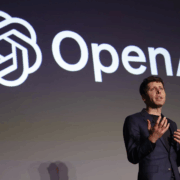
OpenAI and SoftBank Invest $1 Billion in SB Energy to Expand Stargate Data Center Buildout

OpenAI and SoftBank Group will jointly invest $1 billion in SB Energy, committing $500 million each to accelerate the expansion of data center and power infrastructure for their Stargate initiative, SB Energy said on Friday.

SB Energy, which is owned by SoftBank, will build and operate OpenAI’s previously announced 1.2-gigawatt data center campus in Milam County, Texas. The facility is a key component of Stargate, a massive, multi-year plan to scale artificial intelligence training and inference capacity in the United States.

As part of the partnership, SB Energy will also become a customer of OpenAI, using its application programming interfaces and deploying ChatGPT internally for employees.

Stargate is a $500 billion initiative backed by major investors including Oracle, and was publicly endorsed by Donald Trump when the plan was unveiled in January 2025. The project reflects the scale at which leading AI developers are now operating as they race to secure computing power.

The deal highlights a broader industry shift in which technology companies are investing directly in energy and power infrastructure. Access to reliable electricity has become a critical bottleneck for AI expansion, as larger and more numerous data centers sharply increase power demand.

SB Energy said it is developing several data center campuses, with initial facilities expected to begin service later this year. “The partnership accelerates our delivery of advanced AI data center campuses and associated energy infrastructure at the scale required to advance Stargate and secure America’s AI future,” said SB Energy co-CEO Rich Hossfeld.

The data center construction boom has also driven rivals to commit unprecedented sums to infrastructure. Meta Platforms and other Big Tech firms have announced multi-billion-dollar investments spanning chips, cooling systems, servers and power generation.

At the same time, OpenAI is facing rapidly rising costs to train and operate its AI models amid intensifying competition from Alphabet’s Google. OpenAI CEO Sam Altman told employees late last year that the company had entered a “code red” phase, prioritising improvements to ChatGPT while delaying other product launches to counter Google’s Gemini gaining traction.